


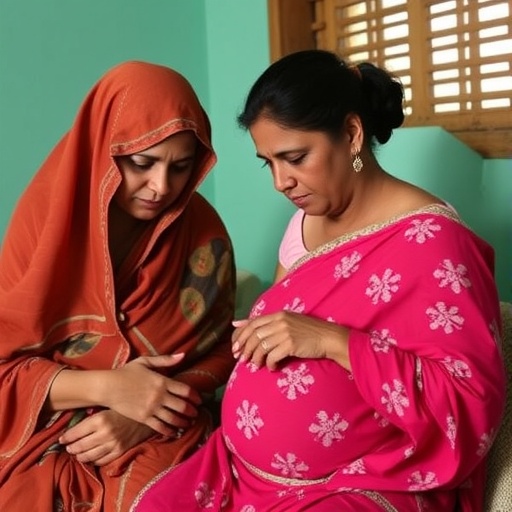
Three out of every four women worldwide fail to complete the full sequence of recommended maternity care services, according to a sweeping new systematic review and meta-analysis published in BMC Health Services Research. The study, led by Birhanu Daba Tulu and Dessalegn Wirtu Tesso of Wallaga University in Ethiopia together with Fekede Asefa Kumsa of the University of Tennessee Health Science Center, pooled data from studies conducted across the globe and found a pooled prevalence of dropout from the maternity continuum of care of 76 percent — a figure that health experts are calling a sobering indictment of how maternal health services are delivered, accessed, and experienced in both high- and low-income settings.
The maternity continuum of care is a framework long promoted by the World Health Organization to describe the connected chain of services a woman should receive across three critical periods: pregnancy, childbirth, and the postpartum period. Completing the continuum typically means attending at least four antenatal care visits during pregnancy, delivering with the assistance of a skilled birth attendant such as a doctor, nurse, or midwife, and receiving at least one postnatal care visit within six weeks of childbirth. Dropout, as defined in this study, is the failure to complete one or more of these recommended components — a definition that allowed the researchers to capture a comprehensive picture of where women fall away from care along the entire reproductive journey.
The magnitude of the problem revealed by the meta-analysis is striking. A pooled dropout prevalence of 76 percent means that, on average, only roughly one in four women worldwide moves seamlessly through antenatal care, skilled birth attendance, and postnatal care. Each break in the chain represents a missed opportunity: antenatal visits allow clinicians to detect and manage complications such as pre-eclampsia, anemia, and gestational diabetes; skilled attendance at delivery is among the strongest determinants of survival for both mother and newborn in the event of obstructed labor, hemorrhage, or sepsis; and postnatal visits are critical for identifying dangerous bleeding, infection, and neonatal jaundice in the vulnerable weeks after birth. When any link is severed, the cumulative risk to mother and child rises, and the protective effect of the full package of care is lost.
To arrive at their findings, the researchers conducted a systematic search of seven major sources of published and grey literature — PubMed, the Cochrane Library, Google Scholar, HINARI, DOAJ, Web of Science, and ProQuest — covering studies published between 1 January 2000 and 30 July 2024. Article screening and data extraction were managed using Covidence software, and statistical analysis was performed in Stata version 14. The methodological rigor of the review reflects current best practice in evidence synthesis. Each included study was appraised for quality using the Joanna Briggs Institute checklist, a standardized tool for assessing the internal validity of prevalence studies. Publication bias was evaluated through three complementary approaches: the LFK index, a symmetry-based method that is increasingly favored over traditional funnel plots because it remains informative even when the number of studies is small; visual inspection of the funnel plot; and Egger’s statistical test for small-study effects.
Heterogeneity — the degree to which the pooled studies differ from one another in their reported outcomes — was assessed using Cochran’s Q test and the I² statistic, with conventional benchmarks of 25 percent, 50 percent, and 75 percent indicating low, moderate, and high heterogeneity respectively. Where heterogeneity was 50 percent or below, the authors applied a fixed-effect model, which assumes that all studies estimate a single true prevalence; where heterogeneity exceeded that threshold, they switched to a random-effect model, which accounts for genuine variation in dropout rates across different populations, health systems, and study designs. Results were presented in forest plots and tables, the standard visual language of meta-analysis, in which each study’s estimate is plotted with its confidence interval and the pooled estimate appears as a diamond at the bottom of the plot.
Beyond the headline prevalence figure, the analysis identified a consistent set of factors associated with a woman’s likelihood of dropping out of the continuum of care. Women whose educational attainment was below secondary school had 21 percent higher odds of dropout (odds ratio 1.21, 95 percent confidence interval 1.04–1.41), suggesting that maternal education remains one of the most durable predictors of health service engagement. Limited exposure to media — a proxy for access to health information through radio, television, newspapers, and increasingly digital platforms — was associated with 20 percent higher odds (OR 1.20, 95 percent CI 1.07–1.35), underscoring the role of health communication in keeping women connected to services throughout pregnancy and beyond.
The circumstances of the pregnancy itself mattered as well. Unintended pregnancy was linked to a modest but statistically significant increase in dropout risk (OR 1.13, 95 percent CI 1.01–1.26), consistent with a large body of literature showing that women with unplanned pregnancies often delay seeking care or engage with it less fully. Timing emerged as an especially potent factor: women who initiated antenatal care after sixteen weeks of gestation had 49 percent higher odds of failing to complete the continuum (OR 1.49, 95 percent CI 1.23–1.80). This finding carries direct programmatic implications, because late initiation of antenatal care compresses the number of available visits, reduces the opportunities for screening and preventive treatment such as iron supplementation and tetanus immunization, and often signals broader barriers — including late pregnancy recognition, lack of autonomy over health decisions, or unawareness of recommended schedules of care.
Social and structural barriers also featured prominently in the results. Lack of husband or partner support raised the odds of dropout by 41 percent (OR 1.41, 95 percent CI 1.20–1.66), a finding that highlights how deeply maternal health-seeking behavior is embedded in household dynamics, particularly in settings where men control transport, finances, or permission to travel for care. Women who perceived the distance to a health facility as a big problem had 18 percent higher odds of dropping out (OR 1.18, 95 percent CI 1.08–1.28), a reminder that geography and physical access remain fundamental constraints even as many countries expand facility-based delivery. Not being informed about the danger signs of pregnancy — such as severe headache, swelling, bleeding, or reduced fetal movement — increased dropout odds by 21 percent (OR 1.21, 95 percent CI 1.10–1.32), pointing to gaps in the counseling content of antenatal visits themselves. Finally, rural residence was associated with 24 percent higher odds of dropout (OR 1.24, 95 percent CI 1.14–1.35), a composite signal that likely bundles together the effects of distance, poverty, lower educational attainment, limited media access, and thinner health infrastructure that characterizes many rural areas.
Taken together, the pattern of risk factors paints a coherent picture of the dropout problem as fundamentally multidimensional. It is not simply a matter of services being unavailable, nor simply a matter of women choosing not to attend. Instead, the evidence suggests a cascade in which social disadvantage, poor information, weak household support, delayed entry into care, and physical inaccessibility compound one another. A woman with limited schooling who lives far from a clinic, learns of her pregnancy later than she might have, receives little encouragement from her partner, and never hears about the warning signs of pregnancy complications is, in effect, being set up at every step to fall away from the system designed to protect her.
The authors argue that these findings call for targeted and comprehensive intervention strategies rather than isolated fixes. They point to three broad levers. First, increasing community awareness — through media campaigns, community health workers, and school-based education — could address the information deficits that the analysis links to dropout, particularly around danger signs and the recommended timing of first antenatal visits. Second, empowering women’s decision-making, including engaging husbands and family members as allies in maternity care, could counteract the household-level barriers that the data reveal to be among the strongest predictors of dropout. Third, improving the accessibility of health facilities — through outreach services, transport support, and decentralized care closer to where women live — could directly attack the geographic barriers that rural women disproportionately face.
The study was registered in the PROSPERO international prospective register of systematic reviews under identifier CRD42024575258, and its reporting follows the PRISMA guidelines for systematic reviews and meta-analyses. The authors declare that they received no financial support for the study and report no competing interests. Because the article is being shared early as a peer-reviewed, accepted manuscript with a permanent DOI, it is citable now and will be automatically replaced by the final version of record after further editorial processing.
For maternal health advocates, the 76 percent figure is likely to serve as a new benchmark — and a new alarm. Global frameworks such as the Sustainable Development Goals have set ambitious targets for reducing maternal and newborn mortality, and progress on those targets has stalled in many regions. The message of this meta-analysis is that counting who shows up for a single service is no longer enough. What matters is whether women stay in the system from the first antenatal visit through the postpartum checkup — and by that measure, the world’s maternal health systems are losing three-quarters of the women they are meant to serve somewhere along the way. Closing that gap, the authors conclude, will require policymakers and stakeholders to act simultaneously on education, communication, household empowerment, and physical access, rather than treating each dropout point as a separate problem to be solved in isolation.
Subject of Research: Global prevalence of and risk factors for dropout from the maternity continuum of care, encompassing antenatal care, skilled birth attendance, and postnatal care
Subject of Research: Medicine
Article Title: Global dropout from the maternity continuum of care and associated factors: a systematic review and meta-analysis
Article References: Tulu, B. D., Tesso, D. W., & Kumsa, F. A. (2026). Global dropout from the maternity continuum of care and associated factors: a systematic review and meta-analysis. BMC Health Services Research. https://doi.org/10.1186/s12913-026-15494-y
Image Credits: AI Generated
DOI: 10.1186/s12913-026-15494-y
Keywords: maternity care, continuum of care, dropout, antenatal care, skilled birth attendance, postnatal care, systematic review, meta-analysis, maternal health, health services research
Cite Scienmag News
APA MLA Chicago
Harold Sullivan. (September 11, 2026). Women worldwide drop out of maternity care continuum, review finds. Scienmag. https://scienmag.com/women-worldwide-drop-out-of-maternity-care-continuum-review-finds/
Harold Sullivan. “Women worldwide drop out of maternity care continuum, review finds.” Scienmag, 11 September 2026, https://scienmag.com/women-worldwide-drop-out-of-maternity-care-continuum-review-finds/. Accessed 11 September 2026.
Harold Sullivan. “Women worldwide drop out of maternity care continuum, review finds.” Scienmag. September 11, 2026. https://scienmag.com/women-worldwide-drop-out-of-maternity-care-continuum-review-finds/
Copy citation Download RIS
Tags: antenatal and postnatal care coverageantenatal care visit adherencebarriers to maternity care accessglobal health research on maternal careglobal maternal health disparitiesglobal maternal health servicesglobal maternity care completionhigh maternal health service dropout ratesmaternal care dropout ratesmaternal health service barriersmaternal health service delivery challengespostpartum care accesspostpartum care challengespostpartum care engagementpregnancy and childbirth health servicespregnancy and postpartum care gapsskilled birth attendant utilizationsystematic review of maternal care accesssystematic review of maternal healthWHO maternity care frameworkWomen maternity care dropoutwomen’s health service utilizationworldwide maternal care disparities


