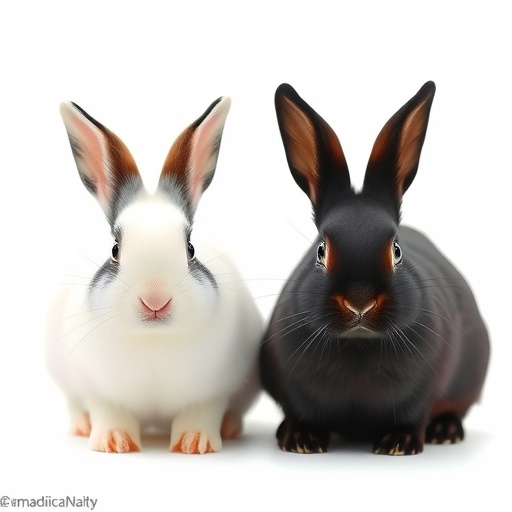
The black rabbits of China have long been prized by local farmers for their hardiness, their flavorful meat, and their remarkable ability to thrive where commercial breeds struggle. Yet despite centuries of informal reputation, the genetic secrets of two of these indigenous breeds—the Laiwu Black rabbit and the Minxinan Black rabbit—remained largely uncharted territory. A new whole-genome study, published in BMC Genomics, has now delivered the first comprehensive genomic characterization of these breeds, revealing a rich tapestry of genetic diversity and identifying the key genes that underpin their celebrated advantages in immunity, reproduction, and meat quality.
The research, led by Beibei Zhou and Shuxia Gao of the Shandong Academy of Agricultural Sciences, together with colleagues from several Chinese institutions, set out to answer a fundamental question: what, at the level of DNA, distinguishes these indigenous black rabbits from the highly selected commercial breeds that dominate modern rabbit production? The answer required a substantial sequencing effort. The team performed whole-genome resequencing at approximately tenfold coverage on 49 rabbits drawn from eight different breeds, providing a genome-wide catalog of genetic variation across the sampled animals.
From this dense dataset of sequence variants, the researchers first examined the population structure and microevolutionary history of the breeds. Two measures were central to this analysis. The first is linkage disequilibrium, which describes the degree to which genetic variants are inherited together across the genome. In breeds that have undergone intense artificial selection, long stretches of DNA tend to be inherited as intact blocks, producing slow linkage disequilibrium decay. The Laiwu Black and Minxinan Black rabbits, by contrast, displayed faster linkage disequilibrium decay than the other six breeds in the study—a hallmark of breeds that have retained greater ancestral diversity and experienced less intensive selection. Faster decay means that the statistical association between nearby genetic markers breaks down more quickly with physical distance, giving researchers finer mapping resolution but also signaling a less bottlenecked demographic history.
The second measure, genetic diversity itself, told a similar story. Both black rabbit breeds showed higher overall genetic diversity than their counterparts among the eight breeds studied. This is significant for conservation genetics, because high diversity generally buffers a population against inbreeding depression and provides the raw material for future adaptation. The two indigenous breeds also exhibited similar microevolutionary trends to one another, suggesting parallel evolutionary paths shaped by comparable environmental pressures and breeding histories in their respective regions of China—Laiwu in Shandong Province and the Minxinan region in Fujian Province.
But the study went beyond population statistics. To connect genetic variation with the traits for which these breeds are known, the researchers integrated selection signature analyses with transcriptome sequencing. Selection signatures are patterns in the genome that reveal regions likely to have been shaped by natural or artificial selection. The team applied two complementary statistics: FST, which measures the differentiation of allele frequencies between populations, highlighting genomic regions where one breed carries variants that are rare or absent in another; and θπ, a nucleotide diversity statistic that quantifies the level of genetic variation within a population. By computing the ratio of θπ values between breed pairs and combining this with FST scans, the researchers could pinpoint genomic windows subjected to strong selective pressure in the Laiwu Black, Minxinan Black, and New Zealand White rabbits, the latter serving as a well-characterized commercial comparator.
Transcriptome sequencing—the analysis of gene expression across the transcriptome—was performed on the Minxinan Black rabbit and the New Zealand White rabbit, allowing the team to ask not just which genes show signatures of selection, but which of those genes are actually active, and how actively, in the tissues relevant to immunity, pigmentation, and meat traits. This integrative approach, fusing population genomics with functional genomics, is increasingly recognized as the most powerful strategy for moving from statistical signals to biological meaning.
The results revealed a striking genetic architecture behind the breeds’ reputations. In the Laiwu Black rabbit, eight key genes emerged from the combined analyses. A cluster of these—BCL2, BIRC2, BIRC3, PIK3CA, and PIK3CD—are connected to immune and reproductive regulation through the NF-κB pathway, a central signaling cascade that governs inflammatory responses and cell survival, and through the prolactin pathway, which plays a well-established role in reproductive physiology and lactation. The presence of selected variants in genes spanning both pathways offers a mechanistic explanation for the breed’s observed resilience to disease and its reproductive performance. Alongside these, the WNT11 gene was identified as a player in melanogenesis—the biochemical process by which pigment is produced—via Wnt signaling, connecting the breed’s distinctive black coat to specific molecular pathways. The eighth gene, ACADM, encodes acyl-CoA dehydrogenase, a mitochondrial enzyme essential for fatty acid metabolism, linking selection in the Laiwu Black rabbit directly to the intramuscular fat composition and meat quality traits for which it is known.
The Minxinan Black rabbit told a complementary but distinct story. Ten key genes were identified in this breed. At the center of its immune advantage stands NFKB1, a core component of the NF-κB pathway itself, mediating immune regulation through the same cascade highlighted in the Laiwu breed but acting through a different member of the family. For coat and meat color, three genes—WNT5A, MITF, and WNT6—were implicated in melanogenesis. MITF in particular is a master transcription factor of the melanocyte lineage, orchestrating the development and pigment-producing activity of pigment cells, while WNT5A and WNT6 represent upstream signals in the Wnt family that modulate this process. The researchers propose that selection on these genes underlies the meat color characteristics of the breed, a trait of commercial and cultural significance in Chinese markets where dark meat and skin pigmentation can influence consumer preference.
The remaining genes of the Minxinan Black rabbit—DKK1, FZD5, DVL2, HSD17B12, NMU, and LAMTOR2—were associated with meat quality through fatty acid metabolism, each connected in different ways to the Wnt signaling machinery or lipid biochemistry. DKK1, FZD5, and DVL2 are all components or regulators of Wnt signaling, a pathway whose influence extends well beyond pigmentation into metabolism and tissue development. HSD17B12 participates in steroid and fatty acid metabolism, while NMU, encoding the neuropeptide neuromedin U, and LAMTOR2, a component of the lysosomal and mTOR signaling regulator complex, round out the list.
Here the transcriptomic data proved decisive. Both NMU and LAMTOR2 showed significantly higher expression in the Minxinan Black rabbit than in the New Zealand White rabbit, demonstrating that the genetic differences between breeds are not merely latent in the DNA but are actively reflected in gene expression patterns. This convergence of selection signal and expression difference substantially strengthens the case that these genes contribute to the breed’s meat quality phenotype.
Perhaps the most practically significant finding concerns specific DNA variants within these two genes. The researchers identified four single nucleotide polymorphisms, or SNPs, in the promoter region of NMU—the regulatory sequence upstream of the gene that controls how actively it is transcribed—including a variant designated g.93192996. Promoter SNPs can alter the binding of transcription factors and thereby modulate gene expression, making them prime candidates as causal regulatory variants. In LAMTOR2, a SNP in exon 2, designated g.36792540, was likewise flagged. Exonic variants can change the protein sequence itself or influence splicing. Taken together, the authors propose that these variants might serve as potential key regulatory loci for meat quality—genetic markers that breeders could one day use in marker-assisted selection to identify animals with superior meat traits without waiting for slow and expensive phenotypic evaluation.
The implications of the study extend in two directions. For genetic improvement, the identified genes and SNPs provide targets for incorporating the immune, reproductive, and meat quality advantages of the indigenous breeds into modern breeding programs, whether through crossbreeding, marker-assisted selection, or genomic selection frameworks. For conservation, the demonstration that the Laiwu Black and Minxinan Black rabbits harbor high genetic diversity and unique adaptive alleles strengthens the case for preserving these breeds as living repositories of genetic variation—repositories that may prove invaluable as agricultural systems face changing climates, disease pressures, and consumer demands.
The work also contributes to a broader scientific conversation about the value of indigenous livestock genetics. Commercial breeds such as the New Zealand White rabbit have been optimized over decades for rapid growth and uniform production, but that optimization has come at the cost of genetic narrowness. Indigenous breeds, shaped by centuries of local adaptation and informal selection, frequently carry alleles that confer disease resistance, reproductive robustness, and distinctive product qualities. Genomic tools such as whole-genome resequencing now allow researchers to document this hidden wealth with unprecedented resolution, transforming anecdotal knowledge of farmers into quantified, testable genetic hypotheses.
For the black rabbits of China, the study marks a turning point: the transition from folklore to functional genomics. The Laiwu Black and Minxinan Black rabbits now stand among the genomically characterized livestock breeds of the world, their biological advantages no longer just a matter of reputation but increasingly a matter of mapped genes, identified pathways, and specific DNA variants that breeders and conservationists can act upon. As the authors conclude, these findings provide a valuable basis for the genetic enhancement and conservation-oriented breeding of indigenous rabbit breeds—work that may ultimately help safeguard both the breeds themselves and the genetic diversity they embody.
Subject of Research: Genome-wide genetic characterization of two indigenous Chinese rabbit breeds, the Laiwu Black rabbit and Minxinan Black rabbit, using whole-genome resequencing, selection signature analyses, and transcriptome sequencing to identify genes underlying immunity, reproduction, melanogenesis, and meat quality.
Subject of Research: Biology
Article Title: Genome-wide genetic characterization of two Chinese indigenous rabbit breeds: Minxinan Black rabbit and Laiwu Black rabbit
Article References: Zhou, B., Gao, S., Yi, K., Sun, H., Zhang, H., Liu, X., Yang, L., Zhang, Y., Liu, G., & Bai, L. (2026). Genome-wide genetic characterization of two Chinese indigenous rabbit breeds: Minxinan Black rabbit and Laiwu Black rabbit. BMC Genomics. https://doi.org/10.1186/s12864-026-13347-w
Image Credits: AI Generated
DOI: 10.1186/s12864-026-13347-w
Keywords: Key genes, Black Rabbit, Selection signatures, Transcriptome sequencing, Whole genome resequencing, Linkage disequilibrium, Genetic diversity, Meat quality, Melanogenesis, NF-κB pathway, Indigenous breeds, Conservation breeding
Cite Scienmag News
APA MLA Chicago
Juliet Wilcox. (September 10, 2026). Genome-wide analysis reveals genetic diversity in two Chinese black rabbit breeds. Scienmag. https://scienmag.com/genome-wide-analysis-reveals-genetic-diversity-in-two-chinese-black-rabbit-breeds/
Juliet Wilcox. “Genome-wide analysis reveals genetic diversity in two Chinese black rabbit breeds.” Scienmag, 10 September 2026, https://scienmag.com/genome-wide-analysis-reveals-genetic-diversity-in-two-chinese-black-rabbit-breeds/. Accessed 10 September 2026.
Juliet Wilcox. “Genome-wide analysis reveals genetic diversity in two Chinese black rabbit breeds.” Scienmag. September 10, 2026. https://scienmag.com/genome-wide-analysis-reveals-genetic-diversity-in-two-chinese-black-rabbit-breeds/
Copy citation Download RIS
Tags: Chinese black rabbit breedscomparative genomics of Chinese rabbit breedsconservation genetics of indigenous rabbit breedsconservation genetics of local rabbit breedsdomestication and evolutionary history of black rabbitsgenetic basis of rabbit immunity and reproductiongenetic basis of rabbit meat qualitygenetic diversity analysisgenetic diversity in indigenous rabbit breedsgenetic variation in traditional Chinese livestockgenome analysis of hardy local livestockidentification of key genes in rabbit breedsindigenous Chinese rabbit breedsLaiwu Black rabbit genetic profilemeat quality genetics in rabbitsMinxinan Black rabbit genomepopulation structure and microevolution in Chinese rabbitspopulation structure of Laiwu and Minxinan black rabbitsrabbit breed differentiation at DNA levelrabbit immune system geneticsreproductive trait genetics in rabbitswhole-genome sequencing in rabbitswhole-genome sequencing of rabbit breeds