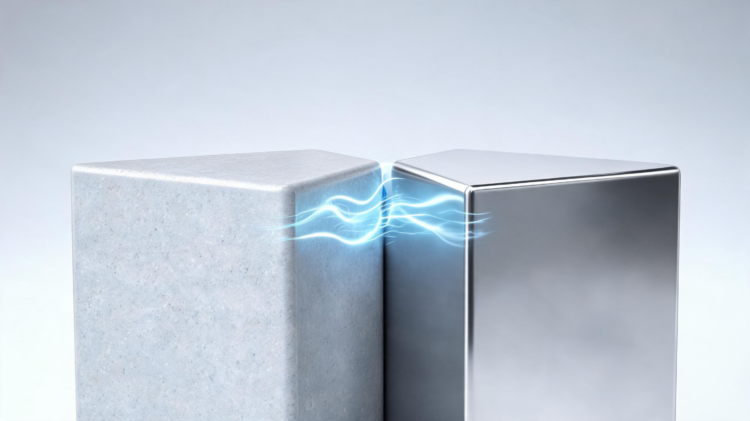
One of the most stubborn problems in advanced manufacturing has just been given a sweeping, solutions-oriented makeover. In a comprehensive review published in the journal Advanced Materials Joining, researchers led by Mengchun Fu and Tiesong Lin of the Harbin Institute of Technology have mapped out how external energy fields — lasers, electric currents, ultrasonic vibrations, microwaves and magnetic fields — can be harnessed to bond ceramics to metals, two classes of materials that nature never intended to hold hands. The work arrives at a critical moment: as aerospace components, power electronics and thermal management systems push ever closer to the limits of single-material design, the demand for joints that survive extreme heat, thermal cycling and corrosion has never been greater. The review systematically catalogues the mechanisms, process optimizations and applications of these energy-field-assisted joining technologies, offering a unified framework for a field that has grown in scattered, discipline-specific pockets, and where investigations into multi-field synergy remain scarce.
The core difficulty is deceptively simple to state and brutally hard to solve. Ceramic-metal composite components are indispensable across electronic packaging, thermal management, aerospace structures, micro-electromechanical systems sensors and photovoltaic modules, because they integrate the high-temperature resistance, corrosion resistance and mechanical strength of ceramics with the toughness, conductivity and machinability of metals. But their coefficients of thermal expansion differ dramatically. Heat a joined ceramic-metal part and the two sides expand at different rates, generating residual stresses during thermal cycling that crack the joint. On top of that, molten metals barely wet ceramic surfaces, inhibiting intimate contact and sufficient bonding, and uncontrolled interfacial reactions can spawn brittle intermetallic phases or oxide layers that act as built-in fracture sites. Conventional brazing and diffusion bonding struggle to fully tame these problems, frequently leaving behind pores, cracks and incomplete fusion that impair long-term reliability. The promise of energy-field-assisted joining is that precisely delivered external energy — light, current, sound, microwaves or magnetic force — can attack each failure mode at its physical root, either by localizing heat, activating the interface chemically, or mechanically disrupting the oxide films that block bonding, thereby reconciling the trade-off between joining efficiency and joint quality.
Laser-assisted joining emerges in the review as the most technologically mature of the single-field approaches, and the details are striking. Femtosecond and picosecond pulses deliver such intense, transient energy that they drive atomic-scale interdiffusion and the formation of entirely new phases at the interface. In one study cited by the authors, molecular dynamics simulation of femtosecond laser irradiation at an aluminum–fused silica interface showed local transient temperatures of roughly 10,000 K and pressures near 20 gigapascals, driving large numbers of aluminum atoms into the quartz matrix, expanding the mixing zone and forming atomic bonds. That degree of mixing was quantified directly: the intermixing length of aluminum and fused silica in the weld reached about 75 micrometers, while in quartz glass-aluminum welding with a pre-deposited chromium oxide film the fusion zone narrowed to just 3 micrometers, supported by key interface phases such as (Si, Al)2Cr. When femtosecond lasers created a mechanical pinning structure connecting Al6082 aluminum alloy to SiO2, the resulting hybrid of mechanical interlocking and chemical adhesion produced joints with shear strengths exceeding 100 megapascals. In MgAl2O4-to-Ti6Al4V bonding, the ultra-high peak power of the femtosecond laser promoted interfacial mixing and revealed a newly discovered Ti6O phase that directly improved joint integrity.
Yet the laser story is one of trade-offs as much as triumphs. The review documents how parameter tuning — laser power, scanning speed, defocus and pulse characteristics — sits on a knife’s edge: sufficient energy promotes the interfacial reaction, but excessively high power causes cracks or excessive spatter. In welding high-borosilicate glass to TC4 titanium alloy, a carefully chosen combination of 180 W power, 3 mm/s welding speed and zero defocus produced joints reaching 60.67 MPa thanks to the formation of Ti5Si3, which bound the interface well. Nanosecond lasers, meanwhile, trade the extreme peak intensities of ultrafast systems for gentler, diffusion-driven chemistry. A chromium interlayer introduced during nanosecond welding of silica glass to stainless steel boosted shear strength by more than 40 percent to 41.4 MPa, thanks to newly formed Fe-O-Si and Cr-Si bonds. The review also flags the persistent villain of silicon carbide-aluminum systems: brittle aluminum carbide, Al4C3, which seeds cracks but can be suppressed by high-power, high-speed parameters or by alloying additions of zirconium that convert the harmful phase into fine, benign carbides.
If lasers represent the high-energy extreme, electric-field-assisted joining occupies the opposite, elegant end of the spectrum. The technique descends from anodic bonding, in which a DC voltage of around 500 volts applied at moderate temperature drives sodium and potassium ions out of glass, leaving a charge-depleted zone that electrostatically presses the surfaces together and enables chemical bonding. Extending the principle to ceramics, the review shows that field-induced ion migration, polarization and electrostatic attraction can raise the shear strength of alumina-titanium diffusion joints by 50.2 percent compared with joints made without a field. Even more remarkable is flash joining, where an electric field above a critical threshold bonds ceramics to metals within seconds. In the Cu–5YSZ system, oxygen vacancies created by electrochemical reactions allow copper and zirconium atoms to interdiffuse, producing a sound joint at 753 °C in just three minutes. Crucially, the bonding is directional — it only works when the field points from ceramic to metal — and reversing the field can deliberately debond the joint, opening the door to reversible, on-demand assembly of zirconia-nickel superalloy structures completed in a single second at 800 °C.
Ultrasonic energy fields attack the wettability problem with pure mechanics. High-frequency vibration first fractures the oxide layer through micro-cracking, then grinds and expels the fragments outward in a self-cleaning process that eliminates the need for any surface pretreatment. Studies cited in the review show that removing a 50-nanometer oxide film can raise aluminum-glass joint strength by two to three times. Once clean atomic contact is established, ultrasonic energy drives element diffusion and genuine chemical bonding — Auger electron spectroscopy confirmed that a mere 1.5 seconds of excitation forms Al-O bonds at an aluminum-alumina interface, and in highly compatible aluminum-glass systems the room-temperature bond completes in just 0.4 seconds. Ultrasonic-assisted brazing adds acoustic cavitation in the molten filler, whose micro-jets break oxides on both base metal and solder, dramatically accelerating wetting. In electromagnetic ultrasonic brazing, capillary filling of Al-12Si solder reached an impressive 12.21 millimeters, while tin-zinc solder on silicon carbide — normally a wettability nightmare — achieved spreading radii of 12.4 to 14.1 millimeters under the combined action of Lorentz forces and acoustic streaming.
Microwave and magnetic fields bring their own distinctive physics to the table. Microwaves heat volumetrically from within rather than conducting heat inward from the surface, allowing ceramics to reach joining temperatures within minutes at power levels as low as 100 watts, and enabling selective heating and microstructural control. In microwave hybrid joining with nickel-coated tin solder paste, joint shear strength climbed to 43.11 MPa — a 45.49 percent improvement over conventional reflow soldering — by exploiting interface polarization to redistribute electromagnetic energy precisely where it is needed. Magnetic fields, acting through Lorentz forces on molten metal, suppress the keyhole instabilities and porosity that plague laser welding: a modest 15-millitesla field concentrated energy at the pool bottom, reduced plasma plume intensity and evened out the temperature gradient during cooling. Pulsed magnetic fields even strengthen solid joints directly — a magnetoplastic effect in alumina-aluminum composites raised tensile strength by 20.7 percent to 532 MPa through dislocation accumulation triggered by electron spin-state transitions.
Perhaps the most forward-looking section of the review concerns hybrid fields, where two or more energy sources are coupled to cover each other’s weaknesses. The ultrasonic-electric combination is the most mature: Joule heating and plasma discharge lower the cavitation threshold of the ultrasound while ultrasonic vibration homogenizes the current distribution. When Sn-0.7Cu solder was clad onto ADC12 aluminum alloy under coupled fields, a single second of treatment produced a 98.72 percent cladding rate and 16.57 MPa shear strength — gains of 43.11 percent and 279.17 percent over ultrasonic processing alone. Laser-magnetic coupling tames the melt pool during precision welding, while magneto-ultrasonic brazing pushes capillary filling to record lengths through alternating Lorentz forces and acoustic pressure. The authors are candid that many of these synergies remain incompletely understood at the quantitative level, and they call for high-fidelity multiphysics simulation frameworks validated by in situ techniques such as synchrotron diffraction and high-speed imaging.
Looking ahead, the Harbin team sketches a roadmap that reads like a blueprint for the next decade of smart manufacturing: data-driven optimization of interlayer and filler design using machine learning, adaptive closed-loop control of multi-field parameters, modular and affordable equipment, and functionalized interfaces engineered for self-healing, enhanced conductivity or corrosion resistance. The applications stretch from third-generation semiconductor packaging — where pulsed laser welding already achieves leak rates as low as 5.2 × 10⁻¹⁰ Pa·m³/s with 278 MPa shear strength — to diamond saw blades with 1200 MPa tooth strength, fusion reactor divertor components requiring copper-tungsten gradient joints, and biomedical implants built from piezoelectric ceramic-titanium scaffolds. Tool manufacturing and electronic packaging, the review notes, are already benefiting from laser-assisted processes that minimize heat-affected zones while promoting atomic diffusion and phase formation. What was once a catalogue of disconnected laboratory tricks is now, thanks to this synthesis, a coherent engineering discipline with identifiable mechanisms, quantified performance benchmarks and a clear trajectory toward reliable ceramic-metal components in the most demanding environments humans can construct.
The review, published open access as volume 1, article 14 of Advanced Materials Joining, ultimately delivers more than a summary of techniques. By establishing a comprehensive framework linking bonding mechanisms, process optimization strategies, filler and interlayer designs, and engineering applications across diverse material systems, it highlights how energy-field-assisted technologies effectively mitigate residual stresses, improve wettability and suppress detrimental interfacial reactions. For engineers selecting among laser, electric, ultrasonic, microwave, magnetic or hybrid approaches, the message is that the choice of energy field should be dictated by the dominant failure mode of the joint — thermal mismatch, poor wetting, or brittle phase formation — and that combining fields, rather than intensifying a single one, is increasingly the path to joints that survive thermal cycling, corrosion and mechanical shock in aerospace, electronics and energy systems.
Subject of Research: Energy field-assisted technology for ceramic/metal joining: a review
Article Title: Energy field-assisted technology for ceramic/metal joining: a review
Article References: Fu, M., Lin, P., Fu, W., Li, Y., Dong, G., Liu, H., Zhao, Y., Yang, B., He, P., & Lin, T. (2026). Energy field-assisted technology for ceramic/metal joining: a review. Advanced Materials Joining, 1(1), Article 14. https://doi.org/10.1007/s44500-026-00014-z
Image Credits: AI Generated
DOI: 10.1007/s44500-026-00014-z
Keywords: Energy, field-assisted, technology, ceramic, metal, joining, review, scientific research
Cite Scienmag News
APA MLA Chicago
Denise Maddox. (September 10, 2026). Energy field-assisted technology for ceramic/metal joining: a review. Scienmag. https://scienmag.com/energy-field-assisted-technology-for-ceramic-metal-joining-a-review/
Denise Maddox. “Energy field-assisted technology for ceramic/metal joining: a review.” Scienmag, 10 September 2026, https://scienmag.com/energy-field-assisted-technology-for-ceramic-metal-joining-a-review/. Accessed 10 September 2026.
Denise Maddox. “Energy field-assisted technology for ceramic/metal joining: a review.” Scienmag. September 10, 2026. https://scienmag.com/energy-field-assisted-technology-for-ceramic-metal-joining-a-review/
Copy citation Download RIS
Tags: aerospace component manufacturingceramicCeramic-metal joining techniqueselectric current-based bonding methodsenergyenergy field-assisted manufacturingfield-assistedhigh-temperature resistant joint designjoininglaser welding of ceramics and metalsmagnetic field applications in material joiningmetalmicrowave-assisted ceramic-metal bondingmulti-field synergy in material joining processespower electronics thermal managementreviewScientific ResearchTechnologythermal cycling and corrosion-resistant jointsultrasonic vibration for advanced material joining