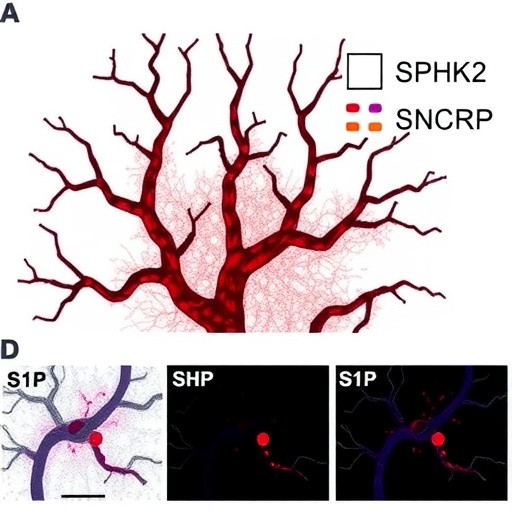
Scientists in China have uncovered a previously hidden molecular pathway that connects cholesterol metabolism to the aging of blood vessels, a discovery that could reshape how researchers approach vascular aging and the diseases that accompany it. The new study, published in the journal Biogerontology, reveals that a lipid-processing gene called DHCR24 governs the senescence of endothelial cells, the thin layer of cells lining every blood vessel in the body, through a signaling axis built around the potent lipid messenger sphingosine-1-phosphate, commonly abbreviated S1P.
Endothelial cells are far more than a passive lining. They regulate vascular tone, control the traffic of immune cells and molecules between blood and tissue, and maintain the anti-inflammatory, anti-clotting properties of the vessel wall. When these cells enter senescence, a state of irreversible growth arrest accompanied by dysfunction and the secretion of inflammatory factors, arteries stiffen, blood pressure rises, and the risk of heart attack, stroke and other age-related cardiovascular conditions climbs sharply. Understanding what pushes endothelial cells into senescence has therefore become a central goal of geroscience, the field that seeks to target aging itself as a treatable process.
The research team, led by Wukaiyang Liang and Jinhua Yan of Tongji Hospital at Huazhong University of Science and Technology in Wuhan, working with senior authors Zhen Yang and Cuntai Zhang, focused on DHCR24, an enzyme that catalyzes the final step of cholesterol biosynthesis by converting the sterol intermediate desmosterol into cholesterol. Earlier work from the same laboratory had shown that insufficient DHCR24 promotes endothelial senescence and vascular dysfunction by suppressing caveolin-1/ERK signaling. What remained unclear was how a gene best known for lipid metabolism communicates with the cellular machinery of aging. The new study supplies the missing link: the SPHK2/SPNS2-S1P axis.
To dissect this connection, the researchers used two complementary experimental systems. The first was a mouse model in which DHCR24 was deleted specifically in endothelial cells, allowing the team to examine the consequences of losing the gene in the vasculature without confounding effects elsewhere in the body. The second was a culture system of human umbilical vein endothelial cells driven into replicative senescence, the form of cellular aging that accumulates as cells divide repeatedly over time. Across both systems, a consistent pattern emerged: when DHCR24 was depleted, intracellular levels of sphingosine-1-phosphate fell significantly.
S1P is not an obscure molecule. It is one of the most studied bioactive sphingolipids, orchestrating processes ranging from immune cell trafficking to vascular barrier integrity and endothelial cell survival. Its intracellular concentration reflects a tug-of-war between synthesis and export, and it is precisely at these two points that DHCR24 exerts its influence. The team found that loss of DHCR24 downregulated sphingosine kinase 2, or SPHK2, the enzyme responsible for phosphorylating sphingosine to generate S1P. At the same time, DHCR24 loss upregulated SPNS2, a transporter that pumps S1P out of the cell. The combined effect was a double blow: less S1P was being made, and what little remained was being exported faster, draining the intracellular pool of this survival-promoting lipid.
The mechanistic architecture of this axis became clear through a series of gain- and loss-of-function experiments. When the researchers overexpressed SPHK2 in DHCR24-deficient endothelial cells, the senescence phenotypes were rescued, demonstrating that restoring S1P synthesis alone is sufficient to counteract the aging program triggered by DHCR24 loss. Conversely, knocking down SPHK2 in otherwise healthy cells reproduced the damage, inducing senescence markers and, notably, driving up SPNS2 expression, mirroring what happens when DHCR24 is absent. This showed that SPHK2 sits upstream of SPNS2 in the pathway and that reduced S1P production itself promotes the transporter upregulation that further depletes the cell.
Perhaps most striking from a therapeutic standpoint, the team showed that pharmacological inhibition of SPNS2 with a compound known as 16d could block the senescence cascade even when SPHK2 was knocked down. Treatment with 16d attenuated the increases in p16 and p21, two canonical senescence-driving cell cycle inhibitors, and reduced senescence-associated beta-galactosidase activity, a classic histochemical marker of senescent cells. Crucially, the drug also restored expression of endothelial nitric oxide synthase, or eNOS, and returned nitric oxide production to healthier levels. Nitric oxide is the master relaxing factor of blood vessels; its loss is a hallmark of endothelial dysfunction and a key contributor to hypertension and atherosclerosis. The finding that blocking a lipid transporter can revive NO output in senescing cells suggests a concrete pharmaceutical entry point into the aging vasculature.
The animal experiments added an in vivo dimension to the story. Endothelial-specific DHCR24 knockout mice displayed elevated levels of circulating S1P, consistent with the increased export of intracellular S1P through upregulated SPNS2. This observation transforms S1P from a purely intracellular variable into a measurable biomarker detectable in blood plasma. The team went further, examining the human relevance of the finding. In human subjects, plasma S1P levels were positively correlated with pulse wave velocity, a clinical measure of arterial stiffness and one of the most robust indicators of vascular aging. Elevated pulse wave velocity predicts cardiovascular events independently of traditional risk factors, and the correlation between plasma S1P and arterial stiffening suggests that the mechanism uncovered in mice and cultured cells may operate in living humans.
The significance of this work lies partly in its unification of two fields that have often been studied in isolation. Cholesterol metabolism has long been central to cardiovascular medicine, most famously through statin drugs that lower LDL cholesterol. Sphingolipid signaling, meanwhile, has generated its own pharmacological success stories, most visibly in fingolimod, a drug that acts on S1P receptors and is used to treat multiple sclerosis. By demonstrating that a cholesterol synthesis enzyme controls the synthesis and export of a sphingolipid messenger in endothelial cells, the study reveals a regulatory bridge between sterol and sphingolipid metabolism with direct consequences for cellular aging. It adds to a growing recognition that lipids are not merely structural components or energy stores but active regulators of the senescence program, and that manipulating lipid flux may offer new ways to keep tissues young.
There are also important nuances. S1P is a molecule with context-dependent effects: inside the cell it tends to promote survival and stress resistance, in part through interactions with telomerase and histone acetylation machinery, whereas extracellular S1P engages five distinct G-protein-coupled receptors with sometimes opposing vascular effects. The finding that DHCR24 knockout raises circulating S1P while depleting intracellular S1P underscores this spatial complexity, and it cautions against naive interpretations of plasma S1P measurements. The positive correlation between plasma S1P and pulse wave velocity may reflect a compensatory export of S1P from stressed, senescing endothelium rather than a direct role for extracellular S1P in stiffening arteries, a question that will require further investigation.
The study also situates DHCR24 within a broader emerging picture of vascular aging biology. Other recent work has shown that SPNS2 deficiency itself can drive endothelial senescence through mitochondrial dysfunction, and that age-related insufficiency of vascular growth factors such as VEGF contributes to systemic aging. The new findings weave DHCR24 into this network, positioning the SPHK2/SPNS2-S1P axis as a conduit through which sterol metabolism, sphingolipid signaling and the endothelial senescence program converge. For the geroscience community, this kind of mechanistic convergence is valuable because it identifies nodes where a single intervention might affect multiple upstream drivers of aging.
Translational implications are already visible on the horizon. If the pathway holds up in further studies, SPNS2 inhibitors such as 16d, which were originally developed as research tools and are known to be active in vivo, could be repurposed or refined as senotherapeutic agents aimed at preserving endothelial function in aging arteries. Alternatively, strategies to boost SPHK2 activity or intracellular S1P production might achieve similar protection. Plasma S1P, meanwhile, could be developed as a biomarker of endothelial senescence burden, potentially enabling earlier identification of patients whose arteries are aging faster than their chronological years.
The authors emphasize that the work was supported by the National Natural Science Foundation of China and involved collaboration across the Department of Geriatrics and the Key Laboratory of Vascular Aging at Tongji Hospital. As populations worldwide grow older, the burden of vascular aging, manifested as hypertension, atherosclerosis, heart failure and cognitive decline linked to poor brain blood flow, is set to intensify. Pathways like the DHCR24-SPHK2/SPNS2-S1P axis offer something the field has long sought: a specific, druggable molecular mechanism that connects measurable metabolic states to the cellular aging of the vessel wall. The road from mouse models and cultured cells to human therapies is long, but this study provides both a target and a biomarker, and in doing so it brings the goal of keeping aging arteries functionally young a measurable step closer.
Subject of Research: The regulation of vascular endothelial cell senescence by the cholesterol synthesis gene DHCR24 through the SPHK2/SPNS2-sphingosine-1-phosphate (S1P) axis, in mice and human endothelial cells.
Subject of Research: Medicine
Article Title: DHCR24 regulates endothelial senescence through the SPHK2/SPNS2-S1P axis
Article References: Liang, W., Yan, J., Li, H., Nie, H., Huang, J., Ji, T., Wan, Z., Zhang, Y., Huang, Y., Zhang, L., Ruan, L., Yang, Z., & Zhang, C. (2026). DHCR24 regulates endothelial senescence through the SPHK2/SPNS2-S1P axis. Biogerontology, 27(5), Article 159. https://doi.org/10.1007/s10522-026-10505-1
Image Credits: AI Generated
DOI: 10.1007/s10522-026-10505-1
Keywords: DHCR24, sphingosine-1-phosphate, SPHK2, SPNS2, endothelial cell, senescence, vascular aging, endothelial nitric oxide synthase, arterial stiffness, geroscience
Cite Scienmag News
APA MLA Chicago
Beatrice Stafford. (September 8, 2026). DHCR24 controls endothelial cell aging via the SPHK2/SPNS2-S1P pathway. Scienmag. https://scienmag.com/dhcr24-controls-endothelial-cell-aging-via-the-sphk2-spns2-s1p-pathway/
Beatrice Stafford. “DHCR24 controls endothelial cell aging via the SPHK2/SPNS2-S1P pathway.” Scienmag, 8 September 2026, https://scienmag.com/dhcr24-controls-endothelial-cell-aging-via-the-sphk2-spns2-s1p-pathway/. Accessed 8 September 2026.
Beatrice Stafford. “DHCR24 controls endothelial cell aging via the SPHK2/SPNS2-S1P pathway.” Scienmag. September 8, 2026. https://scienmag.com/dhcr24-controls-endothelial-cell-aging-via-the-sphk2-spns2-s1p-pathway/
Copy citation Download RIS
Tags: aging-related cardiovascular diseasescholesterol metabolism and blood vessel agingcholesterol processing genes and blood vessel agingcholesterol-related molecular pathways in blood vesselsDHCR24 cholesterol metabolismDHCR24 gene and vascular senescenceendothelial cell agingendothelial cell dysfunction and cardiovascular diseasesendothelial cell function in blood vesselsendothelial cell senescencegeroscience and cardiovascular aginggeroscience and vascular healthlipid messenger S1P in vascular healthlipid-processing genes in vascular healthmolecular mechanisms of endothelial cell senescencemolecular pathways of vascular dysfunctionregulation of blood vessel inflammationsphingosine-1-phosphate signaling pathwaySPHK2/SPNS2-S1P pathway in vascular agingSPHK2/SPNS2-S1P signaling pathwaytargeting vascular aging through lipid signalingvascular aging mechanismsvascular inflammation and aging