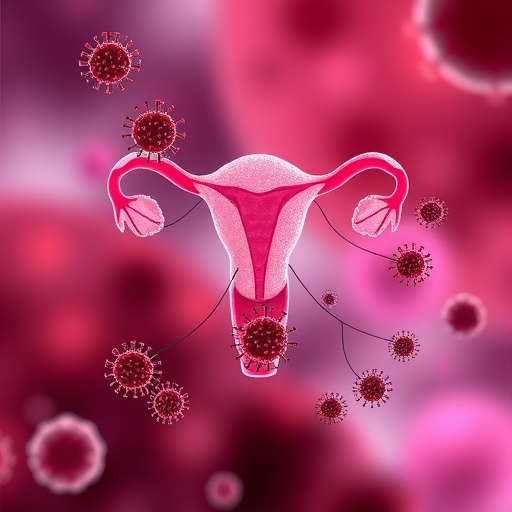
Ovulation has long been described as a rupture, a brief and violent moment when a mature follicle bursts open to release an egg. But a new review published in the Journal of Ovarian Research argues that this familiar picture is radically incomplete. Drawing on decades of biochemical studies and the latest single-cell genomic data, researchers at the University of Kentucky College of Medicine, together with collaborators in Sweden and at a private fertility center, present a unified model in which the immune system is not a bystander to ovulation but an active, choreographed participant in it. The work, led by corresponding author Yohan Choi with co-authors including Ye Jin Lee, Thomas E Curry, Mats Brännström, James W Akin and Misung Jo, synthesizes evidence that leukocytes streaming into the preovulatory follicle produce precisely timed molecular signals that help drive extracellular matrix breakdown, cumulus expansion, granulosa cell differentiation and the transformation of the ruptured follicle into the progesterone-secreting corpus luteum.
The central premise of the review is not entirely new. For decades, scientists have noted that ovulation looks remarkably like a localized inflammatory reaction. The luteinizing hormone (LH) surge, the endocrine trigger that sets ovulation in motion, induces an influx of white blood cells into the follicle, the production of inflammatory cytokines, the synthesis of prostaglandins, and the wholesale remodeling of the extracellular matrix (ECM) that holds the follicular wall together. Early human studies, based on analyzing the composition of follicular fluid aspirated during IVF procedures and on culturing granulosa cells in the laboratory, demonstrated that immune-associated mediators are abundant in the periovulatory follicle and can modulate steroidogenesis, prostaglandin production and tissue remodeling. What those earlier approaches could not answer was the question of cellular attribution: which immune cells, exactly, were producing which signals, and when.
That gap is precisely what the new integration of single-cell RNA sequencing (scRNA-seq) data begins to close. By profiling gene expression in individual cells recovered from human follicular aspirates, researchers have now identified a strikingly heterogeneous population of leukocytes within the follicle. These include distinct subsets of macrophages, dendritic cells, natural killer cells, T lymphocytes, B lymphocytes and neutrophils, each carrying its own transcriptional signature. Crucially, the review points out that these cells collectively express a molecular toolkit that overlaps almost completely with the mediators previously measured in follicular fluid: cytokines and chemokines that coordinate the inflammatory response, growth factors and angiogenic mediators that support tissue repair and new blood vessel formation, prostaglandin biosynthetic enzymes that amplify the ovulatory cascade, and ECM-regulatory factors that soften and degrade the follicular wall in preparation for rupture. In other words, the mysterious sources of the follicle’s inflammatory brew can now be named.
The temporal dimension of this crosstalk is one of the review’s key contributions. Rather than treating the immune infiltrate as a uniform event, the authors assemble a temporally resolved model in which specific leukocyte populations appear and act at defined stages of the ovulatory process. Neutrophils, typically the first responders of the innate immune system, arrive early and contribute proteases and other ECM-degrading enzymes that weaken the follicular apex. Macrophages, with their repertoire of cytokines, growth factors and matrix-remodeling enzymes, appear to participate both in the inflammatory phase and in the subsequent cleanup and rebuilding that follows rupture. Dendritic cells, natural killer cells and lymphocytes add layers of immune regulation and communication that may fine-tune the balance between tissue destruction and tissue repair. By attributing each mediator to a cellular source and placing these sources on a timeline, the model transforms ovulation from a vague “inflammation-like process” into a structured, cell-by-cell dialogue between endocrine commands and immune execution.
The downstream consequences of this dialogue are far-reaching. The review discusses how leukocyte-derived signals may contribute to cumulus expansion, the process in which the cumulus cells surrounding the egg secrete a hyaluronic acid-rich matrix that is essential for fertilization. Immune mediators may also influence granulosa cell differentiation and luteinization, the remarkable transformation in which the post-rupture follicle reprograms itself into the corpus luteum, a transient endocrine gland that produces the progesterone required to sustain an early pregnancy. Prostaglandins, long known to be indispensable for follicular rupture, are now understood to be produced not only by ovarian somatic cells but also by infiltrating leukocytes equipped with the full prostaglandin biosynthetic machinery. Similarly, the angiogenic factors supplied by macrophages and other immune cells may be critical for vascularizing the nascent corpus luteum, one of the most rapid angiogenic events in the adult body.
The authors are careful about the limits of the current evidence. Most mechanistic insights in humans, they note, derive from in vitro models using granulosa or granulosa-lutein cells, and from association-based analyses correlating follicular fluid composition with clinical outcomes. Human ovulation cannot be directly observed in real time within the ovary, and the ethical and technical barriers to sampling the follicle at precise periovulatory moments are formidable. Much of what is known about functional causation, as opposed to correlation, comes from animal studies that may not translate perfectly to human biology. The review therefore positions itself as a synthesis rather than a definitive mechanistic proof: the convergence of descriptive biochemistry, functional in vitro experiments and cell-specific transcriptomic profiling supports, but does not yet fully establish, the concept that leukocytes are indispensable participants in the human ovulatory cascade.
Even so, the clinical implications are considerable. Disruptions in the immune-endocrine crosstalk described in the review could plausibly contribute to ovulatory dysfunction, diminished ovarian reserve, poor oocyte quality, failed luteinization, luteal phase defects and complications of assisted reproduction. Patients undergoing IVF routinely have their follicular fluid and cumulus cells handled in the laboratory, offering a practical window into the immune composition of the periovulatory environment. If specific leukocyte subsets or their secreted mediators prove to be reliable predictors of oocyte quality or IVF success, immune profiling of follicular aspirates could eventually become a diagnostic tool in fertility medicine. Conversely, therapeutic modulation of inflammatory pathways might one day be used to improve ovulatory outcomes, though the authors stress that such applications remain speculative until the underlying biology is more completely mapped.
The path forward, according to the review, requires methodological innovation on several fronts. Time-resolved sampling of the human follicle across the periovulatory window would allow researchers to capture the dynamic succession of immune cell arrivals and mediator release. Spatial transcriptomic mapping, which preserves information about where cells are located within the tissue, would reveal whether particular leukocyte populations cluster at the follicular apex destined to rupture, or along the vascularized theca layers. Functional interrogation, using ex vivo follicle culture systems and carefully designed perturbation experiments, would be needed to move from correlation to causation, testing whether depleting or modulating specific immune subsets alters follicular rupture, cumulus expansion or luteinization. Combining these approaches, the authors argue, will be essential to define how immune-derived signals regulate the ovulatory process in vivo and how they shape clinical reproductive outcomes.
What emerges from this synthesis is a striking reframing of one of biology’s most fundamental events. Ovulation is not simply an endocrine command executed by ovarian cells; it is a cooperative venture in which hormone-sensing somatic cells and an army of immigrant immune cells jointly dismantle and rebuild a complex structure within a matter of hours. The follicle, in this view, is a transient immunological organ, assembling its own inflammatory workforce on demand and directing it with remarkable precision. The review’s integration of old biochemical data with new single-cell atlases gives that concept its strongest empirical foundation yet, and sets the stage for a new generation of studies into how the immune system shapes fertility, and how fertility medicine might in turn learn to work with, rather than around, the immune cells that stand ready at every ovulatory threshold.
The article is published open access, allowing researchers and clinicians worldwide to examine the full model and the evidence behind it. Its authors, funded in part by the Eunice Kennedy Shriver National Institute of Child Health and Human Development through NIH grants R01HD115554, R03HD109497 and R01HD096077, span institutions on both sides of the Atlantic, reflecting the international character of modern reproductive science. As single-cell technologies continue to mature and become more affordable, the kind of cell-source-attributed, temporally resolved biology championed in this review is likely to become the standard framework for understanding not only ovulation but a broad range of cyclic tissue remodeling events throughout the body.
Subject of Research: Immune-endocrine crosstalk during human ovulation, integrating biochemical studies and single-cell RNA sequencing data to define the roles of leukocyte populations in follicular rupture, cumulus expansion, granulosa cell differentiation and luteinization
Subject of Research: Medicine
Article Title: Dynamics of immune-endocrine crosstalk in human ovulation
Article References: Choi, Y., Lee, Y. J., Curry, T. E., Brännström, M., Akin, J. W., & Jo, M. (2026). Dynamics of immune-endocrine crosstalk in human ovulation. Journal of Ovarian Research. https://doi.org/10.1186/s13048-026-02250-3
Image Credits: AI Generated
DOI: 10.1186/s13048-026-02250-3
Keywords: Ovulation, Reproductive Immunology, Luteinization, Immune-Endocrine Crosstalk, Dynamic Immune Cells, Inflammation, Regeneration, Single-cell RNA sequencing, Follicular remodeling, Prostaglandins, Extracellular matrix, Corpus luteum
Cite Scienmag News
APA MLA Chicago
Juliet Wilcox. (September 7, 2026). How immune and endocrine signals interact during human ovulation. Scienmag. https://scienmag.com/how-immune-and-endocrine-signals-interact-during-human-ovulation/
Juliet Wilcox. “How immune and endocrine signals interact during human ovulation.” Scienmag, 7 September 2026, https://scienmag.com/how-immune-and-endocrine-signals-interact-during-human-ovulation/. Accessed 7 September 2026.
Juliet Wilcox. “How immune and endocrine signals interact during human ovulation.” Scienmag. September 7, 2026. https://scienmag.com/how-immune-and-endocrine-signals-interact-during-human-ovulation/
Copy citation Download RIS
Tags: biochemical mechanisms of ovulationcorpus luteum formationcumulus expansion and granulosa cell differentiationendocrine signals in ovulationextracellular matrix breakdown in ovulationgranulosa cell differentiationhormonal signaling in ovulationimmune systemimmune system role in follicle ruptureimmune-endocrine interaction during ovulationinflammation and ovulationinflammatory response in ovulationleukocyte involvement in ovarian follicleLH hormone surge effectsLH surge and immune responsemolecular signaling in ovulationmolecular signals in ovulation processrole of leukocytes in follicle rupturesingle-cell genomic analysis of ovulationsingle-cell genomics in reproductive biologytransformation of follicle into corpus luteum