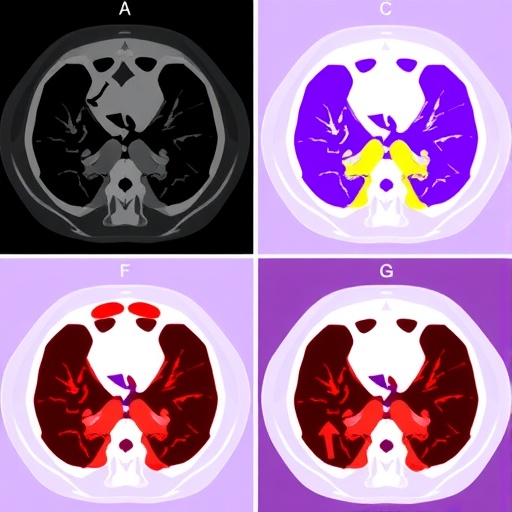
In a finding that could reshape how doctors track one of the most stubborn forms of thyroid cancer, researchers in China have demonstrated that a next-generation molecular imaging tracer detects far more metastatic lesions than the current leading agent. The prospective comparative study, published in the European Journal of Nuclear Medicine and Molecular Imaging, directly pitted a covalent targeted radioligand called CTR-FAPI against the widely used FAPI-04 tracer in patients whose differentiated thyroid cancer had stopped responding to radioactive iodine, and the results were strikingly one-sided.
The study enrolled 40 patients with radioiodine-refractory differentiated thyroid cancer, often abbreviated RAIR-DTC, all of whom had distant metastases. Each participant underwent both [⁶⁸Ga]Ga-FAPI-04 PET/CT and [⁶⁸Ga]Ga-CTR-FAPI PET/CT in sequential examinations separated by 24 to 48 hours. Two experienced nuclear medicine physicians, blinded to which tracer produced which image set, independently assessed lesion visibility, while semi-quantitative analysis measured the maximum standardized uptake value, or SUVmax, and the tumor-to-background ratio (TBR) of lesions across different anatomical regions. A combination of conventional imaging, histopathology where feasible, and long-term clinico-radiological follow-up served as the reference standard against which both tracers were judged.
The headline number is difficult to overstate. Across the cohort, the two scans combined identified 769 metastatic lesions. The new covalent tracer detected 99.2 percent of them, while FAPI-04 managed 62.4 percent. The gap was widest in the lungs, the most common site of distant spread in this disease: CTR-FAPI PET/CT picked up 99.4 percent of lung metastases compared with just 37.5 percent for FAPI-04. Significant advantages were also recorded for pleural and peritoneal deposits (99.0 percent versus 76.4 percent), lymph node metastases (99.0 percent versus 81.7 percent), and bone metastases (100 percent versus 82.9 percent). At the patient level, CTR-FAPI provided superior visual detection of lesion distribution in 17.5 percent of participants, a statistically significant difference.
The chemistry behind this performance advantage lies in the “covalent” element of the new tracer’s design. FAPI-based imaging agents target fibroblast activation protein, or FAP, an enzyme abundantly expressed by cancer-associated fibroblasts in the stroma that surrounds and supports many tumors. Conventional FAPI ligands bind reversibly, meaning they can drift off their target and wash back into the bloodstream, limiting how long the signal lingers in tumor tissue. The CTR-FAPI ligand incorporates a linker built through sulfur(VI)-fluoride exchange, or SuFEx, chemistry, enabling the molecule to form a durable covalent bond with FAP once it docks. In preclinical animal studies, this covalent tethering translated into stronger tumor binding affinity and substantially longer retention time. The new clinical data suggest those animal findings carry over into human disease.
The semi-quantitative measurements reinforce the visual results. Median SUVmax was significantly higher with CTR-FAPI in lung metastases, 5.1 versus 3.8, and in bone metastases, 8.3 versus 3.4. Median tumor-to-background ratios were likewise significantly better for the covalent tracer in local recurrence, 11.2 versus 8.6, and in lymph node metastases, 6.0 versus 5.1. Higher uptake means brighter signals on the PET image; higher tumor-to-background contrast means those signals stand out more cleanly against surrounding tissue. Together, these properties explain why lesions that were faint or invisible on FAPI-04 scans glowed clearly on CTR-FAPI images.
Beyond the head-to-head statistics, the covalent tracer uncovered disease that would otherwise have been missed entirely. Two of the 40 patients had metastatic lesions seen exclusively by CTR-FAPI PET/CT. The covalent agent also revealed additional cerebral and hepatic metastatic deposits and showed higher tracer uptake in shared lesions located in the brain, liver, and kidney. In fairness to the older agent, the study did note one exception: a single mediastinal soft tissue metastasis displayed a slightly higher SUVmax on FAPI-04 imaging. But such cases were rare, and the overall pattern overwhelmingly favored the covalent approach.
The clinical stakes are considerable. Differentiated thyroid cancer, which arises from follicular thyroid cells, is generally among the most curable malignancies, but a minority of patients develop tumors that lose the ability to take up radioactive iodine, the treatment that defines this disease category. Once a tumor becomes radioiodine-refractory, options narrow to kinase inhibitors such as lenvatinib and sorafenib, which carry substantial toxicity, or, increasingly, targeted radioligand therapy. In that landscape, accurate mapping of the full tumor burden is not a luxury. The number, location, and FAP-expression intensity of metastases directly determine whether a patient qualifies for FAP-targeted radionuclide therapy with agents such as lutetium-177 labeled FAPI compounds, guide dosimetry calculations, and shape expectations for response.
The study is not the first application of the covalent targeting strategy. The same research collaboration previously reported in Nature that covalent targeted radioligands potentiate radionuclide therapy, and a companion study in Cancer Discovery showed that CTR-FAPI PET enables precision management of medullary thyroid carcinoma, a different and more aggressive thyroid cancer subtype. What distinguishes the new work is that it is the first prospective comparison of CTR-FAPI and FAPI-04 in a clinical cohort of radioiodine-refractory differentiated thyroid cancer patients, providing head-to-head human evidence rather than extrapolation from animal models or retrospective series.
FAP-targeted imaging has been gaining ground across oncology precisely because it offers a window into the tumor microenvironment rather than the cancer cells themselves. Fibroblast activation protein is expressed at very low levels in most normal adult tissues but is abundant in the activated fibroblasts that constitute much of a solid tumor’s supporting architecture. This makes FAPI tracers attractive for cancers, including thyroid cancer, where glucose-based FDG PET can be insensitive, and where iodine-avid disease is by definition absent in the refractory setting. Prior studies had already established FAPI-04 as a useful agent in RAIR-DTC; the new data suggest its covalent successor may render it obsolete for this indication.
The authors, led by nuclear medicine specialists at Peking Union Medical College Hospital together with chemists at Peking University and Changping Laboratory, conclude that CTR-FAPI PET/CT enhances the comprehensive assessment of tumor burden in these patients and stimulates further research into the agent as a novel theranostic platform. The term theranostics refers to the paired use of a diagnostic imaging agent and a therapeutically labeled version of the same targeting molecule. Because the covalent tracer lingers longer in tumors, it is not merely a better camera but potentially a better delivery vehicle: the same FAP-targeting chemistry that holds gallium-68 in place for imaging could hold lutetium-177 or other therapeutic radionuclides in place to irradiate tumor cells and their supporting stroma.
Caution is warranted in interpreting a single-center study of 40 patients with an intrapatient comparison design. The imaging interval of 24 to 48 hours minimizes the chance of true disease progression between scans, and the blinded reading design strengthens the comparison, but broader multi-center validation will be needed before the covalent tracer becomes standard practice. Questions about optimal imaging time points, radiation dosimetry for a therapeutic version, manufacturing scalability, and cost remain open. The trial was registered as ChiCTR2400091757, and the work was supported by the National Natural Science Foundation of China and National High-Level Hospital Clinical Research Funding.
Still, the magnitude of the detection difference, particularly the near-total visualization of lung metastases that FAPI-04 missed almost two-thirds of the time, marks a genuine step change for a patient population with few good options. For radioiodine-refractory differentiated thyroid cancer, where every undetected lesion is a reservoir of potential progression, an imaging agent that reveals essentially the entire metastatic landscape changes what clinicians can see, and therefore what they can treat.
Subject of Research: Comparison of [⁶⁸Ga]Ga-CTR-FAPI PET/CT and [⁶⁸Ga]Ga-FAPI-04 PET/CT for lesion detection in radioiodine-refractory differentiated thyroid cancer
Subject of Research: Medicine
Article Title: [⁶⁸Ga]Ga-CTR-FAPI versus [⁶⁸Ga]Ga-FAPI-04 PET/CT for patient evaluation in radioiodine-refractory differentiated thyroid cancer: A prospective comparative study
Article References: Liu, S., Zhang, X., Li, R., Kong, Z., Cui, X.-Y., Li, Z., Shi, C., Bian, D., Zhao, Y., Li, Q., Pan, Y., Zhu, Z., Liu, Z., Liu, S., & Lin, Y. (2026). [⁶⁸Ga]Ga-CTR-FAPI versus [⁶⁸Ga]Ga-FAPI-04 PET/CT for patient evaluation in radioiodine-refractory differentiated thyroid cancer: A prospective comparative study. European Journal of Nuclear Medicine and Molecular Imaging. https://doi.org/10.1007/s00259-026-08150-4
Image Credits: AI Generated
DOI: 10.1007/s00259-026-08150-4
Keywords: radioiodine-refractory differentiated thyroid cancer, covalent targeted radioligand, fibroblast activation protein inhibitor, CTR-FAPI, FAPI-04, PET/CT, gallium-68, molecular imaging, theranostics, tumor burden, SuFEx chemistry, metastasis detection
Cite Scienmag News
APA MLA Chicago
Nathaniel Bowman. (September 7, 2026). Ga-68 CTR-FAPI outperforms FAPI-04 PET/CT in radioiodine-refractory thyroid cancer study. Scienmag. https://scienmag.com/ga-68-ctr-fapi-outperforms-fapi-04-pet-ct-in-radioiodine-refractory-thyroid-cancer-study/
Nathaniel Bowman. “Ga-68 CTR-FAPI outperforms FAPI-04 PET/CT in radioiodine-refractory thyroid cancer study.” Scienmag, 7 September 2026, https://scienmag.com/ga-68-ctr-fapi-outperforms-fapi-04-pet-ct-in-radioiodine-refractory-thyroid-cancer-study/. Accessed 7 September 2026.
Nathaniel Bowman. “Ga-68 CTR-FAPI outperforms FAPI-04 PET/CT in radioiodine-refractory thyroid cancer study.” Scienmag. September 7, 2026. https://scienmag.com/ga-68-ctr-fapi-outperforms-fapi-04-pet-ct-in-radioiodine-refractory-thyroid-cancer-study/
Copy citation Download RIS
Tags: comparison of Ga-68 FAPI tracerscovalent targeted radioligand in thyroid cancer detectiondetection of metastatic lesions in differentiated thyroid cancerevaluation of tumor-to-background ratio in thyroid cancer imagingFAPI-04 PET/CTFAPI-04 PET/CT comparisonGa-68 CTR-FAPI PET/CTGa-68 labeled FAPI PET/CT performancemetastatic lesion detection in thyroid cancermolecular imaging tracers for metastatic thyroid cancermolecular imaging tracers for thyroid cancernon-invasive imaging of RAIR-DTC metastasesnuclear medicine imagingPET/CT imaging in differentiated thyroid cancerradioiodine-refractory thyroid cancer imagingsemi-quantitative analysis in PET/CTsensitivity of new FAPI tracersensitivity of next-generation PET tracers fortargeted radioligand in thyroid cancertumor-to-background ratio in thyroid cancer imaging