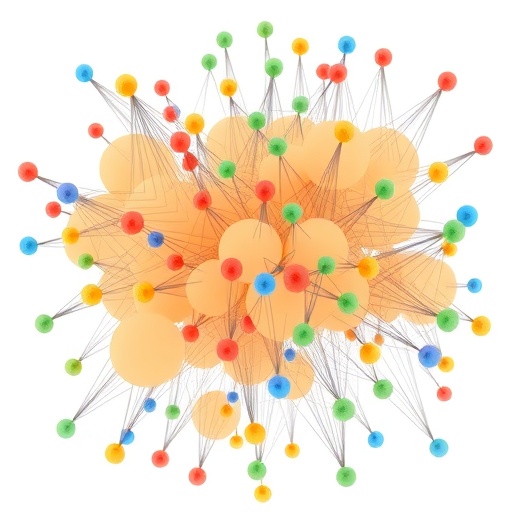
In the sprawling world of open-source software, developers rarely belong to just one team. A programmer contributing to a machine learning library may also maintain a build tool, review pull requests in a web framework, and drift between projects as priorities shift. Understanding these overlapping allegiances is central to understanding how modern software ecosystems live, breathe, and sometimes collapse. A new study published in the International Journal of Data Science and Analytics offers a powerful new lens for this problem: a multi-objective optimization framework that detects overlapping communities in software ecosystem networks with markedly better accuracy than existing methods.
The research, led by Xin Shen of the School of Information Engineering at Yancheng Institute of Technology, together with Luyu Wen, Lejie Ma, Shuyi Chen, Jikun Yang, Zhaofeng Chen, Weibin Kong, and Zhihui Li, tackles a long-standing challenge in software engineering and network science. A software ecosystem can be modeled as a complex network in which nodes represent software projects and their stakeholders, and edges capture interactions such as collaboration, dependency, or communication. Unlike many social networks where each node neatly belongs to a single cluster, software ecosystem networks are inherently overlapping: a single developer or project may sit at the intersection of several functional communities simultaneously. Capturing that reality is essential, the authors argue, because overlapping structure reveals how individuals interact across project boundaries and how the health of the whole system depends on those bridge roles.
Community detection—the task of partitioning a network into densely connected groups—has been studied intensively for two decades, with methods ranging from spectral clustering and nonnegative matrix factorization to graph neural networks and label propagation. But when nodes are allowed to belong to multiple communities, the search space explodes combinatorially, and the quality of detected structures becomes difficult to define, let alone optimize. Many existing overlapping community detection algorithms either sacrifice accuracy for speed or produce community structures that are statistically weak, meaning the groups they identify are not meaningfully denser or more coherent than random partitions. The Yancheng team’s response is to treat overlapping community detection not as a single-objective clustering problem but as a genuine multi-objective optimization task, in which two complementary quality measures must be maximized at once.
At the heart of the new method lies a carefully constructed optimization model with two objective functions tailored to the peculiarities of software ecosystems. The first is the extended kernel k-means (EKKM) criterion, which measures the internal cohesion of communities by evaluating how close each node is to the centroid of the communities it belongs to. The kernel formulation allows the algorithm to capture non-linear structure in the network’s similarity space, so that nodes connected by subtle or indirect relationships can still be grouped together when appropriate. The second objective is the extended ratio cut (ERC), a generalization of the classical ratio cut criterion from graph partitioning theory. Ratio cut penalizes partitions that sever many edges between communities while simultaneously discouraging communities that are pathologically small, striking a balance between separation and scale. By extending both criteria to handle overlapping memberships, the researchers created a fitness landscape in which good solutions must be simultaneously cohesive internally and cleanly separated externally—two goals that frequently pull in opposite directions.
Balancing competing objectives is precisely where evolutionary algorithms shine, and the team built their search engine on NSGA-II, one of the most widely used and robust multi-objective evolutionary optimization frameworks. NSGA-II evolves a population of candidate community structures over successive generations, using non-dominated sorting to preserve a diverse front of compromise solutions and crowding distance to prevent the population from collapsing onto a single trade-off point. However, plugging overlapping community detection into NSGA-II is not trivial, because the encoding of a solution—how a candidate partition is represented as a data structure—determines whether crossover and mutation can meaningfully improve it. The researchers’ key methodological innovation is a hybrid individual representation scheme that combines a character string representation with a binary representation derived from overlapping communities. In essence, the string component encodes which communities each node associates with, while the binary component flags overlapping membership, allowing a single node to be registered in more than one community without ambiguity. This dual encoding dramatically shrinks the effective search space compared to naive representations, in which every possible node-to-community assignment must be explored.
The hybrid representation would be inert without genetic operators designed to exploit it, and the authors engineered custom crossover and mutation operators that respect the structure of their encoding. Crossover recombines the community assignments of two parent solutions in a way that preserves coherent community blocks rather than shuffling nodes randomly, while mutation introduces targeted perturbations—moving a node between communities, adding it to a new community, or removing a redundant membership—that help the population escape local optima. Integrated into the NSGA-II framework, these operators enhance population evolution, steering the search toward partitions that score well on both the EKKM and ERC objectives simultaneously. The final output is not a single partition but a Pareto front of candidate structures, from which the algorithm selects solutions that best balance the competing criteria.
To evaluate their method rigorously, the team constructed six distinct networks representing real software ecosystems, using data collected from GitHub, the world’s largest platform for collaborative open-source development. GitHub’s rich activity logs—commits, issues, pull requests, reviews, and star relationships—provide a natural substrate for building ecosystem graphs in which nodes and edges reflect genuine developer and project interactions. Across these six benchmark networks, the proposed multi-objective approach consistently outperformed comparison methods, producing community structures that were both more accurate in recovering meaningful groupings and more significant in structural terms. The experiments were validated using standard nonparametric statistical testing procedures for comparing evolutionary algorithms, ensuring that the observed advantages were not artifacts of random variation in the stochastic optimization process.
The implications extend well beyond algorithm design. Software ecosystems such as those on GitHub are economic and social organisms: companies build products on top of them, volunteer maintainers sustain them, and entire technology stacks depend on their stability. When community detection can accurately map the overlapping structure of an ecosystem, project managers gain actionable intelligence. They can identify developers who serve as critical bridges between otherwise disconnected clusters—individuals whose departure could fragment collaboration networks. They can spot communities with weak internal cohesion that may benefit from targeted investment or mentorship. They can detect emerging sub-ecosystems before they formalize, and they can inform recommendation systems that suggest relevant projects to contributors based on their multi-community affinities. Previous work by several of the same authors has applied multi-objective optimization to developer cooperation analysis, dynamic community tracking, and project recommendation in time-dependent ecosystems, and the new method consolidates that line of research into a more general and more powerful tool.
The study also contributes to a broader conversation in network science about how to handle overlapping structure at scale. The literature offers maximal-clique-based evolutionary algorithms, edge-encoding genetic algorithms, fuzzy methods based on evolutionary multi-objective optimization, deep learning approaches using graph attention auto-encoders, and nonnegative matrix factorization variants, each with different trade-offs between accuracy, interpretability, and computational cost. What distinguishes the Yancheng approach is its domain-specific adaptation: rather than importing a generic algorithm, the team reformulated the objective functions and the solution representation around the actual properties of software ecosystem networks, where overlaps are not rare anomalies but the structural norm. This grounding in domain reality is likely a key reason the method outperforms more generic competitors on the GitHub-derived benchmarks.
The researchers acknowledge that challenges remain. Multi-objective evolutionary algorithms are computationally demanding, and scaling them to ecosystems with hundreds of thousands of nodes will require further engineering, perhaps drawing on network reduction techniques or parallel and decomposition-based strategies that have proven effective elsewhere. The choice of how many communities to allow, and how to select among solutions on the Pareto front, still involves judgment. Nevertheless, the framework is modular: as better kernels, cuts, or encodings emerge, they can be substituted into the same NSGA-II scaffold. The work was supported by the Science and Technology Program of Yancheng and by school-level research funding at Yancheng Institute of Technology, and the authors report no conflicts of interest.
For the millions of developers whose daily work weaves through dozens of projects, and for the organizations that depend on the invisible architecture of collaboration behind open-source software, this study offers something deceptively simple: a more truthful map. By embracing overlap rather than forcing nodes into tidy, mutually exclusive boxes, the new algorithm reflects how software is actually built—by people and projects that inevitably belong to many worlds at once. As software ecosystems continue to grow in size and strategic importance, tools like this one may become as essential to their stewardship as version control is to their construction.
Subject of Research: Overlapping community detection in software ecosystem networks using multi-objective evolutionary optimization, validated on GitHub-derived networks
Subject of Research: Technology and Engineering
Article Title: Multi-objective optimization-based overlapping community detection in software ecosystem
Article References: Shen, X., Wen, L., Ma, L., Chen, S., Yang, J., Chen, Z., Kong, W., & Li, Z. (2026). Multi-objective optimization-based overlapping community detection in software ecosystem. International Journal of Data Science and Analytics, 22(1), Article 274. https://doi.org/10.1007/s41060-026-01231-5
Image Credits: AI Generated
DOI: 10.1007/s41060-026-01231-5
Keywords: software ecosystem, overlapping community detection, multi-objective evolutionary optimization, NSGA-II, extended kernel k-means, extended ratio cut, hybrid individual representation, GitHub, complex networks, developer collaboration
Cite Scienmag News
APA MLA Chicago
Denise Maddox. (September 7, 2026). Optimization method detects overlapping communities in software ecosystems. Scienmag. https://scienmag.com/optimization-method-detects-overlapping-communities-in-software-ecosystems/
Denise Maddox. “Optimization method detects overlapping communities in software ecosystems.” Scienmag, 7 September 2026, https://scienmag.com/optimization-method-detects-overlapping-communities-in-software-ecosystems/. Accessed 7 September 2026.
Denise Maddox. “Optimization method detects overlapping communities in software ecosystems.” Scienmag. September 7, 2026. https://scienmag.com/optimization-method-detects-overlapping-communities-in-software-ecosystems/
Copy citation Download RIS
Tags: accuracy improvements in community detection algorithmsadvanced algorithms for software ecosystem analysiscommunity detection accuracy in software ecosystemscomplex network analysis in software engineeringcomplex network modeling in software engineeringdetecting overlapping developer communitiesidentifying overlapping developer communitiesidentifying stakeholder overlaps in software communitiesmulti-layered community detection methodsmulti-layered software project networksmulti-objective optimization for software ecosystemsnetwork science applications in software developmentnetwork science in open-source projectsoverlapping communities in software networksoverlapping community detection in software networkssocial network analysis in open-source projectssoftware collaboration and dependency networkssoftware collaboration network analysissoftware dependency and interaction networkssoftware ecosystem community detectionsoftware project stakeholder network modelingunderstanding software ecosystem structure and dynamics