Insomnia has become one of the most pervasive health complaints of modern life, and the clinical arsenal for treating it remains stubbornly limited. Hypnotic drugs—the mainstay of therapy—bring with them well-documented risks of dependence, tolerance, and withdrawal, prompting researchers to search for gentler, food-based alternatives. Now, a new study published in the Journal of Agriculture and Food Research suggests that an unlikely candidate may fit the bill: an anthocyanin-rich extract from mulberry fruit, which appears to restore healthy sleep patterns in mice by orchestrating changes along the gut–brain axis.
The research, led by Anyi Liu, Qian Li, Xinyi Zhong, Dongxu Xing, Fan Liu, Li Wang, and Yuxiao Zou, took an unusually comprehensive approach, weaving together behavioral monitoring, neurochemical assays, gut microbiome sequencing, serum metabolomics, and network pharmacology into a single multi-omics framework. The result is one of the most detailed mechanistic portraits yet of how a traditional food-medicine plant may influence sleep at the molecular level.
Mulberry (Morus spp.) has held official “dual-purpose” status as both food and medicine in China since 2002, and it has long been used in traditional practice to clear heat, protect the liver and kidneys, and—crucially for this study—improve sleep. Modern laboratory work has already attributed neuroprotective, antioxidant, lipid-lowering, and anti-tumor activities to the fruit. Previous studies found that mulberry fruit extract protected PC12 nerve cells from oxygen-glucose deprivation, shielded dopaminergic neurons in a Parkinson’s disease model by suppressing abnormal α-synuclein expression, and enhanced memory when given as a dietary supplement. But the molecular machinery behind its traditional use as a sleep aid had never been systematically dissected.
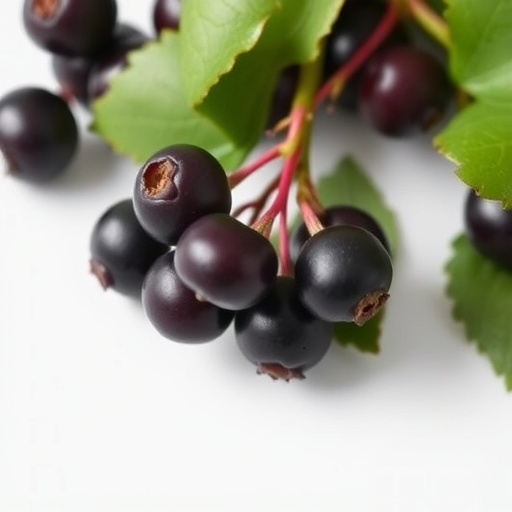
The research team focused on a mulberry fruit anthocyanin extract (MFE) whose chemical fingerprint, previously characterized by UPLC-Q-TOF-MS/MS, is dominated by two pigments: cyanidin-3-O-glucoside (C3G), present at 250 mg per gram of extract, and cyanidin-3-O-rutinoside. Together these two compounds account for more than 98 percent of the total anthocyanin content, making the extract a highly concentrated source of these deep-purple flavonoids.
To test its effects, the scientists worked with 48 SPF-grade male C57BL/6J mice, dividing them into a normal control group, an insomnia model group, a positive control group given a conventional Chinese patent sleep medicine (Anshen Bunao Oral Liquid), and an MFE treatment group. Insomnia was induced in all but the control animals through four days of intraperitoneal injection with para-chlorophenylalanine (PCPA) at 400 mg/kg—a compound that depletes serotonin and reliably produces hallmark signs of disturbed sleep. The induced symptoms were dramatic and unmistakable: disrupted circadian rhythms with markedly increased daytime activity, heightened aggression, reduced food intake, and disheveled, dull coats. Once the model was established, the treatment groups received daily oral gavage for 14 consecutive days, with the MFE group receiving 300 mg/kg of the extract suspended in saline.
The behavioral results were striking. Using a YOLO 8.0 computer-vision pipeline to quantify locomotor activity at 1, 6, and 12 hours after each dose, the team found that MFE substantially reduced the excessive daytime activity seen in the insomniac mice, pulling their activity patterns back toward normal. Perhaps even more telling, histological examination of paraffin-embedded brain sections revealed that MFE administration ameliorated hippocampal atrophy compared with the untreated model group—suggesting genuine structural protection rather than mere sedation. Body weight, though improved, did not fully recover to control levels over the two-week window.
Beneath the behavioral changes lay a convincing neurochemical story. The ratio of gamma-aminobutyric acid (GABA), the brain’s principal inhibitory neurotransmitter, to glutamate (Glu), its chief excitatory counterpart, is widely used as an objective readout of the central nervous system’s excitation–inhibition balance. In the hippocampus of insomniac mice, GABA sat at a depleted 0.33 μmol/g while glutamate ran high at 10.04 μmol/g. After two weeks of MFE treatment, GABA rose more than fivefold to 1.65 μmol/g while glutamate fell to 6.89 μmol/g—a restoration of the GABA/Glu balance that mirrors what effective sleep-promoting interventions are expected to achieve. Similar trends emerged in the hypothalamus, and serum measurements showed MFE modulating monoamine neurotransmitters including serotonin (5-HT) and norepinephrine (NE), alongside a favorable shift in inflammatory markers, with levels of the pro-inflammatory cytokines TNF-α and IL-6 declining while anti-inflammatory IL-4 rose.
The gut microbiome data added a compelling layer to the mechanism. Using full-length 16S rRNA gene sequencing on a PacBio Sequel IIe platform with circular consensus sequencing, the researchers profiled the cecal contents of the mice and found that MFE reshaped the composition of gut microbial communities. Beta-diversity comparisons via PERMANOVA and differential taxa identification through LEfSe (with an LDA score threshold greater than 2) revealed a microbial signature in the treated animals consistent with a healthier, less inflammation-prone gut environment. This finding parallels recent work showing that isoquercitrin combats atherosclerosis through microbiome-mediated metabolic modulation, and it places MFE squarely within the growing family of natural compounds whose neurological benefits travel through the gut–brain axis.
To connect the dots between microbes, metabolites, and sleep circuits, the team performed untargeted serum metabolomics using ultra-high-performance liquid chromatography coupled to Fourier transform mass spectrometry on a Thermo Fisher Exploris 240 system, scanning mass-to-charge ratios from 50 to 1200 in both positive and negative ion modes. After rigorous quality control—including the 80% rule for missing values, sum normalization, removal of variables exceeding 30% relative standard deviation in quality-control samples, and PLS-DA modeling validated by 200-permutation testing—the analysis identified significantly altered serum metabolites in the insomnia model that were partially normalized by MFE. These metabolites were then treated as pharmacodynamic biomarkers: their names were converted to SMILES chemical strings via PubChem, submitted to SwissTargetPrediction to predict human protein targets (filtering out predictions below a 0.01 probability threshold), and intersected with insomnia-related genes harvested from the GeneCards and NCBI Gene databases. Protein–protein interaction networks built in STRING at a high-confidence threshold of 0.700 and visualized in Cytoscape, followed by Gene Ontology and KEGG pathway enrichment in DAVID, converged on pathways governing neurotransmitter signaling, neuroinflammation, and circadian regulation. Key hub genes identified through this network analysis were then verified in mouse hypothalamus and hippocampus tissue by RT-qPCR using the 2−ΔΔCt method with GAPDH as the reference gene, closing the loop between computational prediction and experimental validation.
Taken together, the study sketches a coherent mechanism: anthocyanins from mulberry fruit, dominated by C3G and C3R, appear to modulate the gut microbiota, which in turn alters circulating metabolites; these metabolites converge on shared molecular targets that rebalance the GABA/glutamate equilibrium, restore monoamine neurotransmitter levels, calm neuroinflammation, and ultimately normalize sleep-related behavior. The authors emphasize that their network pharmacology framework treated the altered serum metabolites as biomarkers of MFE’s pharmacodynamic action rather than as direct active ingredients—an important conceptual distinction that guards against overinterpreting the metabolite data.
The implications are noteworthy for a field hungry for alternatives to hypnotic drugs. Because mulberry fruit is already consumed as a food across much of Asia and holds official food-medicine status in China, an anthocyanin-based extract could, in principle, be developed into a functional food or nutraceutical with a favorable safety profile—circumventing the addiction and withdrawal liabilities that limit long-term hypnotic use. The study also adds to mounting evidence that the gut–brain axis is a viable pharmacological target for sleep disorders, not just for metabolic and mood conditions.
Caveats remain, as they always do in preclinical work. The findings derive from a PCPA-induced mouse model at a single dose of extract over a two-week course, and translation to human insomnia will require dose-ranging studies, safety evaluations, and eventually controlled clinical trials. It is also not yet clear which specific microbial taxa or metabolites are indispensable to the effect, questions that future work with germ-free or microbiome-manipulated animals could resolve. Still, the multi-omics rigor on display here—from PacBio HiFi microbiome sequencing to validated qPCR confirmation of network-predicted targets—sets a high methodological bar for natural-product sleep research.
For now, the humble mulberry, a fruit prized for centuries in traditional medicine, has acquired a modern mechanistic credential. If further studies confirm that its anthocyanins can ease insomnia through the gut–brain axis, the purple berries of Morus may find a new role at the intersection of nutrition science and sleep medicine.
Subject of Research: Mulberry fruit anthocyanin extract (MFE) and its modulation of insomnia-related behavioral, neurochemical, gut microbiota, and metabolic alterations in a mouse model
Subject of Research: Agriculture
Article Title: Mulberry fruit anthocyanin extract modulates insomnia-related behavioral and neurochemical alterations via the gut–brain axis: A multi-omics and network pharmacology study
Article References: Liu, A., Li, Q., Zhong, X., Xing, D., Liu, F., Wang, L., & Zou, Y. (2026). Mulberry fruit anthocyanin extract modulates insomnia-related behavioral and neurochemical alterations via the gut–brain axis: A multi-omics and network pharmacology study. Journal of Agriculture and Food Research, 31, Article 103261. https://doi.org/10.1016/j.jafr.2026.103261
Image Credits: AI Generated
DOI: 10.1016/j.jafr.2026.103261
Keywords: mulberry fruit extract, anthocyanins, insomnia, gut–brain axis, cyanidin-3-glucoside, GABA/Glu ratio, gut microbiota, metabolomics, network pharmacology, sleep disorders
Cite Scienmag News
APA MLA Chicago
Cassandra Pierce. (September 7, 2026). Mulberry anthocyanins ease insomnia through the gut–brain axis, study shows. Scienmag. https://scienmag.com/mulberry-anthocyanins-ease-insomnia-through-the-gut-brain-axis-study-shows/
Cassandra Pierce. “Mulberry anthocyanins ease insomnia through the gut–brain axis, study shows.” Scienmag, 7 September 2026, https://scienmag.com/mulberry-anthocyanins-ease-insomnia-through-the-gut-brain-axis-study-shows/. Accessed 7 September 2026.
Cassandra Pierce. “Mulberry anthocyanins ease insomnia through the gut–brain axis, study shows.” Scienmag. September 7, 2026. https://scienmag.com/mulberry-anthocyanins-ease-insomnia-through-the-gut-brain-axis-study-shows/
Copy citation Download RIS
Tags: anthocyanin-rich extractanthocyanin-rich extractsdietary interventions for insomniafood-based insomnia treatmentfood-based sleep remediesgut microbiome and sleepgut-brain axisMulberry anthocyaninsmulti-omics approach to sleep researchmulti-omics sleep researchnatural sleep aidsneurochemical mechanisms of sleepplant-based neuroprotective compoundsplant-based sleep aidsserum metabolomics and sleepserum metabolomics in sleep studiessleep regulationtraditional Chinese medicinetraditional Chinese medicine and sleep healthtraditional medicine for insomnia