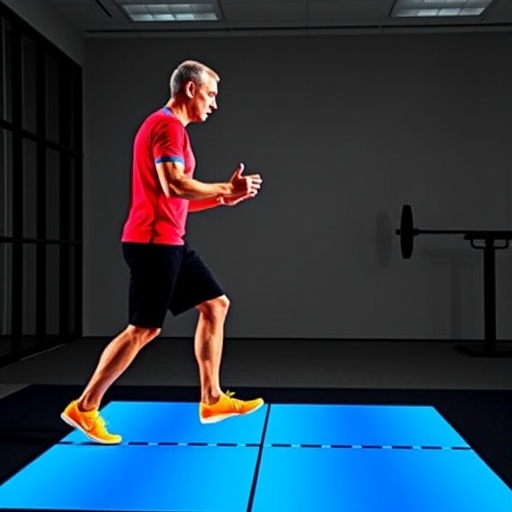
Researchers have developed a video-based method for quantifying leg agility in Parkinson’s disease, revealing previously underappreciated connections between lower-body motor dysfunction and impairments in the arms and hands. The work, published in npj Parkinson’s Disease, describes how computer vision and machine learning can transform ordinary video recordings into precise, repeatable measurements of a cardinal clinical sign of Parkinson’s, potentially replacing subjective rating scales with objective, automated assessment.
Leg agility, one of the standardized items in the Movement Disorder Society–Sponsored Revision of the Unified Parkinson’s Disease Rating Scale (MDS-UPDRS), is assessed clinically by asking a patient to tap the foot rapidly on the ground, striking the heel with amplitude, speed and rhythm intact. Examiners then assign a score from zero, indicating normal performance, to four, indicating the affected side can barely perform the task. The new study demonstrates that this inherently subjective judgment can be decomposed into continuous, quantitative signals extracted directly from video, capturing the amplitude, velocity, cadence and hesitations of each foot tap without the need for wearable sensors, specialized markers or laboratory equipment.
The significance of automating this measure lies in the practical realities of Parkinson’s care. Clinical evaluations are typically brief, and a patient’s performance during a single office visit may be influenced by medication timing, fatigue, anxiety or the so-called “white coat” variability that characterizes many motor symptoms. Because the video-based approach requires nothing more than a camera, it could in principle be deployed in clinics, patients’ homes or telemedicine consultations, enabling repeated sampling over days or weeks. This opens the door to a richer picture of symptom fluctuation than any single visit can provide, and to more responsive adjustment of dopaminergic therapy.
The technical pipeline described in the study follows a pattern now familiar from human pose-estimation research but is carefully adapted to the clinical task. First, a pose-estimation model detects anatomical landmarks, including the toes, heels, ankles, knees and hips, in each video frame. The trajectories of these landmarks over time form time series that encode the kinematics of the tapping movement. Signal-processing steps then segment the continuous recording into individual tap cycles, from which features are derived: the vertical excursion of the heel or toe, peak and mean tapping velocity, frequency, inter-tap interval regularity, and the degree of hesitation or freezing between cycles. Machine-learning classifiers are trained to map these kinematic features onto the conventional MDS-UPDRS leg-agility grades, so that the automated output can be directly compared with, and validated against, the judgment of trained neurologists.
The results indicate strong agreement between algorithmically derived scores and clinical ratings, while providing far finer-grained information than the ordinal scale itself. A rating of two, for example, lumps together patients who may differ substantially in tapping speed or amplitude; the continuous video-based metrics expose this heterogeneity and can track subtle deterioration or improvement that would be invisible to an integer scale. Such sensitivity matters enormously for clinical trials, where detecting small treatment effects over months can determine whether an experimental therapy is judged a success or a failure.
Perhaps the most clinically consequential finding of the study concerns the relationship between leg agility and upper-extremity motor impairments. The researchers analyzed how their video-derived leg-agility measures correlate with established markers of arm dysfunction, such as finger tapping, hand movements and alternation tasks, alongside tremor and rigidity assessments. They found meaningful associations between lower- and upper-body motor performance, supporting the view that axial and distal motor deterioration in Parkinson’s disease progresses along partially shared pathways. At the same time, the strength of the correlations was not uniform across all patients and symptom domains, consistent with the well-recognized heterogeneity of Parkinson’s phenotypes, in which some individuals are dominated by tremor, others by postural instability and gait difficulty, and still others by bradykinesia in the extremities.
This coupling between leg and arm metrics has practical implications. If video analysis of a single, easily administered leg-tapping task can serve as a proxy for broader motor state, clinicians may be able to monitor disease progression more efficiently, particularly in resource-limited settings or in remote consultations where a full neurological examination is impractical. Conversely, the finding that upper-extremity impairment does not perfectly predict leg dysfunction reinforces the need to assess multiple motor domains, ideally with objective tools, rather than relying on a single summary score.
Parkinson’s disease is the fastest-growing neurological disorder in the world by prevalence, with millions of people affected and numbers projected to rise sharply as populations age. Its motor symptoms stem principally from the degeneration of dopamine-producing neurons in the substantia nigra, which disrupts the basal ganglia circuits that calibrate movement. The classic triad of bradykinesia, rigidity and tremor is routinely quantified with rating scales, but these scales have well-documented limitations: they are ordinal, coarse, susceptible to inter-rater variability, and insensitive to small changes over time. Quantitative approaches, including wearable accelerometers, gyroscopes, force plates and pressure-sensitive walkways, have been explored for decades, but cost, comfort and adherence have limited their routine adoption. Video-based assessment sidesteps many of these barriers because the camera is already ubiquitous, in phones, tablets and laptops, and because patients need not wear or charge any device.
The study also illustrates a broader trend in digital neurology, sometimes called remote or decentralized monitoring, in which the examination moves from the clinic to the patient’s environment. Similar video and sensor approaches have been applied to gait, speech, facial expression and handwriting in Parkinson’s disease, and to symptom tracking in conditions from multiple sclerosis to Huntington’s disease. What distinguishes the current work is its focus on leg agility, a measure that is simple to instruct, rapid to perform, and directly embedded in the standard clinical scale, yet rarely the subject of dedicated quantitative study. By demonstrating that leg tapping can be reliably captured and graded from ordinary video, the researchers add a low-friction, high-information item to the digital examination toolkit.
Methodological rigor is critical to making such tools clinically trustworthy, and the study addresses several of the common pitfalls of video-based assessment. Camera placement and distance can alter apparent amplitudes and velocities, so the pipeline must be robust to varied recording conditions, or the protocol must specify standardized framing. Occlusions, clothing, lighting and background clutter can corrupt landmark detection, requiring models trained on diverse data to generalize. The mapping from continuous kinematics to ordinal clinical scores is inherently a regression and classification problem, and the reported agreement with expert raters suggests that the learned features capture what neurologists actually look for: decrementing amplitude, slowing, hesitations and arrests of movement. Importantly, continuous measures can also flag phenomena that raters may miss, such as subtle fatigue of tapping speed within a ten-second window, which may be an early marker of bradykinesia progression.
The therapeutic and research implications extend in several directions. For drug development, objective video endpoints could reduce sample sizes and trial durations by lowering measurement noise, an attractive proposition in a field that has struggled with failed Phase 2 and Phase 3 programs. For clinical practice, repeated home-based recordings could support individualized medication scheduling, capturing the “on-off” fluctuations that patients experience across the day and helping neurologists fine-tune levodopa dosing intervals. For telemedicine, automated grading provides a standardized record that is less vulnerable to the compression of video calls and the absence of in-person examination. There are, of course, remaining hurdles: validation across larger and more diverse cohorts, standardization of recording protocols, regulatory pathways for software as a medical device, and attention to privacy when video of patients is collected and processed.
The authors’ demonstration that leg agility quantified from video relates systematically to upper-extremity impairment also speaks to the neurobiology of Parkinson’s disease. Bradykinesia is thought to arise from increased thresholds and reduced gain in basal ganglia-thalamocortical motor loops, mechanisms that should affect both lumbosacral and upper-limb musculature to varying degrees. Observing correlated deterioration across limbs supports shared central mechanisms, while residual differences between individuals may reflect differential involvement of axial versus distal circuits, a distinction that has prognostic relevance because postural and gait problems drive falls and disability. Objective tools that measure multiple domains in parallel, in a single short video, could eventually feed multimodal models that estimate overall disease trajectory and predict complications such as freezing of gait or falls before they become clinically overt.
In the near term, the study’s message is straightforward: a routine, low-tech clinical maneuver, the foot tap, can be turned into a precise digital biomarker with nothing more than a camera and well-designed software. As validation studies accumulate and such tools are integrated into trials and care pathways, the era in which Parkinson’s motor status is graded by memory and impression on a four-point scale may give way to one in which every visit, or every day at home, contributes kinematic data that is continuous, comparable and clinically actionable. For patients, clinicians and trialists alike, that shift could change both the pace and the precision of progress against one of medicine’s most challenging neurodegenerative diseases.
Subject of Research: Video-based, automated quantification of leg agility in Parkinson’s disease and its relationship to upper extremity motor impairments
Subject of Research: Medicine
Article Title: Video-based quantification of leg agility in Parkinson’s disease and its relationship to upper extremity motor impairments
Article References: Zarrat Ehsan, T., Tangermann, M., Ho, K. C., Bloem, B. R., & Evers, L. J. W. (2026). Video-based quantification of leg agility in Parkinson’s disease and its relationship to upper extremity motor impairments. npj Parkinson’s Disease. https://doi.org/10.1038/s41531-026-01558-7
Image Credits: AI Generated
DOI: 10.1038/s41531-026-01558-7
Keywords: Parkinson’s disease, leg agility, video-based assessment, machine learning, MDS-UPDRS, bradykinesia, digital biomarkers, upper extremity motor impairment, pose estimation, remote monitoring
Cite Scienmag News
APA MLA Chicago
Diana Fleming. (September 6, 2026). Video-based leg agility scoring in Parkinson’s disease links to arm motor impairments. Scienmag. https://scienmag.com/video-based-leg-agility-scoring-in-parkinsons-disease-links-to-arm-motor-impairments/
Diana Fleming. “Video-based leg agility scoring in Parkinson’s disease links to arm motor impairments.” Scienmag, 6 September 2026, https://scienmag.com/video-based-leg-agility-scoring-in-parkinsons-disease-links-to-arm-motor-impairments/. Accessed 6 September 2026.
Diana Fleming. “Video-based leg agility scoring in Parkinson’s disease links to arm motor impairments.” Scienmag. September 6, 2026. https://scienmag.com/video-based-leg-agility-scoring-in-parkinsons-disease-links-to-arm-motor-impairments/
Copy citation Download RIS
Tags: advancements in Parkinson’s disease motor symptom monitoringarm and hand impairments correlationautomated clinical assessment toolsautomated scoring of Parkinson’s motor symptomsclinical application of video analysis in movement disorderscomputer vision in Parkinson’scomputer vision in Parkinson’s clinical evaluationcontinuous quantitative assessment of Parkinson’s motor signscorrelation between leg agility and arm impairmentsdevelopment of automated motor function scoring toolsdigital biomarkers for Parkinson’slower-body motor dysfunction in Parkinson’smachine learning for movement analysisnon-invasive movement analysisnon-invasive Parkinson’s disease gait analysisobjective measurement of leg and arm motor deficitsobjective Parkinson’s motor symptom scoringParkinson’s disease leg agility assessmentParkinson’s disease motor assessmentreal-world Parkinson’s disease monitoringstandardized Parkinson’s rating scalevideo-based leg agility measurementvideo-based motor impairment measurement