• HOME
  • NEWS
  • EXPLORE
    • CAREER
      • Companies
      • Jobs
    • EVENTS
    • iGEM
      • News
      • Team
    • PHOTOS
    • VIDEO
    • WIKI
  • BLOG
  • COMMUNITY
    • FACEBOOK
    • INSTAGRAM
    • TWITTER
Wednesday, April 1, 2026
BIOENGINEER.ORG
No Result
View All Result
  • Login
  • HOME
  • NEWS
  • EXPLORE
    • CAREER
      • Companies
      • Jobs
        • Lecturer
        • PhD Studentship
        • Postdoc
        • Research Assistant
    • EVENTS
    • iGEM
      • News
      • Team
    • PHOTOS
    • VIDEO
    • WIKI
  • BLOG
  • COMMUNITY
    • FACEBOOK
    • INSTAGRAM
    • TWITTER
  • HOME
  • NEWS
  • EXPLORE
    • CAREER
      • Companies
      • Jobs
        • Lecturer
        • PhD Studentship
        • Postdoc
        • Research Assistant
    • EVENTS
    • iGEM
      • News
      • Team
    • PHOTOS
    • VIDEO
    • WIKI
  • BLOG
  • COMMUNITY
    • FACEBOOK
    • INSTAGRAM
    • TWITTER
No Result
View All Result
Bioengineer.org
No Result
View All Result
Home NEWS Science News Biology

Ecology insights improve plant biomass degradation by microorganisms

Bioengineer by Bioengineer
June 22, 2017
in Biology
Reading Time: 2 mins read
0
Share on FacebookShare on TwitterShare on LinkedinShare on RedditShare on Telegram
IMAGE

Credit: Diego Javier Jiménez

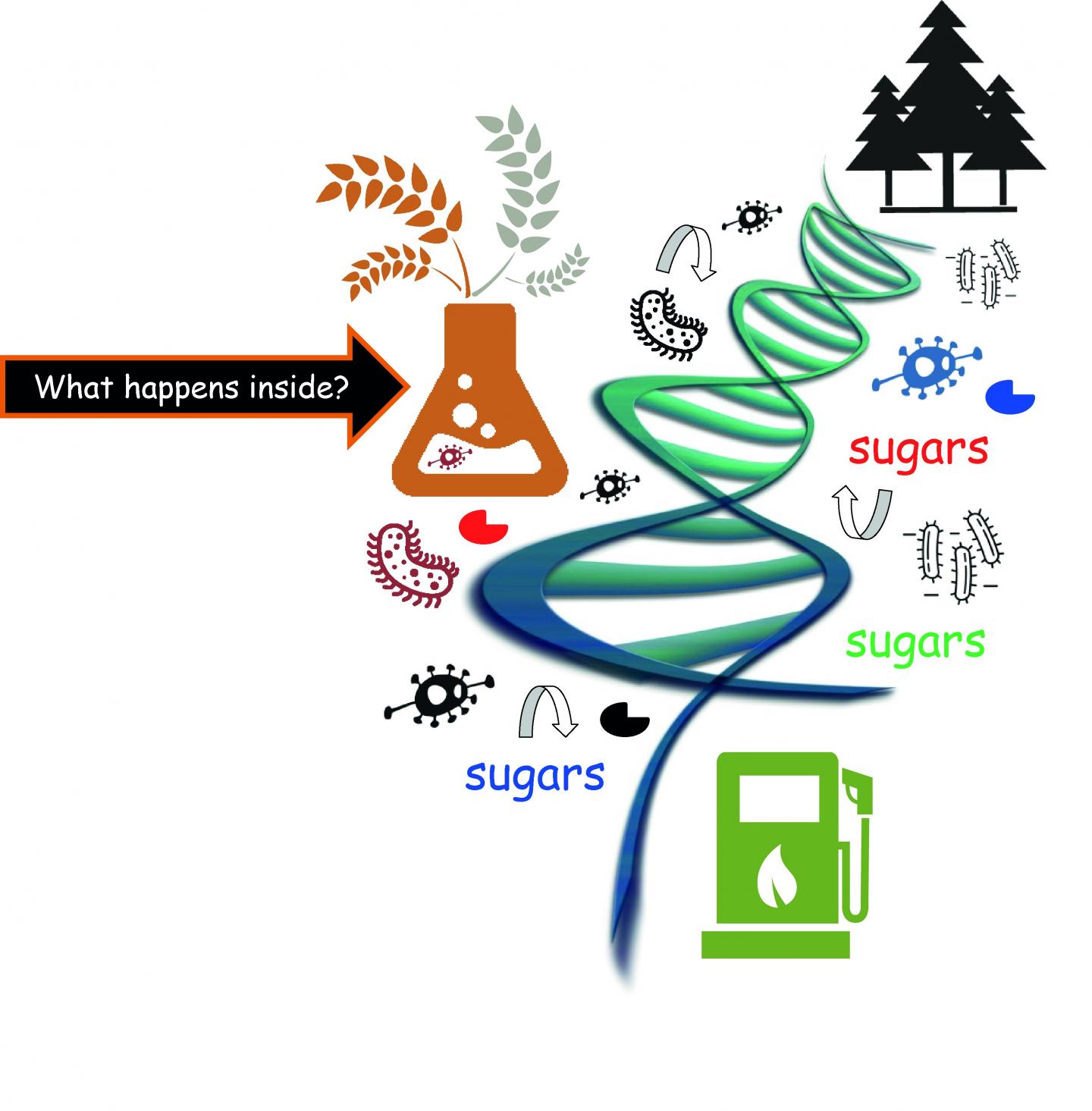
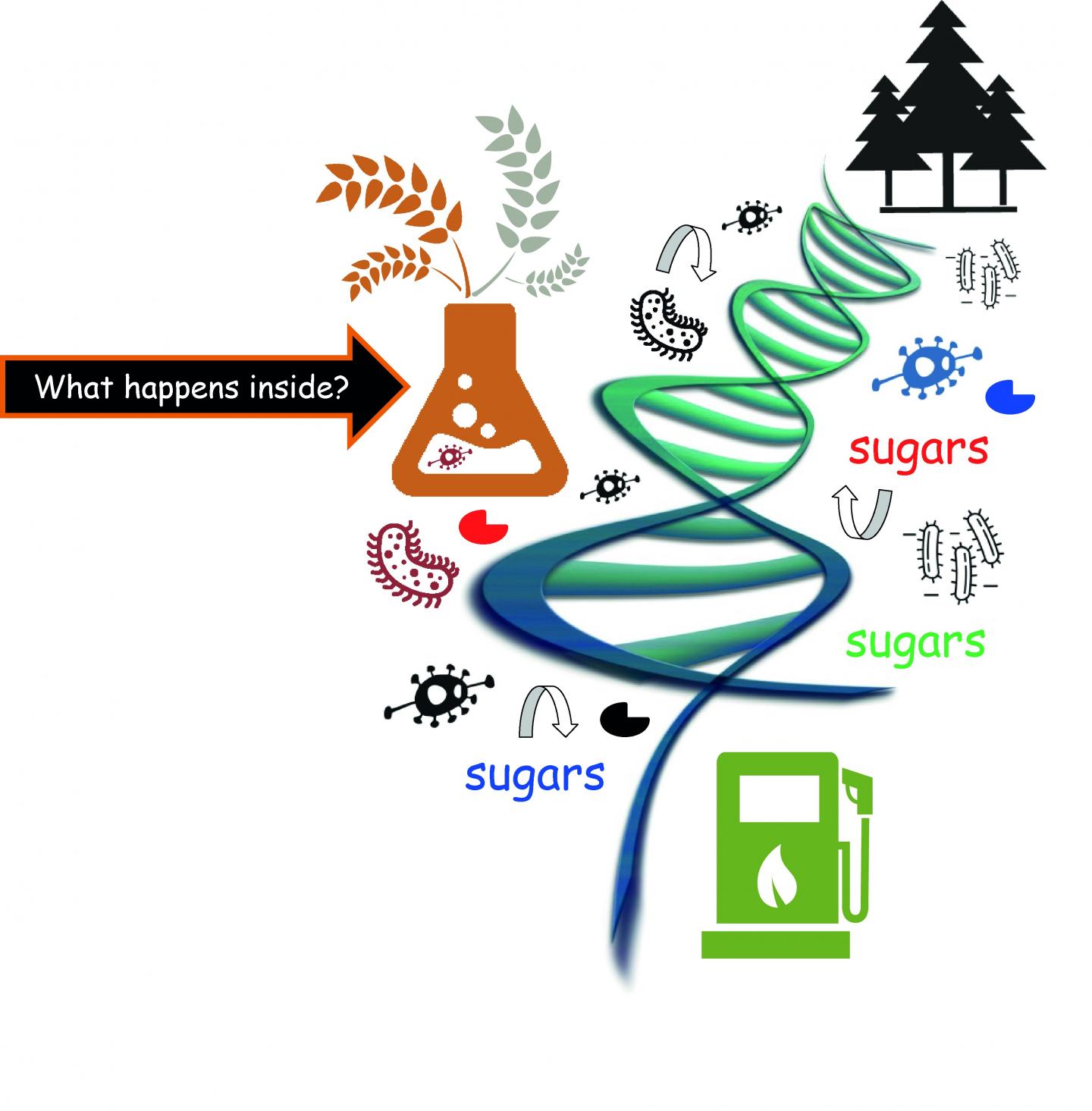
Microbes are widely used to break down plant biomass into sugars, which can be used as sustainable building blocks for novel biocompounds. Getting the right microbial community for this process is still a matter of trial and error. New insights by University of Groningen microbial ecologist Dr Diego Javier Jiménez and colleagues could make a rational design possible. They argue this point in an opinion paper published in the journal Trends in Microbiology on 22 June.

'The key is in the dynamics', says Jiménez. The long and recalcitrant biopolymers in plant material are broken down in different steps, something that has been overlooked. The most common way to produce a microbial community to degrade plant biomass is the dilution method: a flask with plant material in a growth medium is inoculated with a sample of an environmental microbiome (soil for instance). After an incubation period, some of the fluid is transferred to a fresh flask with plant biomass. After a number of these steps, a stable microbial community will have formed.

Different phases

'The general idea in the field is that the most abundant organisms are the most active in degrading the plant biomass', explains Jiménez. 'But our previous work shows that this is not always the case.' Jiménez studied the dynamics of microbial populations during plant biomass degradation. 'We noticed that there are different phases. In the first phase, the backbones of the plant polysaccharides are cleaved. In the next phase, side chain linkages are cleaved.' In the final phase, the remaining molecules are broken down into simple sugars.

'We noticed that different microbial species are important in the different phases, which results in a successional pattern', says Jiménez. 'The literature does not really explain this ecological aspect.' Jiménez and his colleagues developed a conceptual model to describe these dynamics, which he has now published. 'It also means that different enzymes are important at different stages. If you use purified enzymes to degrade plant biomass, you should take this into account. You shouldn't just put them all in there at once.'

The new conceptual model could help with the design of optimized microbial communities for the degradation of plant biomass, says Jiménez. 'I trained as an industrial microbiologist at the Pontificia Universidad Javeriana in Colombia, but I took my PhD in the department of Microbial Ecology, here at the University of Groningen. This gave me unique experience in linking these two fields. My aim is to use insights from Microbial Ecology to improve the industrial breakdown of plant biomass into sugars.'

###

Reference: Jiménez DJ, Dini-Andreote F, DeAngelis MK, Singer SW, Salles JF, van Elsas JD. (2017). Ecological insights in the dynamics of plant biomass-degrading microbial consortia. Trends Microbiol. Published online June 22, 2017.

Media Contact

Rene Fransen
[email protected]
@univgroningen

http://www.rug.nl/corporate/index

Related Journal Article

http://dx.doi.org/10.1016/j.tim.2017.05.012

############

Story Source: Materials provided by Scienmag

Share17Tweet8Share2ShareShareShare2

Related Posts

Do Your Genes Influence How Lifestyle Choices Affect Aging?

Do Your Genes Influence How Lifestyle Choices Affect Aging?

April 1, 2026
Combining Single-Cell Multiomics Unlocks Precise Identification of Rare Cell Types and States

Combining Single-Cell Multiomics Unlocks Precise Identification of Rare Cell Types and States

March 31, 2026

Genetically Engineered Marmosets Pave the Way for Advancements in Human Deafness Research

March 31, 2026

How Great Hammerhead Sharks Outsmart Ocean Temperature Swings: Insights from FIU Researchers

March 31, 2026
Please login to join discussion

POPULAR NEWS

  • blank

    Revolutionary AI Model Enhances Precision in Detecting Food Contamination

    96 shares
    Share 38 Tweet 24
  • Imagine a Social Media Feed That Challenges Your Views Instead of Reinforcing Them

    1006 shares
    Share 398 Tweet 249
  • Promising Outcomes from First Clinical Trials of Gene Regulation in Epilepsy

    51 shares
    Share 20 Tweet 13
  • Popular Anti-Aging Compound Linked to Damage in Corpus Callosum, Study Finds

    43 shares
    Share 17 Tweet 11

About

We bring you the latest biotechnology news from best research centers and universities around the world. Check our website.

Follow us

Recent News

KIST-IAE Collaborative Team Surpasses Performance Limits in Lithium-Air Batteries with Innovative Two-Dimensional Catalyst

Brain Metastases Show Unique Macrophage Spatial Patterns

PRSS56 Drives and Treats Human High Myopia

Subscribe to Blog via Email

Enter your email address to subscribe to this blog and receive notifications of new posts by email.

Join 78 other subscribers
  • Contact Us

Bioengineer.org © Copyright 2023 All Rights Reserved.

Welcome Back!

Login to your account below

Forgotten Password?

Retrieve your password

Please enter your username or email address to reset your password.

Log In
No Result
View All Result
  • Homepages
    • Home Page 1
    • Home Page 2
  • News
  • National
  • Business
  • Health
  • Lifestyle
  • Science

Bioengineer.org © Copyright 2023 All Rights Reserved.