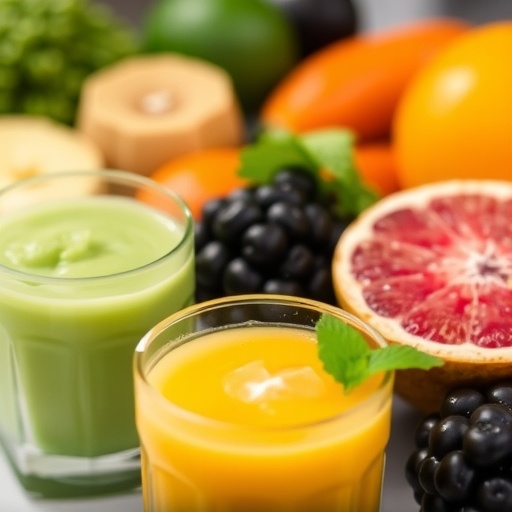
The glass of orange juice on the breakfast table may look the same whether it has been flash-pasteurized at high temperature or treated with a burst of ultrasonic waves, but according to a sweeping new review, what happens inside that liquid at the molecular level could not be more different. A comprehensive analysis published in Food Science & Nutrition has synthesized two decades of research—spanning 2002 to 2026—on how traditional and emerging processing technologies affect the bioactive compounds in fruit juices, and its verdict is reshaping the conversation about how the beverage industry should preserve the nutritional value of its products. The review, conducted by Julia Soja and Dariusz Nowak, concludes that non-thermal technologies, particularly sonication, high pressure processing, and cold atmospheric plasma, can deliver microbial safety while dramatically outperforming conventional heat treatments in retaining polyphenols, anthocyanins, and vitamin C.
The stakes are higher than they might appear. Polyphenols, flavonoids, carotenoids, and vitamin C are the compounds credited with fruit juice’s antioxidant properties, and growing evidence links their dietary consumption to reduced risks of cardiovascular disease, type 2 diabetes, cancer, and neurodegenerative disorders. These secondary plant metabolites neutralize reactive oxygen and nitrogen species generated by normal metabolism; when their production overwhelms the body’s defenses, oxidative stress contributes to the chronic diseases that dominate modern epidemiology. Yet these same molecules are exquisitely fragile. Anthocyanins—the pigments that give berries and pomegranates their deep reds and purples—are among the most thermolabile phenolic compounds known, and vitamin C degrades readily with heat, light, and oxygen exposure. Carotenoids degrade through isomerization of their trans configurations to cis forms and through enzymatic and non-enzymatic oxidation, pathways accelerated by precisely the conditions found in industrial pasteurization.
Conventional thermal processing comes in several flavors, and the review highlights an often-overlooked problem: inconsistent definitions make the literature maddeningly difficult to compare. High-temperature short-time (HTST) pasteurization is variously described as 72°C for 15 seconds or as temperatures at or above 80°C held for no more than 30 seconds—a difference the authors note could produce entirely different chemical transformations. Low-temperature long-time (LTLT) treatment, typically around 63°C for at least 30 minutes, is economical for small producers but poorly suited to preserving nutrients and flavor in fruit juices. The evidence on outcomes is mixed and depends heavily on the fruit. One landmark study of orange juice found that ascorbic acid, supplying at least 77% of its total antioxidant capacity, remained stable regardless of processing technique, so antioxidant activity barely changed. By contrast, pasteurization of carrot juice reduced total polyphenol content and DPPH radical-scavenging ability, and heating strawberry juice at 85°C for two minutes cut anthocyanin content by 5.3% to 5.8% compared with untreated samples. The review’s authors propose an intriguing mechanistic explanation for apparent contradictions: heat treatment simultaneously degrades heat-sensitive phenolics and releases previously bound phenolic compounds from the plant matrix, so the net effect depends on which process dominates. Short thermal bursts may even paradoxically increase bioactive stability during storage by inactivating polyphenol oxidase and peroxidase, the enzymes responsible for phenolic oxidation.
Blanching and microwave treatment occupy an intermediate technological territory, and both illustrate how processing can cut both ways. Blanching in hot water or steam at 75°C to 95°C inactivates peroxidase and polyphenol oxidase, fixing product color, but it can simultaneously leach water-soluble bioactive compounds and cause thermal degradation—one study found blanching carrots reduced polyphenols, flavonoids, tannins, and ascorbic acid even as it successfully silenced the browning enzymes. Microwaves, by contrast, which heat by dielectric mechanisms rather than conduction, can achieve rapid, uniform heating in far shorter times. Apple juice treated at 720 and 900 watts for 100 seconds showed increased flavonoid and polyphenol content and overall antioxidant activity, and microwave heating of fruit and vegetable waste raised vitamin C levels 1.32- to 1.57-fold and flavonoids 1.77- to 2.01-fold. The mechanism appears to involve the release of compounds previously bound to the plant matrix and the breakdown of phenolic complexes—effects that, in the review’s framing, reflect the entire physicochemical system of the juice, from pectins and soluble fiber to cellular microstructure.
The most consequential findings, however, concern the emerging non-thermal arsenal, and sonication emerges as the review’s standout performer. The technique employs high-frequency ultrasonic waves, typically 20 to 100 kilohertz, to generate acoustic cavitation: microscopic bubbles that form, grow, and collapse violently in the liquid, delivering physical, chemical, and mechanical disruption to microbial cells without intensive heat. In cherry juice sonicated at 20 kilohertz and full amplitude, longer treatment times of up to 10 minutes yielded progressively higher total polyphenols, antioxidant activity, and ascorbic acid, prompting the researchers to recommend 10-minute sonication for commercial deployment. Citrus juices saw total phenolic content rise from a range of roughly 223 to 590 micrograms gallic acid equivalents per gram to 315 to 645 after ultrasonic treatment, attributed to cell wall breakdown releasing bound phenolics. Blueberry juice sonicated continuously preserved anthocyanins indistinguishably from untreated juice while raising total polyphenol content above the untreated control, and strawberry juice sonicated at 20°C showed anthocyanin losses of only 0.7% to 4.4%—though the review cautions that combining ultrasound with high temperature can reverse these gains, and full microbiological safety often requires pairing sonication with a mild thermal hurdle.
High pressure processing, already gaining industrial traction, subjects packaged juice to 300 to 600 megapascals of uniform pressure, eliminating the need for chemical preservatives and stabilizers while preserving flavor, color, and nutrition. In chokeberry juice treated at 200 to 600 megapascals for 15 minutes, the decline in polyphenols was modest and, remarkably, not proportional to pressure—12% at 200 megapascals but only 8% at 600. More strikingly, during 80 days of refrigerated storage, untreated juice lost more antioxidant capacity and phenolic content than pressure-treated juice, suggesting high pressure slows degradation over the long term. The technique’s principal limitation, the review notes, is its weakness against endogenous quality-degrading enzymes, which sometimes necessitates an additional mild heat step. Pulsed electric fields take a different mechanistic route: short pulses of 10 to 60 kilovolts per centimeter perforate microbial cell membranes through electroporation, with the side benefit of reducing dissolved oxygen—a driver of polyphenol and anthocyanin oxidation. In a mixed fruit juice study, pulsed electric field treatment delivered the highest retention of phenolics, flavonoids, and anthocyanins after in vitro digestion, and combining the technology with high-power ultrasound in strawberry juice produced a synergistic drop in dissolved oxygen at the longest treatment durations.
Cold atmospheric plasma, perhaps the most exotic of the reviewed technologies, works by passing a strong electric field through a process gas, partially ionizing it and generating a cocktail of reactive species that destroy microorganisms at low temperatures. Microbial reductions of 2.0 to 5.0 log cycles are typical, and in fruit juices specifically, inactivation ranging from 0.15 to 7.4 log cycles has been reported, with antioxidant activity improving by up to 261% and anthocyanin content increasing by 35% under some conditions. In Marasca cherry juice, optimal parameters—3 minutes of treatment on a 3-milliliter sample volume—preserved a more favorable anthocyanin and phenolic acid profile than both pasteurized and untreated juice, likely because plasma broke down fine agglomerates while operating at only about 50°C. The authors emphasize that plasma qualifies as a clean-label, sustainable technology requiring no chemical additives and consuming less water and energy than thermal alternatives, though commercial scaling remains the field’s central challenge.
The environmental dimension adds a compelling dimension to the nutritional argument. One comparative analysis found that pulsed electric field pasteurization with heat recovery achieved a 20% reduction in electricity consumption, over 60% reduction in fuel gas usage, and approximately 30% reduction in greenhouse gas emissions compared with conventional HTST pasteurization. A separate case study of a mobile processing unit using spiral filtration and pulsed electric fields achieved a 15% reduction in environmental impact versus thermal pasteurization, suggesting that decentralized, local processing could reshape supply chain sustainability. High pressure homogenization, which forces juice through a homogenizing valve at up to 400 megapascals, rounds out the technological menu: in cloudy blackcurrant juice, gentle single-pass treatment at low inlet temperatures retained the most quality, while higher pressures paradoxically increased measured antioxidant capacity—likely through enhanced release of bound phenolics—while sacrificing vitamin C and anthocyanins.
The review’s ultimate message is that there is no universal winner. The effect of any processing method depends on the fruit variety, its anthocyanin composition, the dissolved oxygen content, the presence of protective ingredients such as inulin and gluco-oligosaccharides, and the precise interplay of temperature, pressure, amplitude, and duration. Two juices with similar total anthocyanin contents may respond entirely differently to identical treatment. What the authors call for is a new generation of research that moves beyond merely quantifying bioactive compounds to elucidating the mechanisms of their degradation and release, their bioavailability after digestion, and their stability during storage. Until then, consumers reading juice labels may want to add a new criterion to their checklist: not just what fruit is inside the bottle, but what physics was used to keep it there.
Subject of Research: The impact of traditional thermal and emerging non-thermal fruit juice processing technologies on the content and stability of bioactive compounds such as polyphenols, anthocyanins, and vitamin C.
Subject of Research: Agriculture
Article Title: Fruit Juice Processing Technologies and Their Impact on the Content of Bioactive Compounds-A Review of Current Approaches
Article References: Soja, J., & Nowak, D. (2026). Fruit Juice Processing Technologies and Their Impact on the Content of Bioactive Compounds—A Review of Current Approaches. Food Science & Nutrition, 14(7), Article e72073. https://doi.org/10.1002/fsn3.72073
Image Credits: AI Generated
DOI: 10.1002/fsn3.72073
Keywords: fruit juice processing, bioactive compounds, sonication, high pressure processing, cold atmospheric plasma, pulsed electric fields, pasteurization, antioxidant activity, polyphenols, anthocyanins, vitamin C, non-thermal technologies
Cite Scienmag News
APA
MLA
Chicago
Daisy Hatcher. (September 6, 2026). How Juice Processing Technologies Affect Bioactive Compounds: Current Approaches. Scienmag. https://scienmag.com/how-juice-processing-technologies-affect-bioactive-compounds-current-approaches/
Daisy Hatcher. “How Juice Processing Technologies Affect Bioactive Compounds: Current Approaches.” Scienmag, 6 September 2026, https://scienmag.com/how-juice-processing-technologies-affect-bioactive-compounds-current-approaches/. Accessed 6 September 2026.
Daisy Hatcher. “How Juice Processing Technologies Affect Bioactive Compounds: Current Approaches.” Scienmag. September 6, 2026. https://scienmag.com/how-juice-processing-technologies-affect-bioactive-compounds-current-approaches/
Copy citation
Download RIS
Tags: advancements in foodadvancements in food technologyantioxidant properties of flavonoids and carotenoids in juicebioactive compound preservation in fruit juicescold atmospheric plasma in juice safetycomparison of traditional pasteurization and emerging technologieseffects of thermal vs non-thermal processing on antioxidantseffects of ultrasonication and high pressure processing on polyphenolsemerging non-thermal food preservation methodshealth benefits of antioxidant-rich fruit juiceshealth benefits of bioactive compounds in fruit beveragesimpact of high pressure processing on polyphenolsimpact of thermal and non-thermal processing on antioxidantsinfluence of processing methods on vitamin C retentioninfluence of processing techniques on flavonoids and carotenoidsjuice processing technologiesmolecular changes in bioactive compounds during juice processingmolecular effects of juice processing techniquesreduction of oxidative stress through optimized juice processingrole of cold atmospheric plasma in juice safety and nutritionultrasonic treatment effects on vitamin C retention