Scientists have uncovered a hidden chapter in the life of the cilium, the tiny antenna-like projection that cells use to sense their surroundings, revealing that the earliest steps of cilium construction pass through intermediate stages that biologists have never seen before. The discovery, published in Nature Communications, centers on a protein called GRAF1 and its role in coordinating membrane trafficking between the Golgi apparatus and the growing cilium, and it promises to reshape how researchers understand both normal development and the growing list of diseases, from polycystic kidney disease to obesity and retinal degeneration, that trace back to faulty cilia.
Cilia are among the most ancient structures in eukaryotic biology. Nearly every cell in the human body builds one, and these slender organelles act as sensory hubs, detecting fluid flow in the kidney, light in the retina, chemical signals in developing embryos, and odors in the nose. Because cilia cannot make their own building blocks, they depend entirely on a carefully choreographed supply chain: proteins synthesized elsewhere in the cell must be ferried to the base of the cilium, a region known as the transition zone, which acts as a selective gatekeeper. For decades, researchers have focused on the final stages of this delivery process, particularly the well-characterized vesicle docking and fusion events that occur at the ciliary base. What has remained obscure is what happens before that, in the earliest moments when a quiescent cell decides to grow a cilium and begins assembling the membrane scaffold on which everything else will be built.
The new work identifies those missing early steps and shows that they depend on GRAF1, a multidomain protein best known for its role in clathrin-independent endocytosis. GRAF1, whose full name is GTPase regulator associated with focal adhesion kinase 1, belongs to a family of BAR domain proteins that can sense and reshape curved membranes. In its established role, GRAF1 helps form and sculpt tubular membrane carriers involved in a pathway known as CLIC/GEEC endocytosis, a fast, dynamin-independent route for bulk uptake of fluid and membrane from the cell surface. The surprise in the new study is that this endocytic machinery, which most researchers associated with cargo uptake at the plasma membrane, is repurposed during ciliogenesis to handle a fundamentally different job: organizing the membrane flow that feeds the emerging cilium.
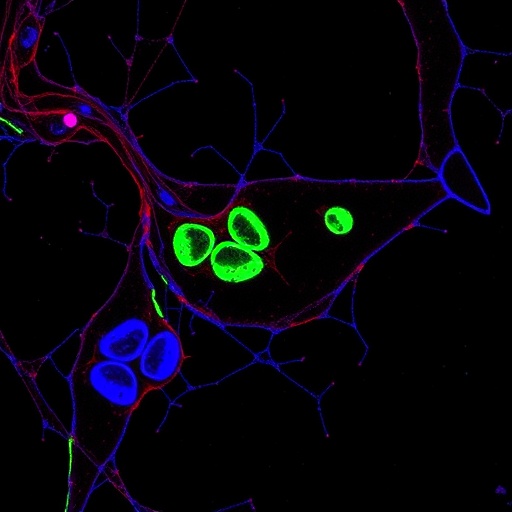
Using a combination of high-resolution live-cell imaging, super-resolution microscopy, and genetic perturbation experiments, the research team followed cells as they exited the cell cycle and began forming cilia, a transition that can be triggered experimentally by inducing growth arrest. Under these conditions, GRAF1 relocated from its usual endocytic haunts to a pericentrosomal region, close to the mother centriole from which the cilium will sprout. There, the protein colocalized with Golgi-derived membrane structures and with markers of the early ciliary vesicle, the small membrane sac that caps the distal end of the mother centriole in the first moments of cilium assembly. This capping event has long been considered the starting gun of ciliogenesis, but the new data show that it is not a single abrupt step. Instead, cells pass through a series of intermediate membrane configurations, each with a distinct molecular signature, before a mature ciliary pocket and axoneme-associated membrane take shape.
When the researchers depleted GRAF1, these intermediate stages stalled. Cells accumulated aberrant membrane structures around the mother centriole, the orderly progression from ciliary vesicle to ciliary sheath was disrupted, and the fraction of cells that successfully extended axonemes dropped significantly. Rescue experiments, in which GRAF1 variants were reintroduced into depleted cells, confirmed that specific functional domains were required. The BAR domain, which senses membrane curvature, and the GTPase-activating domain, which regulates dynamin-family GTPases, were both necessary for normal cilia formation, pointing to a mechanism in which GRAF1 both sculpts curved membranes and tunes the fission machinery that separates membrane carriers. The implication is that GRAF1 does not merely participate in ciliogenesis as an accessory factor; it actively choreographs the membrane-remodeling events that define the earliest phase of the process.
A second major theme of the study concerns the Golgi apparatus. The Golgi is the cell’s central sorting station, dispatching newly synthesized proteins and lipids to their destinations in carrier vesicles. Previous research had established that the Golgi contributes membrane to the cilium, but the routes and intermediates involved were poorly mapped. The new findings show that GRAF1-dependent carriers shuttle between Golgi exit sites and the pericentrosomal cilium assembly site, and that interrupting Golgi trafficking, for example by blocking ARF1-dependent export or disrupting the Golgi matrix protein GM130, phenocopied the ciliogenesis defects seen upon GRAF1 depletion. Electron microscopy revealed elongated membrane tubules connecting Golgi-derived structures to the ciliary base, providing a structural correlate for the trafficking pathway inferred from light microscopy. Together, these observations paint a picture in which the Golgi, GRAF1-dependent endocytic machinery, and the mother centriole form a dynamic membrane-processing hub through which the early cilium must pass.
The discovery of these intermediate stages carries conceptual weight beyond cilia biology. Cell biologists have increasingly recognized that organelle assembly is rarely a linear pipeline; instead, it involves iterative cycles of membrane addition, remodeling, and quality control, much of it mediated by pathways that blur the classical boundaries between endocytosis, secretion, and autophagy. The finding that an endocytic BAR-domain protein moonlights in ciliary construction reinforces this view. It suggests that the same membrane-curvature machinery that cells use to internalize cargo from the surface can be co-opted to build new compartments, and that trafficking routes once considered separate may converge at specific cellular moments. For the ciliogenesis field in particular, the work fills a temporal gap: the transition from a docked ciliary vesicle to a functional transition zone, a span of minutes to hours that had been largely a black box, now has at least a partial molecular map.
The clinical implications are substantial. Ciliopathies, the family of disorders caused by defective cilia, are genetically heterogeneous and clinically diverse, encompassing kidney cysts, skeletal abnormalities, blindness, obesity, and neurodevelopmental defects. Many ciliopathy genes encode trafficking proteins, and the new study suggests that defects in GRAF1-dependent membrane handling could contribute to ciliopathy phenotypes, either through mutations in GRAF1 itself or through disruption of its interaction partners. GRAF1 has previously been linked to neuronal development and has surfaced in genetic studies of neurological disease, and the current findings provide a plausible mechanism by which altered GRAF1 function could perturb cilia-dependent signaling in neurons, where primary cilia in specific brain regions regulate developmental pathways such as sonic hedgehog signaling. The authors’ identification of intermediate stages also offers new diagnostic and experimental readouts: rather than simply counting cells with visible cilia, researchers can now assay the progression of specific membrane intermediates, giving finer resolution to screens for ciliogenesis defects.
Technically, the study stands out for its methodological rigor. The investigators combined inducible ciliogenesis systems, in which synchronized cohorts of cells assemble cilia on a predictable timescale, with live imaging of fluorescently tagged GRAF1 and Golgi markers, allowing them to watch the intermediates form in real time rather than inferring them from fixed snapshots. Correlative light and electron microscopy anchored the dynamic observations to ultrastructural detail, and quantitative colocalization analysis helped distinguish genuine intermediates from random membrane overlap. Genetic loss-of-function and rescue experiments established causal links, while pharmacological perturbation of endocytosis and Golgi trafficking independently confirmed the pathway’s dependence on both membrane sources. This multilayered approach is precisely what was needed to catch stages that are transient and spatially compact, and it illustrates how modern imaging now reaches into cellular events once too fast or too small to resolve.
Open questions remain. The precise cargo carried by GRAF1-dependent carriers has not been fully cataloged, and it is unclear whether the same pathway operates in all cell types or is specialized for particular tissues. The relationship between GRAF1-dependent ciliogenesis and other ciliary trafficking routes, such as those mediated by Rab GTPases, the intraflagellar transport machinery, and exocytic vesicles derived from recycling endosomes, will need to be worked out in detail. It will also be important to determine whether the intermediate stages identified in cultured cells correspond to events in developing organisms, where cilia assemble in the context of complex morphogenetic movements. Answering these questions will likely require tissue-specific knockout models and ciliopathy patient cells, both of which are now within reach given the molecular markers the study has established.
What is already clear is that the earliest moments of cilium assembly are far richer than previously imagined. A sensory organelle often described as the cell’s antenna turns out to begin life through an unexpected partnership between the Golgi apparatus and an endocytic protein better known for its work at the cell surface. By revealing intermediate stages that had escaped detection, the study gives researchers new footholds for understanding how cilia are built, how their construction fails in disease, and potentially how that failure might one day be corrected.
Subject of Research: The role of GRAF1-dependent endocytosis and the Golgi apparatus in previously unrecognized intermediate stages of early ciliogenesis
Subject of Research: Medicine
Article Title: GRAF1-dependent endocytotic processes and the Golgi apparatus contribute to previously unrecognized intermediate stages of early ciliogenesis
Article References: Schmidt, K. N., Buerger, K., Maier, O., Zügner, A., Osten, L., Hofstetter, P., Othmen, H., Zaytseva, Y., Hecht, A., Read, C., Rachel, R., & Witzgall, R. (2026). GRAF1-dependent endocytotic processes and the Golgi apparatus contribute to previously unrecognized intermediate stages of early ciliogenesis. Nature Communications, 17(1), Article 9231. https://doi.org/10.1038/s41467-026-76992-5
Image Credits: AI Generated
DOI: 10.1038/s41467-026-76992-5
Keywords: ciliogenesis, GRAF1, primary cilium, Golgi apparatus, endocytosis, ciliary vesicle, membrane trafficking, BAR domain proteins, transition zone, ciliopathies, mother centriole, Nature Communications
Cite Scienmag News
APA MLA Chicago
Ophelia Keating. (September 5, 2026). Golgi and GRAF1-mediated endocytosis reveal hidden early stages of cilium formation. Scienmag. https://scienmag.com/golgi-and-graf1-mediated-endocytosis-reveal-hidden-early-stages-of-cilium-formation/
Ophelia Keating. “Golgi and GRAF1-mediated endocytosis reveal hidden early stages of cilium formation.” Scienmag, 5 September 2026, https://scienmag.com/golgi-and-graf1-mediated-endocytosis-reveal-hidden-early-stages-of-cilium-formation/. Accessed 5 September 2026.
Ophelia Keating. “Golgi and GRAF1-mediated endocytosis reveal hidden early stages of cilium formation.” Scienmag. September 5, 2026. https://scienmag.com/golgi-and-graf1-mediated-endocytosis-reveal-hidden-early-stages-of-cilium-formation/
Copy citation Download RIS
Tags: cellular membrane traffickingcilia-related diseases and disorderscilia’s function in cell signaling and sensory perceptionciliary assembly and biogenesisciliary transition zone functionCilium formationearly stages of cilia developmentearly stages of cilium biogenesisGolgi apparatus role in ciliaGolgi apparatus role in cilia assemblyGRAF1 protein in membrane traffickingimpact of ciliary defects on healthimpact of GRAF1 on cilia constructionintermediate cilium development stagesintermediate cilium formation stagesintracellular protein transport mechanismsmechanisms of cilia assemblymembrane trafficking in cell organellesnovel insights into cilia constructionprimary cilia in cellular sensingrole of Golgi in sensory organelles