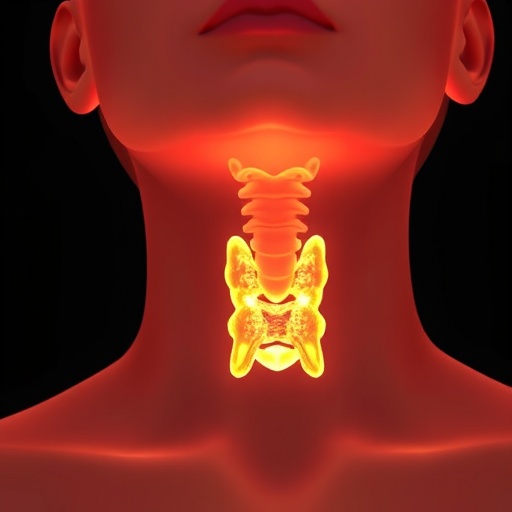
In the largest genetic investigation of its kind to date, an international team of researchers has mapped the genetic architecture of Hashimoto’s thyroiditis, the most common autoimmune disease in the world, through multi-ancestry genome-wide association analyses spanning tens of thousands of patients and controls. The study, published in Nature Genetics, reveals that the genetic underpinnings of this enigmatic condition are far more complex than previously appreciated, and that much of that complexity has been hidden because most genetic studies to date have focused almost exclusively on people of European ancestry.
Hashimoto’s thyroiditis is a condition in which the body’s immune system turns against the thyroid gland, a small butterfly-shaped organ at the base of the neck that produces hormones governing metabolism, energy use, body temperature and nearly every major physiological process. In Hashimoto’s, immune cells infiltrate the thyroid, antibodies targeting thyroid proteins accumulate, and the gland’s ability to produce hormones gradually declines, a state known as hypothyroidism. The disease affects millions of people worldwide, with women affected far more often than men, and it is typically managed with lifelong hormone replacement therapy. Yet despite its prevalence, the disease has received comparatively little attention from geneticists, who have devoted far more effort to other autoimmune conditions such as rheumatoid arthritis, type 1 diabetes and multiple sclerosis.
That gap in knowledge is precisely what the new study set out to close. The research team, led by Mantas Bujnis, Roderick B.T.M. Sterenborg and Yun Li together with colleagues across multiple institutions, assembled genome-wide data from populations representing several ancestral backgrounds, combining European data with data from non-European populations in a single harmonized analytical framework. This multi-ancestry design is more than a matter of inclusivity; it is a powerful statistical strategy. Different populations carry different patterns of genetic variation, and when the same DNA variant shows an association with disease across ancestries, that consistency strengthens confidence that the variant is genuinely involved in the disease rather than being a statistical artifact of population history.
Genome-wide association studies, or GWAS, work by scanning the genome for millions of single-letter variations in DNA, known as single nucleotide polymorphisms, and testing whether any of them appear more frequently in people with a given disease than in people without it. The approach has transformed human genetics since its emergence in the mid-2000s, but it has a well-known limitation: the vast majority of participants in such studies have been of European descent, which means that discoveries made in those datasets may not translate well to other populations. For a disease like Hashimoto’s thyroiditis, which occurs across the globe with varying prevalence, this bias has been particularly consequential.
The multi-ancestry analyses in the new study identified a substantially expanded set of genomic regions associated with Hashimoto’s thyroiditis compared with what earlier, smaller studies had found. The associated regions implicate a wide range of biological pathways, and the researchers went to considerable lengths to move beyond simply listing them. Using sophisticated post-genome-wide association analysis methods, they attempted to pinpoint which specific genes and regulatory elements are responsible for the observed genetic signals, a notoriously difficult problem because the disease-associated variants identified by GWAS often lie in stretches of DNA that do not code for proteins at all.
Many of these non-coding variants appear to act as switches that turn genes on or off in particular cell types. By integrating the genetic association data with functional genomic resources, the researchers found that many of the implicated variants are active in immune cells, consistent with the fundamental nature of Hashimoto’s thyroiditis as an autoimmune disorder, as well as in thyroid tissue itself. This dual involvement, spanning both the immune system and the target organ, fits the biological reality of the disease, in which immune dysregulation and thyroid-specific vulnerability must both be present for the condition to develop.
One of the most striking findings to emerge from the study concerns the genetic overlap between Hashimoto’s thyroiditis and other autoimmune diseases. The researchers found that much of the genetic risk for Hashimoto’s is shared with related conditions, a pattern that reflects a shared tendency of the immune system to lose tolerance to the body’s own tissues. At the same time, the analysis identified genetic signals that appear specific to Hashimoto’s, pointing to pathways that are uniquely relevant to thyroid autoimmunity rather than autoimmunity in general. Distinguishing between these two categories of risk is scientifically valuable, because shared mechanisms may be susceptible to therapies already being developed for other autoimmune diseases, while disease-specific mechanisms may explain why the thyroid becomes the target in the first place.
The multi-ancestry design also allowed the researchers to examine how genetic risk differs across populations. Their analyses revealed that the overall burden of genetic risk for Hashimoto’s thyroiditis varies across ancestries, and that some variants act as risk factors in one population while others are population-specific. This finding has direct implications for clinical genetics: polygenic risk scores, which aggregate the effects of thousands of variants into a single estimate of an individual’s genetic predisposition, perform poorly when they are built in one population and applied to another. By developing ancestry-aware models, the study offers a template for making genetic risk prediction more equitable, a goal that is becoming increasingly urgent as genomic medicine moves toward the clinic.
Another dimension of the analysis involved linking the genetic findings to observable biology. The researchers investigated whether the genetic variants associated with Hashimoto’s thyroiditis also influence thyroid function markers, such as levels of thyroid-stimulating hormone and thyroid hormones measured in blood, as well as antibodies against thyroid peroxidase, the hallmark serological feature of the disease. The results indicate substantial overlap between the genetics of thyroid autoimmunity and the genetics of thyroid function, suggesting that variants may influence disease risk partly by shifting the set points of the thyroid axis. This kind of cross-trait analysis helps bridge the gap between statistical associations and physiological mechanisms.
The study also examined the relationship between Hashimoto’s genetic risk and a range of other conditions and traits. Autoimmune diseases are known to cluster, both clinically and genetically, and the researchers probed whether genetic liability to Hashimoto’s is associated with outcomes beyond the thyroid. Such analyses can illuminate why patients with one autoimmune condition are more likely to develop others, and they can highlight potential downstream health consequences of genetic susceptibility that clinicians may wish to monitor in at-risk individuals.
Beyond the specific findings, the study represents a milestone in how autoimmune disease genetics is conducted. The emphasis on multi-ancestry data is part of a broader movement in human genetics to correct decades of imbalance in whose genomes are studied. The researchers’ approach demonstrates that including diverse populations is not merely an ethical imperative but a scientific advantage, since cross-population data sharpen the resolution of genetic mapping and reveal biology that single-ancestry studies cannot see. Each ancestry contributes unique information: variants that are common in one population may be rare in another, and the different patterns of linkage disequilibrium, the tendency of nearby variants to be inherited together, allow finer localization of causal variants.
The implications for patients are real, even if clinical applications remain on the horizon. A more complete catalogue of genetic risk factors provides targets for drug development, and several of the biological pathways highlighted by the study are already the focus of therapeutic efforts elsewhere in immunology. Genetic findings can also help stratify patients: some individuals with Hashimoto’s may have disease driven primarily by immune mechanisms, while others may have a stronger thyroid-intrinsic component, and understanding these subtypes could eventually allow more personalized monitoring and treatment. Furthermore, better understanding of the genetic overlap with other autoimmune diseases could inform screening strategies, since individuals with high genetic risk for Hashimoto’s may warrant vigilance for related conditions.
There remain significant challenges ahead. Genetic association studies identify regions of the genome but rarely deliver a definitive culprit gene or mechanism, and translating the new catalogue of risk loci into a mechanistic understanding of thyroid autoimmunity will require years of functional work in laboratory models. The study’s authors note the need for even larger and more diverse datasets, particularly from ancestries that remain underrepresented even in this analysis, and for deeper integration of genetic data with molecular measurements taken directly from immune and thyroid cells. Environmental triggers, which are known to contribute to Hashimoto’s but remain poorly characterized, also interact with genetic risk in ways that current studies are only beginning to address.
Nevertheless, the study marks a decisive step forward for a disease that has long been a scientific afterthought despite its enormous global burden. By bringing together populations from across the world and applying the full analytical arsenal of modern genetics, the researchers have produced the most detailed picture yet of the genetic basis of Hashimoto’s thyroiditis. For the millions of people living with the condition, and the many more at risk of developing it, the work lays a foundation upon which future discoveries, and eventually better diagnostics and therapies, can be built.
Subject of Research: Genetic basis of Hashimoto’s thyroiditis through multi-ancestry genome-wide association analyses
Subject of Research: Biology
Article Title: Multi-ancestry genome-wide association analyses provide insights into the genetic basis of Hashimoto’s thyroiditis
Article References: Bujnis, M. N., Sterenborg, R. B. T. M., Li, Y., Åsvold, B. O., Brčić, L., Boraska Perica, V., Babbar, A., Denny, J. C., Fritsche, L. G., Kanai, M., Konrade, I., Leese, G., Marouli, E., Metspalu, A., Moksnes, M. R., Mukherjee, B., Okada, Y., Palmer, C. N. A., Papadopoulou, A., … Teumer, A. (2026). Multi-ancestry genome-wide association analyses provide insights into the genetic basis of Hashimoto’s thyroiditis. Nature Genetics, 58(8), 1855-1865. https://doi.org/10.1038/s41588-026-02704-w
Image Credits: AI Generated
DOI: 10.1038/s41588-026-02704-w
Keywords: Hashimoto’s thyroiditis, genome-wide association study, multi-ancestry genetics, autoimmune disease, thyroid autoimmunity, genetic risk loci, polygenic risk scores, thyroid function, hypothyroidism, Nature Genetics
Cite Scienmag News
APA MLA Chicago
Juliet Wilcox. (September 5, 2026). Genome-wide study across ancestries reveals genetic roots of Hashimoto’s thyroiditis. Scienmag. https://scienmag.com/genome-wide-study-across-ancestries-reveals-genetic-roots-of-hashimotos-thyroiditis/
Juliet Wilcox. “Genome-wide study across ancestries reveals genetic roots of Hashimoto’s thyroiditis.” Scienmag, 5 September 2026, https://scienmag.com/genome-wide-study-across-ancestries-reveals-genetic-roots-of-hashimotos-thyroiditis/. Accessed 5 September 2026.
Juliet Wilcox. “Genome-wide study across ancestries reveals genetic roots of Hashimoto’s thyroiditis.” Scienmag. September 5, 2026. https://scienmag.com/genome-wide-study-across-ancestries-reveals-genetic-roots-of-hashimotos-thyroiditis/
Copy citation Download RIS
Tags: advances in autoimmune disease geneticsautoimmune disease genetic architectureautoimmune disease genome-wide associationcomplex genetic architecture of Hashimoto’scomplex genetics of autoimmune thyroiditisgender differences in autoimmune thyroid diseasegenetic diversity in autoimmune diseasegenetic diversity in autoimmune diseasesglobal prevalence of Hashimoto’sHashimoto’s thyroiditis genetic studyhormonal regulation and geneticshypothyroidism genetic factorsimmune system and thyroidimmune system and thyroid gland interactionlarge-scale genetic research in autoimmune diseasesmulti-ancestry genetic researchmulti-ancestry genome-wide association analysispopulation-specific genetic risk factorsrole of antibodies in Hashimoto’ssex differences in Hashimoto’sthyroid autoimmune disorder geneticsthyroid gland genetics