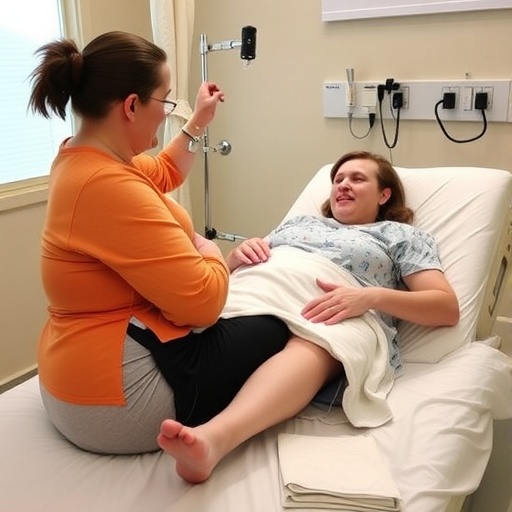
An international team of critical care specialists has published the most comprehensive guidance to date on how to rehabilitate patients with obesity in the intensive care unit, warning that this fast-growing patient group remains both marginalised in practice and almost invisible in the research that shapes ICU care. The narrative review, led by physiotherapist Sabrina Eggmann of the University Children’s Hospital Zurich and Bern University Hospital together with Stefan J. Schaller of the Medical University of Vienna, and published in Intensive Care Medicine, brings together physiotherapists, dietitians, pharmacists, nurses, speech pathologists and physicians from across Europe, Australia, North America and the Middle East to map out how rehabilitation must be adapted to the altered physiology of critical illness in obesity.
The scale of the problem is substantial. Obesity, defined by the World Health Organisation as excessive fat deposits with a body mass index above 30 kg/m², is rising worldwide, and patients with obesity are an increasingly common presence in ICUs. Yet body mass index is a crude measure that says little about actual body composition, and the review argues that this limitation matters clinically. Drawing on cohort studies and their own interprofessional expertise, the authors describe three distinct obesity phenotypes that appear to drive very different outcomes. Patients whose muscle mass is preserved despite excess fat may hold a genuine survival advantage; a cohort of 507 medical ICU patients in the United States found that a higher proportion of skeletal muscle mass, measured on computed tomography scans at admission, was associated with improved six-month survival and a greater likelihood of discharge home with independent living. By contrast, phenotypes dominated by ectopic visceral fat, with fat deposited in the liver, heart and skeletal muscle, or by sarcopenic obesity, combining high body fat with low muscle mass, are frequently complicated by multimorbidity and polypharmacy, increasing the risk of suboptimal sedation, prolonged ventilation, immobilisation, malnutrition and impaired recovery. Sarcopenic obesity has been linked to increased short-term mortality, for example in patients with abdominal sepsis.
The apparent short-term survival benefit sometimes called the “obesity paradox” receives a cautious treatment. Multicentre cohort studies suggest patients with obesity may be more likely to survive critical illness and be discharged home, but the authors emphasise that the mechanisms remain incompletely characterised and are likely confounded by age, frailty, selection bias and the misclassification of body composition by BMI alone. Other outcomes are less favourable: extreme obesity, with a BMI of 40 or above, was associated with increased delirium incidence in a retrospective analysis of 20,193 critically ill patients, and survivors with extreme obesity appear to experience prolonged mechanical ventilation and extended ICU stays, both recognised risk factors for ICU-acquired weakness, the loss of muscle mass and function during critical illness that independently increases long-term mortality and morbidity. A recent multicentre observational study of 1,600 ICU survivors from 10 Brazilian ICUs found no association between BMI category and physical quality of life or functional independence, underscoring how uncertain the long-term recovery picture remains.
The pathophysiology underlying these challenges is detailed extensively. Abdominal adiposity reduces functional residual capacity and lung compliance, promotes airway closure and atelectasis, and, together with increased pulmonary vascular pressures, chest wall mass and cephalad displacement of the diaphragm, substantially reduces pulmonary compliance during critical illness. Obesity is also a major risk factor for hypertension, heart failure with both preserved and reduced ejection fraction, arrhythmias and obstructive sleep apnoea. Pharmacokinetics are similarly disrupted: lipophilic drugs such as opioids and sedatives distribute into excess adipose tissue, enlarging their volume of distribution, while hepatic steatosis may reduce clearance and prolong drug effects, demanding careful dosing and titration to avoid oversedation, which itself delays mobilisation and ventilation weaning.
On respiratory care, the review recommends early use of non-invasive ventilation or high-flow nasal cannula therapy, citing moderate evidence that non-invasive ventilation reduces intubation, morbidity and mortality compared with oxygen alone. Positioning emerges as a powerful, low-cost intervention: sitting or reverse Trendelenburg positions reduce abdominal pressure on the diaphragm, increase functional residual capacity and recruit dependent lung areas, while the supine position should be avoided. When invasive ventilation is required, tidal volumes should be calculated on ideal body weight, derived from sex and height rather than actual weight, with higher positive end-expiratory pressure often needed to counteract reduced functional residual capacity. Prone positioning for severe hypoxaemia is feasible with experienced teams, with extra attention to pressure injury prevention. Because secretion clearance is significantly impaired in ventilated patients with obesity, the authors suggest mechanical insufflation–exsufflation devices may help achieve adequate peak expiratory flows. After extubation, there is high-level evidence that prophylactic non-invasive ventilation reduces respiratory failure, reintubation and mortality, particularly given the prevalence of obesity hypoventilation syndrome and sleep apnoea in this population.
Nutrition guidance is similarly nuanced. Critical illness accelerates catabolism and anabolic resistance, and emerging evidence indicates patients with greater fat mass lose skeletal muscle more rapidly than lean patients, making targeted nutrition essential to preventing severe weakness. Calculating energy needs is particularly difficult: actual body weight risks overfeeding, ideal body weight may underestimate requirements, and predictive equations perform poorly. Indirect calorimetry remains the gold standard and should be used where available; otherwise, the European Society for Clinical Nutrition and Metabolism recommends weight-based estimates using adjusted body weight with regular reassessment. Hypocaloric feeding below 70 percent of requirements during the acute phase, transitioning to full requirements during rehabilitation, may preserve lean mass, while adequate protein at roughly 1.3 g/kg adjusted body weight per day, achieved progressively over the first week, integrated with early resistance-based rehabilitation may support muscle protein synthesis. Higher protein provision alone has not proven beneficial. Targeted assessment of vitamin D, zinc, selenium, B vitamins and iron is appropriate during prolonged stays, though routine high-dose supplementation is not recommended.
Early mobilisation receives extensive attention. Meta-analytic evidence shows early mobilisation roughly halves the odds of developing ICU-acquired weakness, shortens delirium duration by about 1.34 days and ventilation duration by just over one day, and improves physical function up to six months. Guidelines recommend individualised mobilisation within the first 72 hours of admission for all critically ill patients, and early ambulation has proven safe even in morbidly obese patients. However, the authors flag important cautions: an exploratory analysis of 716 mobilisation sessions found an elevated risk of hypotension in patients with higher BMI, with events most likely within 15 minutes after mobilisation during the recovery phase. Right ventricular dysfunction, common in obesity, may limit exercise tolerance, and a secondary analysis of the TEAM trial associated high-dose mobilisation with increased mortality in patients with diabetes, though the subsequent meta-analysis found no overall increase in adverse events, supporting low-dose, progressive, individually adjusted approaches. Perhaps the most actionable finding concerns logistics: turning patients safely requires surfaces wider than 91 cm for a BMI above 35 and wider than 127 cm above a BMI of 45, and the availability of bariatric beds, lifters and chairs, checked for weight capacity before use, is described as fundamental. Weight bias compounds the problem, with clinicians fearing injury and patients reporting mistrust and fear of falling that leads to refusal. Robotic-assisted mobilisation remains experimental, with preliminary studies unable to demonstrate reductions in staffing requirements.
The review closes with a call for structured post-ICU follow-up embedded in an interprofessional framework spanning doctors, nurses, rehabilitation clinicians, dietitians, pharmacists and psychosocial care providers. Post-intensive care syndrome, with an estimated pooled prevalence of 50 percent within one month of discharge, may be masked in patients with obesity or wrongly attributed to their pre-existing condition, and lower mental health-related quality of life has been reported compared with normal-weight survivors. Digital health applications and telemedicine may lower barriers created by perceived weight stigma and limited mobility. Crucially, the authors stress that the primary objective of follow-up should not be weight reduction but the restoration of physical, mental and cognitive functioning, with an urgent need for obesity-inclusive trials that report subgroup data, phenotype-driven rehabilitation protocols, and evidence on the optimal timing, dose and type of intervention across the entire recovery pathway.
Subject of Research: Rehabilitation principles for critically ill patients with obesity in the intensive care unit, covering obesity phenotypes, respiratory care, nutrition, early mobilisation and post-ICU follow-up
Subject of Research: Medicine
Article Title: Key principles for rehabilitation of critically ill patients with obesity
Article References: Eggmann, S., Bear, D. E., Bourne, R. S., Freeman-Sanderson, A., Hickmann, C. E., Karner, V., McWilliams, D., Needham, D. M., Singer, P., van Mol, M., van Zanten, A., Hodgson, C. L., & Schaller, S. J. (2026). Key principles for rehabilitation of critically ill patients with obesity. Intensive Care Medicine. https://doi.org/10.1007/s00134-026-08541-z
Image Credits: AI Generated
DOI: 10.1007/s00134-026-08541-z
Keywords: obesity, critical care, critical illness, rehabilitation, early ambulation, ICU-acquired weakness, non-invasive ventilation, sarcopenic obesity, nutrition therapy, post-intensive care syndrome, early mobilisation, weight bias
Cite Scienmag News
APA
MLA
Chicago
Daisy Hatcher. (September 5, 2026). Rehabilitation principles for critically ill patients with obesity outlined. Scienmag. https://scienmag.com/rehabilitation-principles-for-critically-ill-patients-with-obesity-outlined/
Daisy Hatcher. “Rehabilitation principles for critically ill patients with obesity outlined.” Scienmag, 5 September 2026, https://scienmag.com/rehabilitation-principles-for-critically-ill-patients-with-obesity-outlined/. Accessed 5 September 2026.
Daisy Hatcher. “Rehabilitation principles for critically ill patients with obesity outlined.” Scienmag. September 5, 2026. https://scienmag.com/rehabilitation-principles-for-critically-ill-patients-with-obesity-outlined/
Copy citation
Download RIS
Tags: body composition assessment in ICUbody composition assessment in obese patientschallenges in ICU care for obese patientscritical care management for obese patientscritical illness management in obese patientsglobal guidelines for obesity management in ICUhealth policy for obesity-related critical illnessimpact of obesity on critical illness recoveryimpact of obesity on ICU recoveryimproving outcomes for critically ill patients with obesityinternational guidelines for obesity management in ICUmultidisciplinary approaches to obesity in critical caremultidisciplinary approaches to obesity in ICUObesity in ICU rehabilitationobesity phenotypes in critical careobesity phenotypes in critical illnessObesity rehabilitation in ICUphysiotherapy for obese critically illphysiotherapy guidelines for obese ICU patientsrehabilitation challenges for obesity-related critical illnessresearch gaps in obesity and critical carerole of dietitians and speech therapists in obese ICU caretailored ICU rehabilitation protocolstailored rehabilitation strategies for obesity