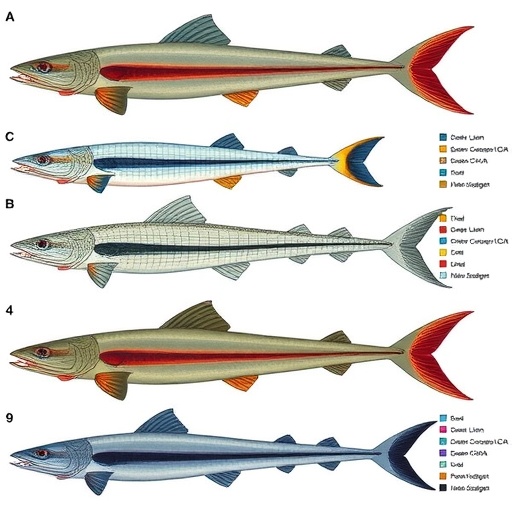
Sturgeons are among the oldest surviving lineages of bony fish on Earth, having first appeared roughly 200 million years ago during the Jurassic period. Often called living fossils, they have persisted through mass extinctions, ice ages, and dramatic reorganizations of the world’s river systems, surviving thanks to a combination of conserved body plans, remarkable tolerance of fluctuations in temperature and salinity, and an anadromous life cycle that carries them between saltwater and freshwater to spawn. Yet this ancient endurance has not equipped them for the pressures of the modern world. Overfishing, poaching, river damming, pollution, and habitat destruction have pushed sturgeons across the Northern Hemisphere to the brink, and today the family Acipenseridae ranks among the most imperiled groups of animals on the planet according to the IUCN Red List.
Nowhere is this crisis more acute than in the Ponto-Caspian region, where the Danube River serves as the principal migratory corridor linking spawning grounds to the feeding habitats of the Black Sea. Six sturgeon species once swam the Danube; only four remain. The European sturgeon (Acipenser sturio) survives solely in France’s Gironde-Garonne-Dordogne basin, while the ship sturgeon (Acipenser nudiventris) has vanished from the river except for a relict population in Georgia’s Rioni River. The remaining species—beluga (Huso huso), Russian sturgeon (Acipenser gueldenstaedtii), stellate sturgeon (Acipenser stellatus), and the primarily freshwater sterlet (Acipenser ruthenus)—persist in critically reduced numbers, and their long-term survival now depends on conservation programs that are only as good as the genetic information behind them. A new multi-marker mitochondrial study, published in Ecology and Evolution, delivers exactly that information, and its findings paint sharply contrasting demographic portraits of the four species.
The research team assembled three complementary datasets drawn from publicly available repositories. The first comprised 32 complete mitochondrial genomes retrieved from the NCBI RefSeq database—24 from Acipenseridae species spanning the genera Acipenser, Huso, Scaphirhynchus, and Pseudoscaphirhynchus, six from hybrid individuals, and two from paddlefish outgroups (Polyodon spathula and Psephurus gladius)—used to reconstruct the family’s phylogenetic tree. The second and third datasets targeted population-level variation: 261 cytochrome B (Cyt B) sequences covering all four species, and a larger D-loop control region dataset for the three anadromous species, all sourced from NCBI GenBank and spanning the Black Sea basin and its migratory tributaries. The D-loop, a noncoding segment of mitochondrial DNA that accumulates mutations far faster than protein-coding genes, proved essential for resolving fine-scale genetic structure and recent demographic events that the more conserved Cyt B gene simply could not detect.
The phylogenetic analysis, conducted with IQ-TREE using partitioned substitution models and 1,000 bootstrap replicates across a 17,836-position alignment, yielded several notable conclusions. The sturgeons separated cleanly into Atlantic and Pacific clades consistent with prior studies, and the genus Scaphirhynchus clustered near the Atlantic species. Interestingly, Acipenser and Huso did not form distinct monophyletic groups—an interspersed placement suggesting a tangled evolutionary history. Minimal genetic divergence between hybrid specimens and their maternal lineages confirmed the strict matrilineal inheritance of mitochondrial DNA, while the authors noted that such hybridization events, recorded between species both in the wild and in aquaculture, pose real risks of infertility and genetic contamination for restocking programs.
The population genetics results are where the study becomes truly striking. Across all three anadromous species, the D-loop region displayed dramatically higher polymorphism than Cyt B. For the beluga, mean pairwise genetic distance dropped from 1.441 percent in the D-loop to a mere 0.003 percent in Cyt B; for the stellate sturgeon, from 0.686 to 0.004; and for the Russian sturgeon, from 2.306 to 0.034. The h/N ratios—the proportion of sequences representing unique haplotypes—told the same story, with Acipenser gueldenstaedtii reaching 0.74 in the D-loop versus 0.29 in Cyt B. The contrast underscores a fundamental principle of mitochondrial genomics: functional constraints keep protein-coding genes conserved, while the control region mutates rapidly enough to serve as a fine-scale recorder of population history.
The neutrality tests—Tajima’s D and Fu and Li’s D, statistical tools that compare observed patterns of mutations with those expected under neutral equilibrium—produced contrasting demographic signatures that form the study’s most consequential findings. The stellate sturgeon emerged as the genetic standout, showing a significantly negative Tajima’s D of −2.32257 (p < 0.01) for Cyt B, a classic signature of recent population expansion, alongside exceptionally high haplotype diversity (Hd = 0.937 for Cyt B and 0.9934 for D-loop, with 129 haplotypes detected). The stellate sturgeon, in other words, still commands a vast genetic reservoir that may buffer it against environmental change.
The Russian sturgeon told the opposite story. In the D-loop, Acipenser gueldenstaedtii exhibited a strikingly positive Tajima’s D of 2.66070 (p < 0.01)—a textbook indicator of a severe, recent population bottleneck, in which rare alleles and intermediate haplotypes have been purged, leaving behind only highly divergent lineages. Its nucleotide diversity in the D-loop (0.28011) was nearly ten times that of the stellate sturgeon, and its haplotype network appeared fragmented and disconnected, consistent with either a dramatic decline or the mixing of previously isolated lineages. The beluga displayed an intermediate but worrying profile: a significantly positive Fu and Li’s D value (1.60722, p < 0.05) in the D-loop pointing to recent genetic contraction, and overall limited variation suggestive of ongoing genetic erosion. The sterlet, restricted to Cyt B analysis due to data availability, showed a significant negative Fu and Li’s D (−2.60125, p < 0.05), hinting at historical expansion and the accumulation of new mutations within a conserved genetic core.
The authors place these results in a broader temporal context. Recent palaeogenomic work on ancient Danube sturgeon DNA had revealed remarkable mitochondrial continuity over millennia, with high haplotype diversity and low nucleotide diversity implying genomic stasis maintained by epigenetic plasticity rather than rapid mutation. The present study, with its larger and more geographically diverse sampling, recorded substantially higher nucleotide diversity in the D-loop—suggesting that a wider Black Sea-wide lens captures greater divergence among haplotypes than Danube-focused surveys alone. Earlier work had also documented hybridization between native and introduced sturgeons in the Danube and in aquaculture settings, reinforcing the message that fish-farm breeding practices can degrade wild germplasm if left unmanaged.
The conservation implications are direct and urgent. Genetic diversity underpins population viability and adaptive potential, and the genetic parameters measured here—haplotype diversity, nucleotide diversity, and network structure—provide a foundation for defining management units tailored to each species’ actual demographic trajectory. Where the stellate sturgeon may warrant strategies that preserve a large, expanding genetic reservoir, the Russian sturgeon and beluga demand interventions aimed at reversing bottlenecks: genetically screened broodstock for captive-breeding programs, pedigree reconstruction to select suitable candidates, and habitat and migratory-corridor restoration along the Lower Danube. Stocking rivers with animals poorly matched to local genetic structure, the study emphasizes, can be ineffective or even harmful, driving inbreeding or outbreeding depression.
Looking forward, the authors argue that traditional sequencing must be supplemented with environmental DNA (eDNA) metabarcoding for noninvasive, large-scale population monitoring, and eventually with whole-genome sequencing and epigenetic markers to understand how these populations adapt to climate-driven change in the Black Sea ecosystem. Ultimately, they conclude, the preservation of these living fossils depends on a unified, transboundary approach that integrates advanced molecular monitoring with the large-scale restoration of the Danube’s migratory corridors—a blueprint in which genetics is not an afterthought of conservation, but its guiding architecture.
Subject of Research: Genetic diversity, phylogenetic relationships, and demographic history of four critically endangered Black Sea sturgeon species (Huso huso, Acipenser gueldenstaedtii, Acipenser stellatus, Acipenser ruthenus) based on multi-marker mitochondrial DNA analysis
Subject of Research: Biology
Article Title: Multi-Marker Mitochondrial Analysis Reveals Genetic Diversity and Phylogenetic Relationships of Black Sea Sturgeons (Acipenseridae)
Article References: Deák, G., Prangate, R., Matei, M., Boboc, M., & Holban, E. (2026). Multi‐Marker Mitochondrial Analysis Reveals Genetic Diversity and Phylogenetic Relationships of Black Sea Sturgeons (Acipenseridae). Ecology and Evolution, 16(7), Article e73903. https://doi.org/10.1002/ece3.73903
Image Credits: AI Generated
DOI: 10.1002/ece3.73903
Keywords: sturgeon, Black Sea, mitochondrial DNA, D-loop, cytochrome B, Tajima’s D, population bottleneck, genetic diversity, Danube River, conservation, haplotype network, Acipenseridae
Cite Scienmag News
APA MLA Chicago
Juliet Wilcox. (September 5, 2026). Mitochondrial DNA Analysis Uncovers Diversity and Relationships of Black Sea Sturgeons. Scienmag. https://scienmag.com/mitochondrial-dna-analysis-uncovers-diversity-and-relationships-of-black-sea-sturgeons/
Juliet Wilcox. “Mitochondrial DNA Analysis Uncovers Diversity and Relationships of Black Sea Sturgeons.” Scienmag, 5 September 2026, https://scienmag.com/mitochondrial-dna-analysis-uncovers-diversity-and-relationships-of-black-sea-sturgeons/. Accessed 5 September 2026.
Juliet Wilcox. “Mitochondrial DNA Analysis Uncovers Diversity and Relationships of Black Sea Sturgeons.” Scienmag. September 5, 2026. https://scienmag.com/mitochondrial-dna-analysis-uncovers-diversity-and-relationships-of-black-sea-sturgeons/
Copy citation Download RIS
Tags: ancient fish lineagesancient fish lineages and survivalBlack Sea sturgeon genetic diversityconservation genetics of Acipenseridaeevolutionary relationships of sturgeon speciesevolutionary relationships of sturgeonsfreshwater and saltwater migratory behaviorsgenetic diversity of endangered fishgenetic markers for sturgeon species identificationimpact of habitat loss on sturgeon populationsimpact of overfishing and habitat destructionmigratory behavior of sturgeonsmitochondrial DNA analysis in sturgeonsMitochondrial DNA analysis of Black Sea sturgeonsphylogenetics of long-lived fish speciesPonto-Caspian biodiversityPonto-Caspian sturgeon species declinerelict populations of endangered sturgeonsrole of mitochondrial DNA in fish conservationspecies decline in the Danube Riversturgeon species conservationsurvival of ancient fish speciesthreats to Black Sea aquatic ecosystemsthreats to Black Sea sturgeon populations