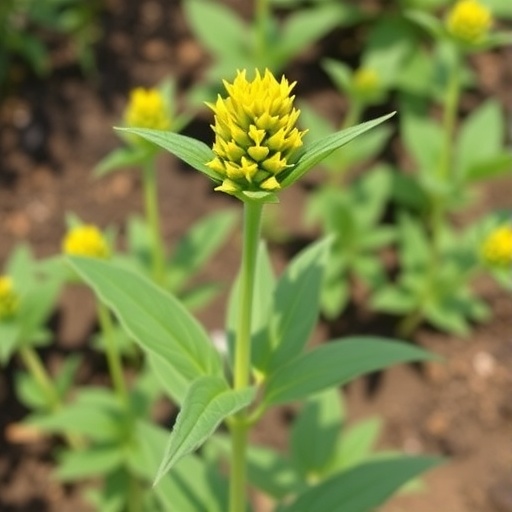
Heat waves are steadily squeezing the margins of winter agriculture across South Asia, and few crops feel the squeeze more acutely than mustard. In the eastern Indo-Gangetic plains, farmers increasingly sow mustard late so that the crop can follow rice in the region’s dominant rice–wheat–mustard rotations, and late sowing pushes the reproductive and grain-filling stages directly into the punishing pre-summer heat. A new study from Banaras Hindu University in Varanasi offers an unusually detailed view of what heat actually does to the internal chemistry of a heat-susceptible mustard variety, and, more intriguingly, of how a single well-known plant hormone applied as a foliar spray can reorganize that chemistry toward survival. The work, published as an open-access research article in BMC Plant Biology, uses high-resolution mass spectrometry to map the metabolome of mustard plants under heat stress, with and without treatment by methyl jasmonate, a volatile derivative of the wound-response hormone jasmonic acid.
The research team, led by Madhurya Ray with corresponding author Md Afjal Ahmad of the Department of Plant Physiology at the Institute of Agricultural Sciences, focused on Pusa Bahar, a mustard genotype classified as heat susceptible. That choice was deliberate. Heat-tolerant varieties have their own built-in defenses, which can obscure the signals that scientists most want to understand; a susceptible line laid bare, its metabolism is easier to read like a ledger of vulnerability. The researchers grew the plants under a randomized block design and applied methyl jasmonate as a foliar treatment at a concentration of 20 micromolar, comparing it against untreated controls at 0 micromolar. Heat-stressed plants receiving the hormone treatment were then profiled alongside their untreated counterparts, allowing the team to disentangle the metabolic fingerprint of heat injury from the fingerprint of chemical protection.
The analytical backbone of the study was untargeted metabolomics using high-resolution mass spectrometry coupled to ultra-high-performance liquid chromatography. Untargeted metabolomics differs from targeted assays in a crucial way: rather than measuring a preselected list of compounds, it captures thousands of molecular features simultaneously, including ones the researchers never thought to look for. Each feature is defined by its mass-to-charge ratio, retention time, and fragmentation pattern, and can then be annotated against reference libraries such as the Human Metabolome Database and the Kyoto Encyclopedia of Genes and Genomes. To impose statistical order on this enormous data cloud, the team deployed a battery of multivariate techniques: principal component analysis to reveal the gross structure of the dataset, orthogonal partial least squares discriminant analysis, or OPLS-DA, to sharpen the separation between treatment groups, and machine-learning classifiers including random forest and support vector machines to identify the metabolites that best distinguish heat-stressed from protected plants.
What emerged was a portrait of a plant metabolism in disarray, followed by a carefully choreographed rescue. Under heat stress alone, Pusa Bahar plants accumulated a distinctive set of metabolites that researchers interpret as distress markers. Gamma-L-glutamyl-L-leucine, a glutathione-linked dipeptide, rose sharply, as did 2-oxoglutaric acid, a central intermediate of the tricarboxylic acid cycle, suggesting perturbed carbon and nitrogen flux through core respiration. Cytosine, a nucleobase, and 9-oxononanoic acid, an oxidized fatty acid fragment typically associated with membrane lipid peroxidation, also climbed — the latter being a chemical signature of the very membrane damage that heat inflicts on plant cells. In parallel, a second cluster of metabolites collapsed. Trehalose, a sugar prized for its role in stabilizing proteins and membranes during drought and thermal stress, declined markedly, as did uridine, a nucleoside central to RNA synthesis and energy transfer, along with trans-aconitic acid and several derivatives of quercetin, an antioxidant flavonoid.
The pattern tells a coherent story. Heat simultaneously overdrove some branches of metabolism and starved others. The accumulation of lipid peroxidation products indicates that the membranes of susceptible plants were being chemically eroded as reactive oxygen species ran rampant, while the loss of trehalose and quercetin derivatives points to a failure of the plant’s osmoprotective and antioxidant reserves precisely when they were needed most. The rise of 2-oxoglutaric acid, positioned at the junction of carbon metabolism and amino acid biosynthesis, hints at the redirection of nitrogen toward protective amino acids even as energy metabolism wobbled. In the heat-susceptible genotype, these shifts appear to represent an incomplete and ultimately insufficient response — the plant knows it is in trouble, but it cannot mount a defense strong enough.
Methyl jasmonate changed that calculus. When the hormone derivative was sprayed onto the leaves before heat exposure, the metabolomic picture shifted substantially. The treated plants showed reinforced osmoprotection, consistent with restoration of compatible solutes and sugars that stabilize cellular water content and protect macromolecules. They also showed evidence of improved membrane stability, with lipid remodeling patterns suggesting that the hormone primed cells to withstand, rather than merely endure, peroxidative attack. Perhaps most significantly, the MeJA-treated plants exhibited enhanced detoxification of reactive oxygen species, the chemically aggressive molecules — superoxide, hydrogen peroxide, and hydroxyl radicals among them — that multiply when photosynthesis and respiration become thermally uncoupled and that destroy proteins, membranes, and DNA. Coordinated shifts in amino acid metabolism, carbohydrate turnover, antioxidant pathways, and secondary metabolism, all highlighted by the multivariate analyses, point to a broad systemic adjustment rather than a single-point intervention.
The mechanistic plausibility of these effects rests on a large body of plant physiology. Methyl jasmonate is a mobile signaling molecule that activates the jasmonate pathway, one of the master regulators of plant stress responses. Upon perception, jasmonate signaling converges on the transcriptional regulation of hundreds of genes, including those encoding enzymes of secondary metabolism — the flavonoid and phenylpropanoid pathways that produce quercetin and related antioxidants — as well as heat shock proteins and the factors that control them, the HSF-HSP system. Jasmonate signaling also interacts with abscisic acid, the hormone governing stomatal closure and dehydration responses, and with the oxylipin biosynthesis cascade that begins with lipoxygenase acting on membrane fatty acids and passes through intermediates such as 12-oxo-phytodienoic acid. By priming these pathways before the heat arrives, a modest 20 micromolar application effectively gives the plant a metabolic head start.
One of the study’s most practically valuable outputs is the identification of candidate metabolic biomarkers for heat stress tolerance. By combining OPLS-DA variable importance in projection scores with receiver operating characteristic analysis, the researchers could rank metabolites by their power to discriminate protected from unprotected plants. The metabolites that accumulated under heat — gamma-L-glutamyl-L-leucine, 2-oxoglutaric acid, cytosine, 9-oxononanoic acid — and those that were depleted — trehalose, uridine, trans-aconitic acid, quercetin derivatives — together form a molecular panel that breeders and physiologists could use to screen seedlings for heat resilience long before plants reach the field. Screening by metabolite profile is faster and potentially more informative than waiting for yield data at season’s end, and it can be applied at early growth stages in glasshouse or growth-chamber conditions.
The agricultural context amplifies the significance. Mustard, Brassica juncea, is a pillar of edible oil production in the Indian subcontinent, and climate projections by the Intergovernmental Panel on Climate Change indicate that terminal heat stress will grow more frequent and more intense across the region’s rabi cropping season. Because sowing dates are constrained by the harvest of the preceding rice crop, simply telling farmers to plant earlier is rarely feasible. Chemical priming with jasmonate derivatives offers a stopgap that could be integrated into existing spraying regimens, buying susceptible varieties a measure of protection during the critical heat window. In the longer term, the biomarker panel identified here could feed directly into marker-assisted and metabolomic breeding programs aimed at stacking thermotolerance traits into elite cultivars without sacrificing yield or oil quality.
The authors are careful to frame the work as a foundation rather than a finished recipe. The study was conducted on a single, deliberately heat-susceptible genotype, and translating the findings to tolerant varieties and to open-field conditions — where heat arrives tangled with drought, vapor pressure deficit, and variable soil moisture — will require further experimentation. Dose optimization, timing relative to growth stage, and the agronomic economics of foliar jasmonate application all remain open questions. Nevertheless, the metabolome-scale resolution of the data, achieved without external funding and supported by the AICRP-RM project and the Institution of Excellence grant at Banaras Hindu University, demonstrates that modern untargeted metabolomics can move beyond descriptive cataloging to deliver actionable intelligence for crop improvement.
What makes the study resonant beyond agronomy is the picture it draws of plant stress as a whole-body metabolic event. Heat does not merely denature a few proteins; it rewrites the chemical conversation among carbon metabolism, nitrogen assimilation, lipid architecture, and redox balance. The fact that a single hormone signal can rebalance that conversation suggests a remarkable degree of metabolic plasticity latent even in susceptible germplasm. For a crop that millions of smallholder farmers depend on, and for a warming world that is testing that dependence year after year, decoding this chemical language may prove to be one of the more consequential frontiers of plant science.
Subject of Research: Metabolic reprogramming and biomarker identification for heat stress tolerance in heat-susceptible mustard (Brassica juncea L. cv. Pusa Bahar) under methyl jasmonate treatment, analyzed by untargeted high-resolution mass spectrometry metabolomics.
Subject of Research: Agriculture
Article Title: Metabolomic dissection and biomarker identification for heat stress tolerance under ameliorative effects of methyl jasmonate in mustard (Brassica juncea L.)
Article References: Ray, M., Gautam, V., Jat, M., Ahmad, M. A., Srivastava, K., & Prakash, P. (2026). Metabolomic dissection and biomarker identification for heat stress tolerance under ameliorative effects of methyl jasmonate in mustard (Brassica juncea L.). BMC Plant Biology. https://doi.org/10.1186/s12870-026-09751-9
Image Credits: AI Generated
DOI: 10.1186/s12870-026-09751-9
Keywords: thermotolerance, mustard, Brassica juncea, heat stress, methyl jasmonate, metabolomics, HRMS, biomarkers, oxidative stress, membrane stability, jasmonic acid signaling, crop improvement
Cite Scienmag News
APA
MLA
Chicago
Alan Morgan. (September 4, 2026). Methyl jasmonate metabolomic biomarkers reveal heat stress tolerance in mustard. Scienmag. https://scienmag.com/methyl-jasmonate-metabolomic-biomarkers-reveal-heat-stress-tolerance-in-mustard/
Alan Morgan. “Methyl jasmonate metabolomic biomarkers reveal heat stress tolerance in mustard.” Scienmag, 4 September 2026, https://scienmag.com/methyl-jasmonate-metabolomic-biomarkers-reveal-heat-stress-tolerance-in-mustard/. Accessed 4 September 2026.
Alan Morgan. “Methyl jasmonate metabolomic biomarkers reveal heat stress tolerance in mustard.” Scienmag. September 4, 2026. https://scienmag.com/methyl-jasmonate-metabolomic-biomarkers-reveal-heat-stress-tolerance-in-mustard/
Copy citation
Download RIS
Tags: biochemical changes under heat stress in mustardbiochemical mechanisms of heat toleranceeffect of foliar sprays on heat susceptibilityheat stress biomarkers in mustard plantsheat stress response in Indo-Gangetic plainsheat susceptibility in mustardheat tolerance mechanisms in mustardheat wave impact on South Asian winter cropshigh-resolution mass spectrometry in plant sciencehigh-resolution mass spectrometry in plant stressimpact of jasmonic acid derivatives on cropsmetabolome reorganization under heat stressmetabolomic analysis of heat tolerancemetabolomic profiling of heat-sensitive mustard varietiesmetabolomics of heat stress in cropsmethyl jasmonate plant hormonemethyl jasmonate plant hormone applicationmustard crop resilience to climate changeMustard heat stress biomarkersopen-access research on plant metabolomicsplant hormone foliar sprayplant hormone-mediated stress tolerancerole of jasmonic acid derivatives in plant stress responserole of plant hormones in heat stress mitigation