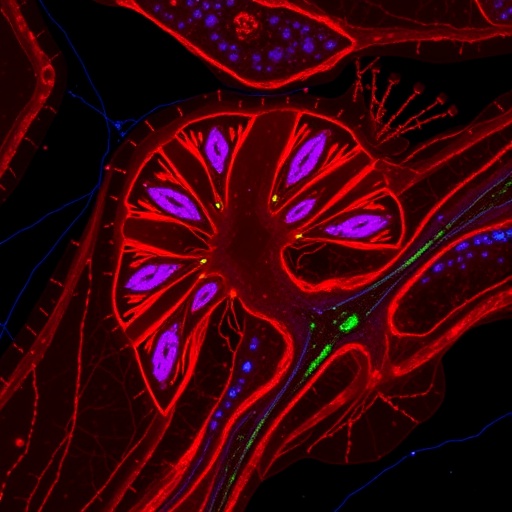
Idiopathic pulmonary fibrosis has long been framed as a disease of runaway wound healing, in which the delicate air sacs of the lung are progressively replaced by stiff scar tissue that no longer permits the exchange of oxygen. Yet the precise molecular events that push otherwise resilient alveolar epithelial cells toward a profibrotic state have remained frustratingly incomplete. A new study from researchers at CSIR-Institute of Genomics and Integrative Biology in New Delhi and collaborators at Ashoka University and Hansraj College, University of Delhi, adds a striking piece to that puzzle. Writing in Molecular Biology Reports, the team reports that loss of desmoplakin—a structural protein best known as the molecular rivet of desmosomes, the junctions that weld epithelial cells together—triggers a cascade of Wnt/β-catenin signaling that remodels the extracellular matrix and activates classic fibrotic gene programs in human alveolar epithelial cells in vitro.
The work builds on a decade of genetic evidence. Genome-wide association studies have repeatedly linked variants near the desmoplakin gene, DSP, to susceptibility to idiopathic pulmonary fibrosis, and independent work has shown that a functional variant, rs2076295, regulates desmoplakin expression in airway epithelial cells. Desmoplakin variants have also been associated with a distinctly fibrotic and inflammatory form of heart muscle disease, suggesting that this protein does more than glue cells together. What has been missing, however, is a mechanistic account of how reduced desmoplakin in the alveolar epithelium could translate into the collagen deposition, matrix stiffening, and epithelial dysfunction that define pulmonary fibrosis. The new study, led by first author Pooja Singh with senior author Ritushree Kukreti, sets out to close that gap.
To do so, the researchers used small interfering RNA to silence DSP expression in A549 cells, an adenocarcinoma-derived human alveolar epithelial cell line that is a workhorse of pulmonary fibrosis modeling. The consequences of losing desmoplakin were immediate and multifaceted. The cells underwent hallmarks of epithelial-to-mesenchymal transition, the process by which epithelial cells shed their polarized, adhesive identity and acquire migratory, matrix-producing characteristics. Cell migration increased, epithelial permeability rose, and the expression of fibrotic and extracellular matrix-associated genes climbed. Among the genes upregulated were COL1A1, which encodes the alpha-1 chain of type I collagen, the dominant structural protein of fibrotic scars, and MMP9, a matrix metalloproteinase that degrades and reshapes the extracellular matrix. In fibrotic lungs, the balance between matrix-degrading enzymes and their inhibitors is famously disrupted, and the appearance of these genes after DSP loss places desmoplakin squarely upstream of matrix remodeling.
To identify the pathway responsible, the team turned to the STRING database and mapped the known interaction partners of desmoplakin, then performed pathway enrichment analysis on that network. One signal rose above the rest: the canonical Wnt/β-catenin pathway, an ancient developmental signaling cascade whose reactivation in adult tissues is a well-documented feature of idiopathic pulmonary fibrosis. Prior studies have shown that functional Wnt signaling is increased in fibrotic human lungs and that β-catenin–dependent transcription supports the survival and migration of alveolar epithelial cells after injury. The enrichment analysis suggested that desmoplakin might act as a brake on this program—and that removing the brake would allow fibrotic signaling to run unchecked.
The mechanistic validation that followed is where the study becomes technically interesting. Desmosomes are not merely mechanical fasteners; their component proteins participate in signaling crosstalk, most notably through plakoglobin, also known as γ-catenin. Plakoglobin is a close molecular relative of β-catenin: both are armadillo-family proteins that compete for overlapping binding sites at junctions, and both can, in principle, enter the nucleus and engage T-cell factor/lymphoid enhancer factor (TCF/LEF) transcription factors. Crucially, plakoglobin acts as a transcriptional antagonist of β-catenin in several tissues. Landmark work in cardiomyocytes showed that nuclear plakoglobin suppresses canonical Wnt/β-catenin signaling, and that its loss underlies the pathology of arrhythmogenic cardiomyopathy. The New Delhi team hypothesized that an analogous arrangement governs the alveolar epithelium.
The experiments supported that hypothesis. Using cycloheximide chase assays, which block new protein synthesis and allow researchers to follow the decay of existing proteins over time, the researchers found that loss of desmoplakin destabilized desmosomal complexes and accelerated the degradation of plakoglobin. At the same time, β-catenin turnover was reduced, meaning the signaling-competent catenin persisted longer in the cell. Quantitative PCR and western blotting confirmed the corresponding changes in transcript and protein abundance, and immunofluorescence microscopy revealed increased accumulation of β-catenin in the nucleus—the compartment where it acts as a transcriptional co-activator. Luciferase reporter assays, in which cells are engineered to glow when TCF/LEF-driven transcription occurs, demonstrated that this nuclear β-catenin was functionally active, driving enhanced TCF/LEF-dependent transcription. The downstream consequence was elevated expression of extracellular matrix genes, including COL1A1 and MMP9, tying the junctional protein loss directly to the fibrotic transcriptional output.
The team then tested the circuit from the opposite direction. When they overexpressed desmoplakin, Wnt/β-catenin signaling and fibrotic gene expression were suppressed, consistent with desmoplakin acting as a homeostatic restraint on the pathway. And when they pharmacologically inhibited Wnt/β-catenin signaling in cells lacking desmoplakin, the increases in ECM-associated gene expression were attenuated—strong evidence that the pathway is not merely correlated with the fibrotic phenotype but is causally required for it. Together, the gain-of-function, loss-of-function, and rescue experiments sketch a coherent model: desmoplakin stabilizes the desmosomal scaffold that retains plakoglobin; plakoglobin, in turn, competes with and restrains β-catenin; when desmoplakin disappears, plakoglobin degrades, β-catenin accumulates in the nucleus, TCF/LEF transcription surges, and the cell begins manufacturing the molecular ingredients of scar tissue.
The findings resonate with related observations in other organs and cell types. Plakophilin-2, another desmosomal protein, has been shown to restrain TGF-β1/p38 MAPK-dependent fibrotic gene expression in cardiomyocytes, and desmoplakin-deficient zebrafish models of cardiac disease show Wnt/β-catenin abnormalities that can be rescued by genetic and pharmacological intervention. The lung appears to follow the same logic: the structural apparatus of epithelial adhesion doubles as a signaling hub, and its erosion converts mechanical vulnerability into biochemical reprogramming. This dual role may explain why genetic variants that subtly lower desmoplakin expression—without abolishing it entirely—could predispose individuals to fibrosis over decades, particularly when combined with environmental insults such as microaspiration, smoke exposure, or viral injury.
The clinical implications are tantalizing but deliberately hedged. Available antifibrotic drugs for idiopathic pulmonary fibrosis slow disease progression modestly, and there is broad agreement that new targets are urgently needed. If reduced desmoplakin function is a driver of fibrotic initiation in susceptible individuals, then preserving desmosomal integrity, stabilizing plakoglobin, or dialing down β-catenin activity in the alveolar epithelium could represent alternative therapeutic strategies. Wnt pathway inhibitors are already in development for cancer and other fibrotic diseases, and the current results suggest a specific epithelial context in which such inhibitors might be beneficial. Conversely, the study complicates the picture for regenerative medicine, because β-catenin signaling is also required for lung development and epithelial repair; any therapeutic manipulation would need to distinguish between protective, transient signaling during wound healing and the chronic, dysregulated activation that drives fibrosis.
The authors are careful to frame their conclusions within the limits of the model system. A549 cells, while convenient and widely used, are a cancer-derived line with alveolar epithelial characteristics rather than genuine primary type II alveolar epithelial cells, and the entire study was conducted in vitro. Whether desmoplakin loss activates the same plakoglobin–β-catenin axis in primary human alveolar epithelial cells, in three-dimensional organoid cultures, or in animal models of fibrosis remains to be demonstrated. The team states explicitly that the disease relevance of the pathway will require validation in primary human alveolar epithelial cells and in vivo models. Nonetheless, by connecting a genetically validated IPF risk gene to a specific signaling mechanism and a concrete transcriptional output—collagen and matrix-remodeling enzymes—the study converts a statistical association into a testable biological hypothesis. It reframes the alveolar epithelium’s adhesive machinery as an active participant in epithelial–matrix crosstalk, and it suggests that the earliest seeds of pulmonary fibrosis may be planted not in the fibroblast, as long assumed, but in the structural proteins that hold the lung’s most vulnerable cells together.
Subject of Research: Role of desmoplakin loss in alveolar epithelial cells in driving Wnt/β-catenin–mediated extracellular matrix remodeling and fibrotic signaling relevant to idiopathic pulmonary fibrosis
Subject of Research: Biology
Article Title: Desmoplakin loss in alveolar epithelium drives Wnt/β-Catenin-mediated extracellular matrix remodeling and fibrotic signaling in vitro
Article References: Singh, P., Chakraborty, K., Bansal, A., Agrawal, A., & Kukreti, R. (2026). Desmoplakin loss in alveolar epithelium drives Wnt/β-Catenin-mediated extracellular matrix remodeling and fibrotic signaling in vitro. Molecular Biology Reports, 53(1), Article 1516. https://doi.org/10.1007/s11033-026-12709-7
Image Credits: AI Generated
DOI: 10.1007/s11033-026-12709-7
Keywords: idiopathic pulmonary fibrosis, desmoplakin, Wnt/β-catenin, plakoglobin, extracellular matrix, epithelial-to-mesenchymal transition, COL1A1, MMP9, profibrotic signaling, alveolar epithelial cells
Cite Scienmag News
APA MLA Chicago
Juliet Wilcox. (September 4, 2026). Losing desmoplakin in lung epithelium triggers fibrotic Wnt signaling in vitro. Scienmag. https://scienmag.com/losing-desmoplakin-in-lung-epithelium-triggers-fibrotic-wnt-signaling-in-vitro/
Juliet Wilcox. “Losing desmoplakin in lung epithelium triggers fibrotic Wnt signaling in vitro.” Scienmag, 4 September 2026, https://scienmag.com/losing-desmoplakin-in-lung-epithelium-triggers-fibrotic-wnt-signaling-in-vitro/. Accessed 4 September 2026.
Juliet Wilcox. “Losing desmoplakin in lung epithelium triggers fibrotic Wnt signaling in vitro.” Scienmag. September 4, 2026. https://scienmag.com/losing-desmoplakin-in-lung-epithelium-triggers-fibrotic-wnt-signaling-in-vitro/
Copy citation Download RIS
Tags: airway epithelial cell susceptibilityalveolar epithelial cell injuryalveolar epithelial cellsdesmoplakin lossdesmoplakin loss in lung epitheliumdesmosome junctionsextracellular matrix remodelingextracellular matrix remodeling in fibrosisfibrotic gene activationfibrotic gene activation in lung cellsgenetic susceptibilitygenetic variants in DSP genegenetic variants linked to idiopathic pulmonary fibrosisIdiopathic pulmonary fibrosisimpact of desmoplakin deficiency on lung epitheliumin vitro lung cell modelsin vitro models of lung fibrosislung epitheliummolecular mechanisms of lung fibrosismolecular pathways of wound healing in lungspulmonary fibrosis molecular mechanismsrole of desmosomes in lung tissue integrityWnt/β-catenin signalingWnt/β-catenin signaling in lung fibrosis