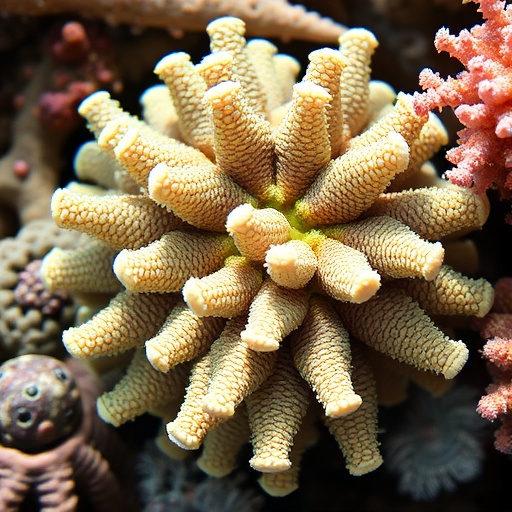
In the murky, nitrogen-rich waters of Hong Kong, one coral species seems to thrive where others perish, and a new genomic study is revealing why the zebra coral Oulastrea crispata may owe its remarkable resilience to a combination of subtle genetic tweaks, a stress-tolerant algal partner, and sheer biological flexibility. The research, published in the journal Ecology and Evolution, offers one of the most detailed looks yet at how a coral can maintain genetic uniformity across a steep pollution gradient while still carrying the molecular fingerprints of environmental stress.
A team of researchers led by Le Qin Choo and Vriko Yu set out to determine whether O. crispata, an encrusting coral that ranges from the tropical Indo-Pacific to temperate waters as far north as Jeju Island and southern Japan, shows evidence of local adaptation along Hong Kong’s dramatic east–west water quality gradient. Hong Kong provides an ideal natural laboratory for this question. Its western waters, influenced by runoff from the Pearl River Delta and dense urban development, carry elevated levels of dissolved inorganic nitrogen, chlorophyll a, phosphate, and suspended solids, along with reduced salinity. Eastern waters, by contrast, are flushed with relatively clean oceanic input and support richer coral communities. The difference in dissolved inorganic nitrogen across the sampling area was pronounced, ranging from 1.6 to 9.0 micromolar over a spatial scale of just tens of kilometres.
To probe the coral’s genetic makeup, the researchers collected 90 individuals of O. crispata from eight sites spread across the gradient in August 2018, from eutrophic western locations such as Yam Chai Wan and Sam Tseng to oligotrophic eastern sites including Bluff Island and Lung Mei. Coral fragments were removed during SCUBA dives, immediately frozen in liquid nitrogen, and later subjected to restriction site-associated DNA sequencing, or RADseq, a reduced-representation genomics method that allows researchers to survey thousands of genetic markers without needing a reference genome. After rigorous filtering to remove contaminating sequences from algae, fungi, and other dinoflagellates, the team assembled a dataset of 39,527 genome-wide single nucleotide polymorphisms, or SNPs.
The first major finding was striking in its absence of drama: despite the pronounced environmental differences among sites, the coral population is genetically homogeneous. Principal component analysis showed that the first two axes explained a mere 2 percent and 1 percent of total genetic variation, and a clustering analysis using ADMIXTURE found that the best fit to the data was a single ancestral population. Pairwise genetic differentiation values, measured as FST, hovered near zero across all site comparisons, ranging from −0.0070 to 0.0060, indicating essentially free mixing of genes across the entire study area. Diversity metrics told a similar story of health: observed and expected heterozygosity were consistent across locations, nucleotide diversity ranged only from about 0.011 to 0.014, and inbreeding coefficients were uniformly low, suggesting no loss of genetic diversity despite the challenging conditions.
Why such uniformity? The authors point to the coral’s life history. O. crispata is a hermaphroditic species capable of both broadcast spawning and brooding, and the low inbreeding coefficients suggest outcrossing dominates. During Hong Kong’s southwest monsoon, coastal currents can move water masses more than 50 kilometres in under a week, passively transporting larvae between environmentally distinct sites. This high connectivity homogenises allele frequencies across the population, overwhelming any divergent selection at neutral loci. The pattern mirrors findings in other stress-tolerant corals, such as Pocillopora damicornis on the Great Barrier Reef and Porites lutea in the South China Sea, where long larval durations and generalist traits maintain gene flow.
Yet beneath this superficially uniform surface, the team detected something intriguing. Traditional outlier detection methods, BayeScan and OutFLANK, found no loci showing elevated differentiation, and a univariate genotype–environment association method called LFMM identified only a single outlier that was not corroborated. But a multivariate redundancy analysis (RDA), which models allele frequencies as a function of multiple environmental variables simultaneously, told a different story. The RDA model was statistically significant and explained about 5 percent of total genetic variance, identifying 137 outlier SNPs associated with water quality parameters. Of these, 43 were associated mostly with pH, 39 with suspended solids, 25 with temperature, 20 with dissolved oxygen, and 10 with chlorophyll a.
Functional annotation of these candidate loci, mapped against the O. crispata transcriptome, revealed that they are enriched for functions plausibly linked to environmental tolerance. Many of the annotated transcripts fall into three broad categories: external signal perception and transduction, including transcription regulation, protein phosphorylation, and signal transduction; membrane transport and ion homeostasis, particularly calcium-related transport, a process central to coral calcification; and endoplasmic reticulum and Golgi-associated protein trafficking and cellular metabolism. Calcium dysregulation is a well-known component of the coral stress response, and protein phosphorylation and carbohydrate metabolism have been implicated in the regulation of the symbiosis between cnidarians and their algal partners. In other words, the loci most strongly associated with polluted conditions are precisely the kinds of genes one might expect to be involved in sensing and coping with environmental stress.
The study also examined the coral’s algal symbionts, the photosynthetic dinoflagellates of the family Symbiodiniaceae that live inside coral tissues and supply much of their energy. By mapping RADseq reads to 11 Symbiodiniaceae reference genomes, the researchers found that Durusdinium trenchii, a member of a genus renowned for heat and stress tolerance, dominated across the entire water quality gradient, from the most eutrophic western sites to the cleanest eastern waters. A PERMANOVA test confirmed that symbiont community composition differed significantly among water quality categories, though the authors caution that the overwhelming dominance of Durusdinium means this pattern may reflect small shifts in rarer symbiont species. Previous work suggests the strain in Hong Kong waters is likely Durusdinium eurythalpos, a known associate of O. crispata in the subtropics. This stable partnership with a stress-tolerant symbiont represents what the authors call a holobiont-level mechanism of resilience: the coral and its microbial and algal partners together form a unit that can withstand conditions that would bleach or kill more specialised corals.
The authors are careful to frame their results as hypothesis-generating rather than definitive proof of local adaptation. Several caveats apply. Environmental values were assigned at the site level, meaning the effective replication in the RDA analysis is the number of sites, not individuals, which inflates the risk of false positives. Theoretically, polygenic adaptation driven by many small-effect loci is difficult to sustain in a highly connected population, because gene flow should swamp weak selection at any single locus. And the short fragments produced by RADseq make functional annotation inherently inferential. The 137 candidate loci remain putative, requiring validation through whole-genome sequencing and transcriptomic experiments, ideally with paired-gradient sampling designs tailored to detect weak selection.
Even so, the study paints a compelling picture of how a coral can persist at the front lines of coastal urbanisation. O. crispata‘s toolkit appears to include not only a reservoir of environment-associated alleles spread across many genetic backgrounds, possibly maintained by so-called soft selective sweeps, but also remarkable physiological flexibility. The species tolerates temperatures as low as 7 to 10 degrees Celsius at its poleward range edge, survives long periods in darkness in the laboratory, and can shift from partial reliance on its algal symbionts to fully heterotrophic feeding, a crucial advantage in Hong Kong’s turbid, light-limited waters. Its bacterial microbiome, moreover, remains relatively stable across the gradient, with only about 23 percent of microbiome variation explained by environmental differences, in contrast to more environmentally sensitive genera like Acropora and Tubastraea.
The broader implications reach beyond a single species. With nearly a billion people living within 100 kilometres of coral reefs, understanding how corals cope with the combined pressures of pollution, eutrophication, and climate change is urgent. Most adaptation studies focus on temperature and ocean acidification, but urbanised reefs represent an equally pressing and rapidly changing frontier. The Hong Kong findings suggest that in highly connected marine populations, adaptation may hide in diffuse, multilocus signals that only multivariate genomic methods can detect, complemented by non-genetic mechanisms such as symbiont shuffling and phenotypic plasticity. For restoration practitioners, the message is that conserving genetic diversity and the flexibility it enables may matter as much as selecting for specific stress-tolerant genotypes.
The research team, which also included Paolo Momigliano and Shelby E. McIlroy, was funded by the Research Grants Council of Hong Kong and the Ocean Park Conservation Foundation Hong Kong. Future work, they write, should apply whole-genome resequencing, epigenetic profiling, and biophysical models of larval dispersal to unravel the full genetic architecture of O. crispata‘s resilience. If the zebra coral can teach scientists how a reef-building animal endures some of the world’s most compromised waters, its lessons may prove invaluable for predicting which corals will survive the Anthropocene, and where conservation efforts should focus as coastal development continues to reshape tropical and subtropical seas.
Subject of Research: Population genomics and environmental adaptation of the zebra coral Oulastrea crispata across a eutrophication gradient in Hong Kong
Subject of Research: Biology
Article Title: Weak Structure and Environment-Associated Loci Across a Eutrophication Gradient in a Resilient Coral Species
Article References: Choo, L. Q., Yu, V., Momigliano, P., & McIlroy, S. E. (2026). Weak Structure and Environment‐Associated Loci Across a Eutrophication Gradient in a Resilient Coral Species. Ecology and Evolution, 16(7), Article e73908. https://doi.org/10.1002/ece3.73908
Image Credits: AI Generated
DOI: 10.1002/ece3.73908
Keywords: Oulastrea crispata, RADseq, eutrophication, coral resilience, genotype-environment association, Durusdinium, Hong Kong, population genomics, Symbiodiniaceae, phenotypic plasticity, local adaptation, marine connectivity
Cite Scienmag News
APA MLA Chicago
Juliet Wilcox. (September 3, 2026). Genetic Structure and Environment-Linked Loci in a Resilient Coral Along Eutrophication Gradient. Scienmag. https://scienmag.com/genetic-structure-and-environment-linked-loci-in-a-resilient-coral-along-eutrophication-gradient/
Juliet Wilcox. “Genetic Structure and Environment-Linked Loci in a Resilient Coral Along Eutrophication Gradient.” Scienmag, 3 September 2026, https://scienmag.com/genetic-structure-and-environment-linked-loci-in-a-resilient-coral-along-eutrophication-gradient/. Accessed 3 September 2026.
Juliet Wilcox. “Genetic Structure and Environment-Linked Loci in a Resilient Coral Along Eutrophication Gradient.” Scienmag. September 3, 2026. https://scienmag.com/genetic-structure-and-environment-linked-loci-in-a-resilient-coral-along-eutrophication-gradient/
Copy citation Download RIS
Tags: adaptation mechanisms in Oulastrea crispataconservation genetics of coral reefscoral adaptation along urbanization gradientsCoral genetic resiliencecoral response to pollution gradientscoral-algal symbiosis in polluted waterscoral-algal symbiosis under environmental stressecological genomics of coral reefseffects of nitrogen-rich waters on coral healtheffects of nitrogen-rich waters on coral speciesenvironmental linked loci in coral populationsenvironmental stress adaptation in coralseutrophication impact on coral reefseutrophication impact on reef ecosystemsgenetic structure of resilient coral speciesgenetic structure of resilient coralsgenomic analysis of coral stress tolerancegenomic insights into coral resiliencelocal adaptation of corals in Hong Kong waterslocal adaptation of corals to pollution gradientsmolecular markers of coral stress tolerancemolecular mechanisms of coral resilience