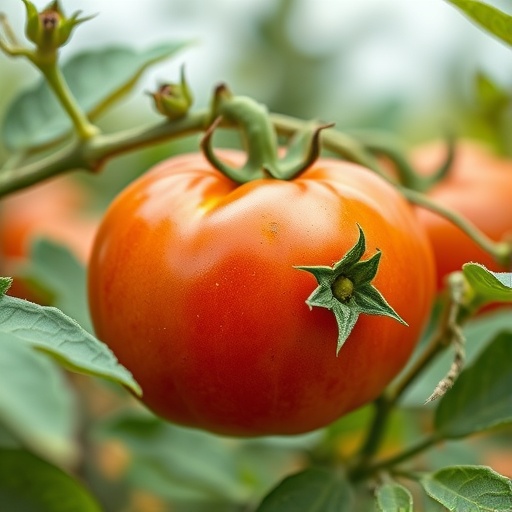
A comprehensive new scientific review has brought renewed attention to a class of largely unregulated fungal toxins that are routinely found in tomato products consumed around the world, warning that exposure to two of these compounds — alternariol and alternariol monomethyl ether — may exceed internationally recognized safety thresholds, particularly for young children and heavy consumers of tomato-based foods.
The review, published in the journal Current Research in Food Science, was conducted by a team of Italian food safety researchers led by Stefano Sdogati and Teresa D’Amore. It represents one of the most exhaustive attempts to date to consolidate what is known about Alternaria toxins, a family of secondary metabolites produced by one of the most ubiquitous fungal genera on Earth, and to assess the dietary risk they pose through tomato products, one of the most widely consumed vegetable-derived food categories globally.
Tomato is the most produced vegetable in the world, with global annual output reaching 192.32 million tons. China dominates production with 68 million tons, followed by India at 20.6 million tons, Turkey at 13 million tons, and the United States at 10.2 million tons. Within the European Union, Italy leads with 6.1 million tons, ahead of Spain and Portugal. But the tomato’s fragile epidermis makes it exceptionally vulnerable to infection by Alternaria, a genus of saprophytic fungi first described in 1817 that thrives in conditions of humidity above 80 percent and temperatures around 20 degrees Celsius — conditions commonly found in Mediterranean and tropical climates where much of the world’s tomato crop is grown. Species such as Alternaria alternata and A. arborescens are responsible for early blight and brown spot diseases in tomatoes, causing fruit decay, crop losses, and — crucially for food safety — contamination of the harvested product with fungal metabolites.
Approximately 70 Alternaria toxins have been structurally characterized to date, and they fall into chemically distinct families. The dibenzo-α-pyrones include alternariol (AOH), alternariol monomethyl ether (AME), altenuene, and altenuisol, compounds biosynthesized through polyketide synthase enzymes starting from acetyl-CoA via six consecutive condensation reactions incorporating activated malonate moieties, followed by an aromatization-lactonization step. The tetramic acid derivatives include tenuazonic acid (TeA), a small polar molecule produced by a hybrid polyketide synthase–non-ribosomal peptide synthetase enzyme, whose biosynthesis in related fungi begins from isoleucine and acetoacetyl-CoA. The perylene-quinone family, which includes the altertoxins, is believed to arise through a pathway resembling the dihydroxynaphthalene melanin pathway shared by many fungi. Most concerning from a plant pathology standpoint are the AAL-toxins, host-specific toxins that selectively damage tomato plants; these aminopentol esters are structurally similar to fumonisins and are synthesized by a polyketide synthase gene shared with the toxin-producing machinery of numerous other pathogenic fungi. Tentoxin, a cyclic peptide containing glycine, L-leucine, N-methyl-L-alanine, and N-methyl-L-dehydrophenylalanine, rounds out the most relevant miscellaneous structures.
The toxicological profile of these compounds gives regulators reason for concern. AOH and AME exert cytotoxicity through the generation of reactive oxygen species following alteration of mitochondrial membrane potential, and both have demonstrated carcinogenic properties, including concentration-dependent induction of DNA strand breaks in hamster, human colon, and human liver cells. Their mutagenic mechanism likely involves covalent interaction with DNA topoisomerase II during replication fork formation and elongation. Recent work has shown that altertoxin I and II behave similarly, with potencies comparable to AOH. TeA operates differently, reducing protein synthesis by inhibiting release from ribosomes — in mammalian cells, protein production dropped by up to 80 percent after 72 hours at concentrations of 200 to 400 micrograms per milliliter. TeA also has the lowest LD50 values in mice, ranging from 81 to 225 milligrams per kilogram of body weight. Toxicokinetic studies indicate that AOH and AME are poorly absorbed in the gastrointestinal tract and rapidly metabolized, with roughly 90 percent of an oral dose excreted in feces, but their structural similarity to known genotoxic compounds has kept them firmly on the regulatory radar.
The European Food Safety Authority first assessed these risks in 2011, drawing on 11,730 analytical results, and concluded that exposure to AOH and AME may exceed the Threshold of Toxicological Concern, a screening tool used for substances lacking full toxicological datasets. A 2016 update, based on 24,461 results from 7,916 food samples, identified tomato and tomato-based products as a major exposure source, with TeA appearing at mean concentrations of 351.2 micrograms per kilogram in that matrix. The most exposed populations were infants and toddlers, with estimated intakes reaching 1.490 and 1.614 micrograms per kilogram of body weight per day respectively under upper-bound assumptions. These findings prompted the European Commission to issue Recommendation (EU) 2022/553, which established indicative levels — thresholds above which investigations should be performed — for AOH, AME, and TeA in foodstuffs, including a level of 10 micrograms per kilogram for AOH and AME and 500 micrograms per kilogram for TeA in processed tomato products. Notably, the European Union remains the only jurisdiction in the world with any structured framework for these contaminants; the United States, Canada, China, India, Brazil, and other major trading partners have no national limits, with only the German region of Bavaria adopting a precautionary limit of 500 micrograms per kilogram for TeA in sorghum- and millet-based infant foods.
To build their risk picture, the review authors applied a strict PRISMA-based selection process, accepting only studies that used liquid chromatography–tandem mass spectrometry, the gold-standard analytical technique for emerging mycotoxins. Twenty research studies published between 2011 and 2025 survived the screening. The methodological analysis reveals how dramatically the field has advanced: early thin-layer chromatography methods could only detect toxins at levels of 100 to 700 micrograms per kilogram, while modern LC-MS/MS workflows routinely achieve limits of quantification as low as 0.1 to 5 micrograms per kilogram, sometimes bypassing laborious derivatization steps entirely. The European recommendation now requires analytical methods to reach quantification limits no higher than 2 micrograms per kilogram for AOH and AME in infant foods and 20 micrograms per kilogram for TeA in all foods — benchmarks that only the most recent methods can meet.
The occurrence data compiled from those 20 studies paint a consistent picture. TeA emerged as the most prevalent and abundant toxin in tomato-based products, with mean concentrations frequently reaching 37 to 40 micrograms per kilogram and maximum values exceeding 1,000 micrograms per kilogram in some studies, likely reflecting its extreme polarity, high water solubility, and resistance to degradation during processing. AOH and AME appeared far more frequently than the family of AAL-toxins, which were generally not included in routine monitoring. Crucially, the review found that contamination is rarely caused by a single toxin — AOH and AME, which share the same biosynthetic route, typically occur together, and co-occurrence raises the specter of combined toxicity. In vitro studies testing binary and ternary combinations of AOH, AME, and TeA on human intestinal epithelial cells and hepatocytes showed increased cytotoxicity at the highest concentrations tested, and studies on porcine epithelial cells demonstrated that co-administration of AOH and AME significantly decreased cell viability compared with individual toxins, suggesting a possible synergistic mechanism.
Perhaps the most striking finding concerns processing. The review found that concentrated tomato products — tomato paste and tomato concentrates — consistently showed the highest contamination levels, while fresh tomatoes and diluted products showed lower levels. This reflects the concentration effect of industrial processing, in which water removal during paste production amplifies whatever toxin load was present in the raw fruit. The authors note that validated processing or transformation factors for Alternaria toxins are almost entirely absent from the scientific literature, a major barrier to interpreting contamination across product categories and to setting product-specific guidance levels. A related mystery concerns altenuene, which appeared far less frequently than its chemical relatives — possibly because only certain Alternaria strains produce it, or because quantification limits for this compound are generally higher than for other toxins.
The dietary exposure assessment performed by the review team integrated occurrence data with consumption figures from FAOSTAT, EFSA’s FoodEx2 classification, and Italian national dietary surveys, evaluating global, European, and Italian populations across age subgroups and high-consumer scenarios. For liquid tomato products, estimated daily intakes of AOH and AME frequently reached or exceeded the TTC for genotoxic substances — set at 0.0025 micrograms per kilogram of body weight per day — particularly in children, toddlers, and high-consumption scenarios. When the authors applied the benchmark dose lower confidence limit of 0.0336 micrograms per kilogram of body weight per day derived from a 28-day oral study of AME, the resulting margins of exposure fell well below 100 across all tomato product categories, far from the margin of 10,000 typically considered of low concern for genotoxic carcinogens. The authors caution that this result should not be read as definitive evidence of high risk — the toxicological reference point comes from a short-term study, and applying AME data to AOH involves an inherent read-across assumption — but they conclude that a potential health concern cannot be excluded.
By contrast, exposures to TeA and tentoxin from tomato products remained well below the TTC of 1.5 micrograms per kilogram of body weight per day for non-genotoxic compounds across all population groups assessed, a finding fully aligned with EFSA’s earlier judgments. The overall picture that emerges is one of a regulatory and scientific landscape still struggling to catch up with a persistent and globally relevant contamination problem in a staple food. The review’s authors argue that meaningful progress now depends on integrating toxicology, exposure science, food technology, and regulatory policy — expanding beyond short-term studies and structural read-across approaches toward long-term, mechanistic, and mixture-toxicity investigations, while harmonizing analytical sensitivity worldwide and systematically reporting all toxin classes. Alternaria toxins in tomato products, they conclude, are neither sporadic nor negligible, and sustained scientific attention, stronger regulatory guidance, and practical mitigation strategies throughout the entire supply chain will be needed to protect consumers effectively.
Subject of Research: Occurrence, analytical detection, dietary exposure, and regulatory status of Alternaria mycotoxins in tomato products
Subject of Research: Agriculture
Article Title: Alternaria toxins in tomato products: from analytical advances to risk assessment and regulatory needs
Article References: Sdogati, S., Pecorelli, I., Orsini, S., Pacini, T., Bibi, R., Caporali, A., Verdini, E., Smaoui, S., Agriopoulou, S., & D’Amore, T. (2026). Alternaria toxins in tomato products: from analytical advances to risk assessment and regulatory needs. Current Research in Food Science, 13, Article 101483. https://doi.org/10.1016/j.crfs.2026.101483
Image Credits: AI Generated
DOI: 10.1016/j.crfs.2026.101483
Keywords: Alternaria toxins, mycotoxins, tomato products, alternariol, tenuazonic acid, LC-MS/MS, food safety, dietary exposure, risk assessment, Threshold of Toxicological Concern
Cite Scienmag News
APA MLA Chicago
Daisy Hatcher. (September 3, 2026). Advances in detecting and regulating Alternaria toxins in tomato products. Scienmag. https://scienmag.com/advances-in-detecting-and-regulating-alternaria-toxins-in-tomato-products/
Daisy Hatcher. “Advances in detecting and regulating Alternaria toxins in tomato products.” Scienmag, 3 September 2026, https://scienmag.com/advances-in-detecting-and-regulating-alternaria-toxins-in-tomato-products/. Accessed 3 September 2026.
Daisy Hatcher. “Advances in detecting and regulating Alternaria toxins in tomato products.” Scienmag. September 3, 2026. https://scienmag.com/advances-in-detecting-and-regulating-alternaria-toxins-in-tomato-products/
Copy citation Download RIS
Tags: advances in food safety testing for fungal toxinsadvances in food toxin regulationAlternaria toxin detection in tomato productsAlternaria toxins in tomato productsalternariol and alternariol monomethyl ether safety thresholdsdetection of fungal toxins in fooddietary risk assessment of fungal toxinsEuropean Union food safety policies on fungal toxinsfood safety research on Alternaria toxinsfood safety risks of alternariolglobal tomato consumption and contaminationglobal tomato consumption and toxin exposurehealth impact of alternariol monomethyl etherimpact of fungal metabolites on vulnerable populationsimpact of fungal toxins on children’s healthinternational standards for mycotoxin regulationmethods for detecting Alternaria toxinsmethods for detecting Alternaria toxins in tomatoesmitigation strategies for Alternaria toxin contaminationregulation of fungal toxins in foodregulation of mycotoxins in vegetablesregulatory challenges for fungal toxins in foodrisk assessment of mycotoxins in tomato-based foods