A “Silent” Pleural Hematoma Expanded for Eight Years Before Triggering Fatal Hemoptysis
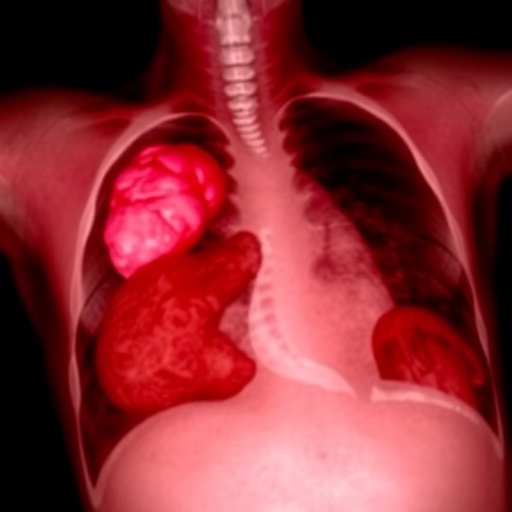
A rare blood collection in the chest slowly enlarged over eight years, eventually causing catastrophic bleeding into the airways, respiratory failure and death in a 73-year-old man, according to a case report published in Respirology Case Reports. The condition, known as chronic expanding hematoma (CEH), can develop when an old collection of blood becomes enclosed by scar tissue and continues to grow through repeated microscopic bleeding. Although thoracic CEH is most often associated with previous tuberculosis, chest surgery or major trauma, the patient had no history of any of these common triggers. His case illustrates how a seemingly stable pleural mass can evolve into a dangerous disorder involving the lung, airways and mechanics of breathing.
The patient, a Nepalese man with well-controlled asthma and hypertension, first sought medical attention in 2017 after experiencing mild, intermittent hemoptysis—the coughing up of blood. A contrast-enhanced computed tomography (CT) scan revealed a large, compartmentalized collection along the right pleural space, the thin cavity between the lung and chest wall. The mass measured approximately 13.7 by 6.5 by 7 centimeters and appeared consistent with an organized pleural hematoma. Ultrasound-guided drainage produced altered, old blood rather than evidence of active hemorrhage. Tests found no acid-fast bacteria or other bacteria in the fluid, and cytological analysis showed no malignant cells. Because his symptoms were mild and his condition stabilized with oral tranexamic acid, a medication that helps prevent clot breakdown, he declined surgical removal.
The hematoma did not disappear. When the patient returned after another episode of hemoptysis in 2020, imaging showed new pockets of gas inside the otherwise blood-filled lesion. The finding was particularly concerning because he had undergone no intervening pleural procedure and had no documented infection that could readily explain gas formation. Clinicians suspected a bronchopleural fistula, an abnormal passage connecting the bronchial tree to the pleural cavity. Such a connection can allow air from the respiratory tract to enter the hematoma and, in the opposite direction, enable blood or infected material to reach the airways. The patient then returned to Nepal and was lost to medical follow-up for five years, leaving the suspected communication untreated while the encapsulated mass continued its slow evolution.
By late 2025, he re-presented with chest pain and severely elevated blood pressure. A CT angiogram ruled out an acute aortic dissection, but showed that the pleural hematoma had grown to 14.0 by 7.8 by 8.4 centimeters. Its outer capsule also contained more dystrophic calcification, a process in which calcium deposits accumulate in chronically damaged tissue. The increase in size was modest in some dimensions, but clinically important: a lesion occupying much of one side of the chest can compress adjacent lung tissue, restrict its expansion and impair the diaphragm’s movement. The patient also had new-onset atrial fibrillation, an irregular heart rhythm that increases the risk of stroke. After his blood pressure was controlled, clinicians began apixaban, an anticoagulant prescribed to reduce that risk.
Soon afterward, he developed life-threatening hemoptysis and type 2 respiratory failure, in which inadequate ventilation causes carbon dioxide to accumulate in the blood. Apixaban was immediately stopped, but the bleeding was severe enough to require emergency intubation and mechanical ventilation in an intensive-care unit. Bronchoscopy, in which a camera is passed through the breathing tube, showed blood oozing from the right lower-lobe bronchus—the airway anatomically closest to the hematoma. This localization strengthened the suspicion that the expanding pleural lesion had begun bleeding into or communicating with the bronchial system. Respiratory testing also detected Klebsiella pneumoniae and methicillin-resistant Staphylococcus aureus, prompting treatment with levofloxacin and vancomycin. However, CT bronchial arteriography did not show enlarged or abnormal bronchial arteries that could explain the hemorrhage, suggesting that the bleeding might have arisen from fragile vessels within the chronic inflammatory capsule rather than from a readily embolized arterial source.
The biology of CEH helps explain why such a mass can enlarge long after the original bleeding event. As hemoglobin and other blood products break down, they irritate surrounding tissues and maintain a low-grade inflammatory response. The body attempts to contain the collection by forming granulation tissue and a thick fibrous capsule. That capsule is not inert: it can develop a network of small, abnormal blood vessels. These newly formed capillaries are structurally fragile and vulnerable to repeated microhemorrhage. Each tiny bleed adds more blood to the lesion, while further inflammation and organization thicken the capsule, creating a self-perpetuating cycle. Over years, the result can be a heterogeneous pleural mass containing layers of different-aged clot, fibrous tissue, inflammatory cells and calcification. The same cycle has been proposed in other chronic expanding hematomas, including those occurring after tuberculosis-related pleural disease or old thoracic operations.
The clinical team considered the standard definitive treatment: surgical evacuation of the clot together with capsulectomy, or removal of the constricting fibrous shell. Surgery is generally favored because simply draining a CEH may leave behind the vascularized capsule that drives further bleeding and expansion. In some high-risk patients, selective arterial embolization may be performed before surgery to reduce blood loss. The operation, however, can itself be hazardous because the capsule may adhere tightly to the lung, chest wall and major vessels, and reports have described substantial intraoperative blood loss. In this patient, persistent type 2 respiratory failure, severely restricted lung volumes, poor diaphragmatic excursion and frailty made major thoracic surgery too dangerous. An attempt to aspirate the mass through a needle also failed: the blood had become so densely organized that no fluid could be withdrawn.
Mechanical ventilation introduced another complication. Positive pressure increased the pressure within the airways and apparently worsened the suspected bronchopleural air leak, producing subcutaneous emphysema—air trapped beneath the skin of the chest and neck. The swelling was managed conservatively and eventually resolved without insertion of an intercostal chest drain. Yet the underlying problem remained. Recurrent bleeding required frequent bronchoscopic suctioning and airway clearance, while the large hematoma continued to compromise respiratory mechanics. The patient repeatedly failed attempts to come off the ventilator and ultimately underwent an elective tracheostomy to provide longer-term ventilatory support. Two months later, despite intensive supportive treatment, he developed hospital-acquired pneumonia and died from progressive respiratory failure.
A post-mortem examination finally provided definitive confirmation. The pleural lesion contained dense fibrous tissue, dystrophic calcification, patchy chronic inflammation, mature fibroadipose tissue and organized blood clots—the characteristic mixture expected in a chronic expanding hematoma. There was no histological evidence of tuberculosis, cancer or acute infection. The authors emphasize that CEH should be considered when CT reveals a slowly enlarging, heterogeneous pleural mass surrounded by a thick, sometimes calcified capsule, particularly after more common explanations such as malignancy and active infection have been excluded. The case also demonstrates why early recognition matters: a patient with mild symptoms may later develop airway bleeding, bronchopleural fistula, infection, lung compression and respiratory collapse. Because treatment decisions involve radiologists, pulmonologists, intensivists and cardiothoracic surgeons, the report argues for multidisciplinary assessment and early consideration of definitive surgery before the lesion becomes too organized or the patient too medically fragile to survive it.
Subject of Research: Chronic expanding thoracic hematoma complicated by life-threatening hemoptysis, bronchopleural fistula and respiratory failure
Article Title: Chronic Expanding Hematoma Complicated by Life Threatening Hemoptysis and Respiratory Arrest—A Case Report
Article References: Yu A. S.-y., Cheung C. Y., Ng C. T., et al., “Chronic Expanding Hematoma Complicated by Life Threatening Hemoptysis and Respiratory Arrest—A Case Report,” Respirology Case Reports 14, no. 7 (2026): e70665. Original research article
Image Credits: AI Generated
DOI: 10.1002/rcr2.70665
Keywords: chronic expanding hematoma, thoracic hematoma, life-threatening hemoptysis, bronchopleural fistula, respiratory failure, pleural disease, organized blood clot, dystrophic calcification
Tags: case reportchronic expanding hematomadifferential diagnosis of chest masseshemoptysislife-threatening bleedinglong-term hematoma growthpleural masspulmonary complicationsrespiratory failurespontaneous hemothoraxthoracic hematomatrauma-free hematoma development