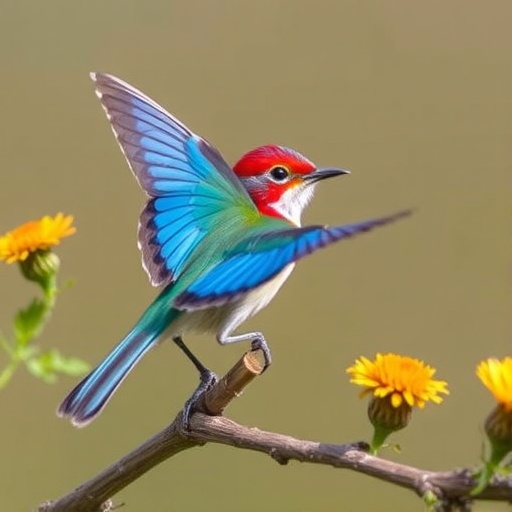
Europe’s most familiar birds and butterflies may continue to disappear from the landscape even if governments achieve major conservation goals, according to a continent-wide modelling study that examined how climate change, land use and the intensity of human activity could reshape common biodiversity by 2050. The analysis, covering 265 common bird species and 144 common butterfly species across more than 20,000 monitoring sites in 27 European countries, found that conservation-oriented scenarios would improve projected outcomes relative to less sustainable futures—but would not stop the average decline in abundance. The result challenges a widely held assumption that meeting current biodiversity targets will automatically stabilize the ordinary species people encounter in fields, gardens and towns. Instead, the study suggests that Europe could satisfy important conservation objectives while still losing substantial numbers of common animals, particularly birds associated with farmland. Because common species make up much of the visible and ecological fabric of everyday landscapes, the findings point to a biodiversity crisis that may remain obvious even outside formally protected areas.
The researchers began with observations collected between 2000 and 2021, using long-term monitoring data to estimate how bird and butterfly abundance responds to several environmental pressures. Abundance is a measure of how many individuals are present, rather than simply whether a species survives somewhere. That distinction is crucial: a species can remain widespread and technically avoid extinction while its populations shrink dramatically across most of its range. The study connected observed population changes to drivers including changing climate conditions, conversion or redistribution of land, and land-use intensity—the degree to which landscapes are managed, fertilized, urbanized or otherwise exploited. These relationships were then used to project future abundance under different combinations of environmental and policy conditions. By linking real-world monitoring to scenario modelling, the researchers aimed to ask not merely whether species might persist, but whether the populations that define Europe’s everyday biodiversity could remain numerous enough to sustain functioning ecosystems.
The future scenarios were built around the Nature Futures Framework developed through the Intergovernmental Science-Policy Platform on Biodiversity and Ecosystem Services, or IPBES. Rather than representing a single forecast, such frameworks describe alternative pathways for society, land use and environmental management. Some pathways are more compatible with conservation objectives, while others reflect continuing or intensifying pressure from human demand for food, materials, energy and space. The researchers translated the projected changes in land use and land-use intensity from these scenarios, together with climate-change projections, into expected changes in species abundance through 2050. This approach allowed them to compare how birds and butterflies might respond when conservation policies are implemented against what could happen under less protective trajectories. It also exposed a problem that can be hidden by policy language: reducing pressure is not the same as removing it, and slowing a decline is not equivalent to restoring populations.
For birds, the conservation-oriented futures produced a relatively better outlook, but the improvement was measured against scenarios in which environmental pressures were stronger. Average abundance still declined. The most pronounced concern involved farmland birds, a group already closely tied to the transformation of Europe’s agricultural landscapes. Species that depend on open fields, grasslands, hedgerows, field margins or traditional low-intensity farming can be affected by the simplification of landscapes, the loss of nesting habitat, changes in crop cycles and intensive use of agricultural chemicals. Climate change adds another layer of pressure by altering food availability, breeding conditions and seasonal timing. Even if some policies improve habitat management or reduce the intensity of land use, the model indicates that the combined pressures may remain large enough to drive continuing population losses. The projected relative improvement therefore represents a less damaging future, not a recovery.
Butterflies showed a particularly limited response to the different conservation scenarios. The study reported few effects on projected butterfly trends, suggesting that improvements in broad land-use pathways may not be sufficient to overcome the pressures affecting these insects. Butterflies are sensitive to temperature, rainfall, the timing of seasonal events and the availability of specific nectar plants and larval host plants. Their populations can also respond rapidly to mowing, grazing, pesticide exposure and the loss of small habitat patches. A landscape may appear green while offering little of the plant diversity or uninterrupted seasonal resources required by butterflies to complete their life cycles. Climate change can further disrupt the synchrony between caterpillar development, flowering and adult emergence. The weak scenario differences do not mean that butterflies are unaffected by conservation; rather, they indicate that the modelled policy pathways may not alter the relevant pressures enough, or quickly enough, to change the overall direction of decline.
The researchers also examined multi-species indicators used to track the status of common biodiversity in Europe. Such indicators combine trends from many species into a summary signal that can help governments assess whether environmental conditions are improving or deteriorating. Their value lies in revealing broad ecological patterns that may be missed when attention focuses on a few charismatic or endangered species. Yet the projections showed that no scenario succeeded in stopping or reversing the average decline across the bird and butterfly species considered. This is an important warning because headline biodiversity measurements can improve even while many ordinary species continue to lose individuals. A protected area may secure habitat for rare species, for example, while the wider agricultural, urban and semi-natural matrix remains hostile to common wildlife. Monitoring abundance across large species groups can therefore provide a more demanding test of whether conservation policies are changing ecological conditions at scale.
The study’s conclusions do not suggest that conservation policy is ineffective. On the contrary, the scenarios that met conservation objectives generally produced better outcomes than alternatives involving greater environmental pressure, especially for birds. The concern is that current objectives may be insufficient for achieving a stable future for common species. Policies designed to limit habitat loss, protect ecosystems or reduce land-use intensity can deliver measurable benefits while still operating within an economic system that continues to increase demand for natural resources. If total resource use grows, efficiency gains or local improvements may be overwhelmed by expansion elsewhere. This dynamic can create a paradox in which the environmental pressure per unit of production falls, but the overall pressure on land, climate and ecosystems remains high. The researchers argue that future planning must therefore examine not only how sustainably resources are used, but also whether societies are structurally reducing their dependence on ever-increasing resource consumption.
That conclusion is especially relevant because common birds and butterflies are more than visual symbols of a healthy countryside. Birds disperse seeds, control insects and connect habitats through movement, while butterflies and other pollinating insects participate in plant reproduction and serve as food for many other animals. Their abundance also reflects the condition of the habitats used by less visible organisms, from soil invertebrates to microorganisms. When familiar species become less numerous, the change can signal a gradual erosion of ecological functions long before an ecosystem visibly collapses. The loss of common species may also weaken the cultural connection between people and nature. Fewer swallows over farmland, fewer butterflies along roadsides or fewer birdsong-filled spring mornings can make biodiversity decline tangible, even when official conservation statistics appear stable.
The modelling necessarily describes probable responses under defined scenarios rather than predicting the exact future of every species or location. Climate trajectories, land-use decisions and conservation implementation can all change, and local restoration projects may produce gains that are not visible in a continent-wide average. Species also differ in their mobility, ecological requirements and ability to adapt. Nevertheless, the scale of the analysis gives the warning unusual weight: it combines more than two decades of observations, hundreds of species and thousands of sites across most of Europe. Its central message is robust across the scenario comparison. Conservation pathways can reduce the severity of decline, but none of those examined created a future in which average abundance recovered. Preventing further losses will require action that addresses climate change and habitat management together, while giving greater attention to the quality and intensity of the landscapes between protected areas.
The findings ultimately raise a question about what counts as success in biodiversity policy. Avoiding extinction, expanding protected areas and lowering individual environmental impacts are essential goals, but they may not be enough to preserve abundant wildlife in ordinary European landscapes. The study points toward “anticipatory frameworks” that do not implicitly assume an ever-growing need for natural resources. Such frameworks would assess whether food, energy and materials can be provided while reducing total pressure on ecosystems, rather than relying solely on technological efficiency or partial mitigation. They would also treat population abundance as a central outcome, not a secondary indicator consulted after rare species have reached crisis levels. For Europe’s common birds and butterflies, the message is both alarming and actionable: conservation policies can bend the curve, but under the futures tested in this research, they do not yet bend it upward.
Subject of Research: Projected effects of climate change, land use and land-use intensity on common European bird and butterfly populations under conservation policy scenarios
Article Title: Predicted decline in common bird and butterfly species even under conservation policy scenarios in Europe
Article References: Rigal, S., Lenormand, M., Tardieu, L. et al. “Predicted decline in common bird and butterfly species even under conservation policy scenarios in Europe.” Nature Ecology & Evolution (2026). https://doi.org/10.1038/s41559-026-03139-6
Image Credits: AI Generated
DOI: 10.1038/s41559-026-03139-6
Keywords: common birds, butterflies, biodiversity decline, conservation policy, climate change, land use, Europe, farmland species, abundance projections
Tags: biodiversity conservation challengesbiodiversity crisis in European landscapesclimate change impact on common speciescommon European species threatened by environmental pressuresconservation policy effectiveness in EuropeEuropean bird and butterfly declinefarmland bird population declineland use and human activity effects on biodiversitylong-term monitoring of European wildlifemodeling future species abundancepredicting species decline with climate and land use changeswidespread biodiversity loss outside protected areas