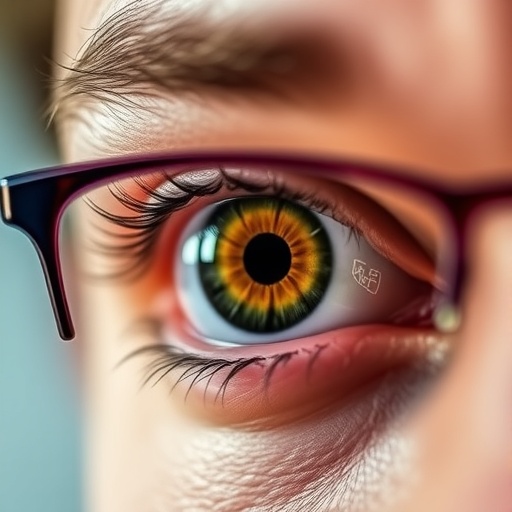
Myopia correction has long been framed as a choice between permanence and flexibility: laser surgery can reduce or eliminate dependence on glasses and contact lenses, while contact lenses offer a reversible solution that can be stopped or changed at any time. A new systematic review comparing the two approaches suggests that the decision may also have a significant effect on how people experience everyday life. The analysis found that LASIK generally produced higher patient satisfaction and fewer reported complications than contact lenses, although its overall effect on quality of life remained less certain because the available studies measured that outcome in different ways.
The review, conducted according to the Preferred Reporting Items for Systematic Reviews and Meta-Analyses, or PRISMA, examined research identified through four scientific databases. Investigators ultimately included four studies involving 2,141 people with myopia. Of these participants, 1,275 had undergone laser-assisted in situ keratomileusis, commonly known as LASIK, while 866 used contact lenses. The researchers focused primarily on quality of life and also compared patient satisfaction and dry-eye symptoms, two outcomes that can strongly influence whether a person considers a vision-correction method successful.
LASIK corrects myopia by using a laser to reshape the cornea, the transparent outer surface of the eye responsible for much of its focusing power. In a typical procedure, a thin corneal flap is created, and an excimer laser removes microscopic amounts of tissue according to the patient’s prescription. This changes the curvature of the cornea so that incoming light is focused more accurately on the retina. Contact lenses achieve a similar optical result without permanently changing the eye’s anatomy. They sit on the tear film over the cornea and alter the path of light before it enters the eye, but they must be cleaned, replaced and handled correctly.
Across the studies included in the review, LASIK was associated with a moderate improvement in quality of life. However, the results were not uniform. Different researchers used different questionnaires and scoring systems to assess visual function, daily activities, comfort and emotional well-being, making direct comparisons difficult. When the investigators removed one study that included only female participants, the remaining studies showed a more consistent advantage for LASIK. This sensitivity analysis suggests that the overall result may have been influenced by differences in study populations as well as by the tools used to measure quality of life.
The contrast was more pronounced for satisfaction. In the studies that reported satisfaction percentages, approximately 88 percent of LASIK patients were satisfied with their vision correction, compared with about 54 percent of contact lens users. The review also found that 97 percent of people who had previously worn contact lenses said they preferred LASIK after switching to surgery. These findings point to the practical burden of contact lens use as a possible factor. Even when lenses provide clear vision, users must manage insertion and removal, cleaning routines, replacement schedules and the risk of discomfort or infection.
The safety findings also favored LASIK in the analyzed studies, although the researchers did not present surgery as risk-free. Reported complication rates ranged from 6.7 to 9.5 percent among LASIK users, compared with 19.9 percent among contact lens users. The comparison includes different types of problems and should not be interpreted as proof that every patient faces the same level of risk. Surgical outcomes can be affected by age, corneal thickness, the severity and stability of myopia, pre-existing eye disease, the technology used and the experience of the surgical team. Contact lens-related complications, meanwhile, are strongly influenced by hygiene, wearing time, lens type and adherence to replacement instructions.
Dry eye emerged as the most important trade-off between the two correction methods. The review reported acute dry-eye symptoms in approximately 50 to 58 percent of LASIK patients, particularly during the early period after surgery. The procedure can temporarily disrupt corneal nerves involved in tear production and sensation, and this may reduce blinking or alter the feedback system that helps maintain the tear film. For many patients, symptoms improve as the cornea heals, but recovery varies and some people may experience persistent discomfort, fluctuating vision or sensitivity to light.
Contact lens users showed a different pattern, with chronic dry-eye symptoms reported in as many as 71 percent of participants in the analyzed data. A lens can interfere with the stability of the tear film, increase evaporation and create mechanical interaction with the eyelid and corneal surface. Deposits, inadequate lubrication and prolonged daily wear can intensify irritation. Unlike the early postoperative dryness associated with LASIK, contact lens-related symptoms may continue as long as the underlying wearing pattern remains unchanged. Nevertheless, the figures came from a limited number of studies and may reflect differing definitions of dry eye, so they should not be treated as universal rates.
The authors emphasize that the review cannot establish that LASIK is the best choice for everyone with myopia. The evidence base was small, the included studies differed in design and measurement methods, and quality-of-life outcomes were not sufficiently consistent to support a definitive conclusion. In addition, comparisons between people who choose surgery and those who continue using lenses may be affected by baseline differences in lifestyle, expectations, occupation, tolerance for risk and previous experiences with vision correction. A person who frequently participates in sports, travels extensively or struggles with lens maintenance may value the benefits of LASIK differently from someone who prefers a reversible option.
For patients considering either method, the findings support a personalized evaluation rather than a simple ranking of treatments. An ophthalmologist should assess refractive stability, corneal shape and thickness, tear-film quality, eyelid health and any history of ocular-surface disease before recommending surgery. People with existing dry-eye symptoms may require treatment and stabilization before undergoing LASIK, while contact lens users may benefit from changes in lens material, wearing time or care practices. The review’s central message is that LASIK appears to offer stronger satisfaction and lower reported complication rates in the available evidence, but the most appropriate correction method depends on the condition of each eye and the patient’s priorities. The study, titled “Quality of Life in Myopia: Laser-Assisted In Situ Keratomileusis Versus Contact Lenses,” was published in Eye & ENT Research on June 24, 2026.
Subject of Research: People with myopia using LASIK or contact lenses
Article Title: Quality of Life in Myopia: Laser-Assisted In Situ Keratomileusis Versus Contact Lenses
News Publication Date: 24 June 2026
Web References: https://doi.org/10.1002/eer3.70045
References: Eye & ENT Research, DOI: 10.1002/eer3.70045
Image Credits: Higher Education Press
Keywords: Myopia, LASIK, contact lenses, quality of life, patient satisfaction, dry eye, refractive surgery, cornea, vision correction
Tags: clinical outcomes of LASIK surgerycontact lens complications and satisfactioneffects of LASIK on dry-eye symptomsimpact of myopia correction on lifestyleinfluence of myopia correction choice on daily lifeLASIK vs contact lenses for myopia correctionmyopia treatment options comparisonpatient satisfaction with LASIK and contact lensesPRISMA methodology in eye researchquality of life outcomes in vision correctionreversible versus permanent vision correction solutionssystematic review of myopia correction methods