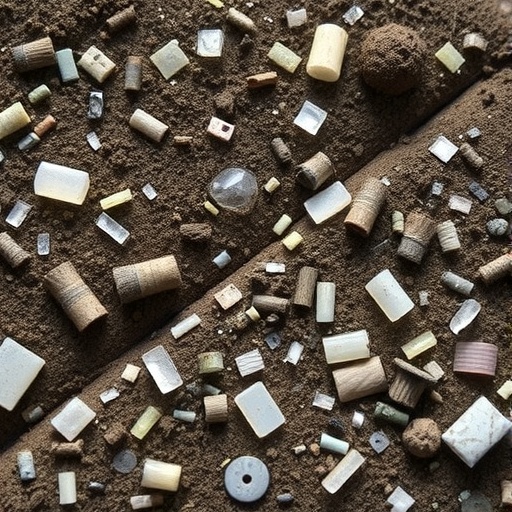
A hidden partnership between aging plastic waste and agricultural pesticides could be changing how long chemical pollutants remain in soil. New research shows that tiny particles of polyvinyl chloride, or PVC, can become significantly more effective at capturing the fluorinated pesticide fluensulfone after weathering. The finding challenges the common view of microplastics as chemically passive fragments that merely accumulate in the environment. Instead, the particles may act as evolving environmental surfaces, changing their structure and chemistry over time and creating new sites where pesticides can attach, persist, and potentially resist transport through agricultural landscapes.
The study, published in Environmental and Biogeochemical Processes, examined PVC microplastics measuring either 1 or 150 micrometers in diameter. Researchers compared pristine particles with particles that had undergone artificial oxidative aging designed to mimic the chemical changes caused by sunlight, oxygen, and long-term environmental exposure. They then tracked how the particles interacted with fluensulfone, a fluorinated nematicide used to control plant-parasitic nematodes. The experiments also examined how pH, dissolved ions, soil organic matter, and the presence of another pesticide could alter the behavior of the PVC–fluensulfone system.
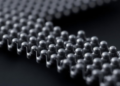
The most pronounced effects occurred in the smallest aged particles. At the micrometer scale, PVC has a relatively large surface area compared with its mass, giving chemicals more opportunity to encounter and bind to the plastic. Aging intensified that effect. Oxidative treatment roughened the PVC surface, increased its porosity, and introduced oxygen-containing functional groups. These changes made the particles more chemically heterogeneous, meaning that their surfaces contained a wider variety of regions with different charge, polarity, and reactivity. For 1-micrometer PVC particles, aging raised the maximum sorption capacity for fluensulfone from approximately 292 micrograms per gram to about 344 micrograms per gram, while also substantially increasing the pesticide’s sorption affinity.
Sorption is the combined process by which a chemical adheres to or enters a material, and it is central to understanding pesticide movement through soil. A pesticide that remains dissolved in soil water can migrate, reach groundwater, or become available for uptake by organisms. A pesticide retained on particles may move more slowly, but it can also remain in the environment for longer periods and be released later when chemical conditions change. In this study, the researchers found that the enhanced retention of fluensulfone on aged PVC could not be explained by conventional hydrophobic attraction alone. The results instead pointed to a combination of polar interactions, pore-assisted retention, and fluorine-sensitive interfacial forces involving the pesticide and newly formed oxygen-rich groups on the plastic surface.
The proposed chemistry is particularly important because fluensulfone contains fluorinated structural elements that can interact differently from ordinary hydrocarbon groups. The researchers identified evidence consistent with interactions involving fluorine and oxygen-containing surface functionalities, including hydrogen-bond-related forces. Although fluorine is not always treated as a strong hydrogen-bond acceptor in the same way as oxygen or nitrogen, its behavior can depend on the surrounding molecular structure and interfacial environment. On weathered PVC, the combination of surface oxidation, altered polarity, irregular topography, and nanoscale pores may create conditions in which these fluorine-sensitive interactions contribute measurably to pesticide retention. Changes in chlorine-containing regions of the PVC may also play a secondary role.
The surrounding water chemistry further changed the strength of the interaction. Fluensulfone sorption increased as the pH rose from 4 to 12, indicating that the ionization or surface-charge state of the pesticide and the aged PVC strongly influenced their compatibility. Calcium ions promoted sorption, increasing fluensulfone uptake by roughly 30 to 35 percent in some treatments. Calcium can act as a bridge between negatively charged surfaces and organic molecules or can alter the electrical double layer surrounding particles, reducing repulsion and allowing closer contact. Sodium, chloride, and nitrate generally reduced sorption, demonstrating that common dissolved ions can either compete for active surface sites or modify the electrostatic environment in ways that weaken pesticide binding.
Humic acid, a major component of natural organic matter, enhanced fluensulfone retention but showed comparatively little dependence on concentration. This result suggests that humic substances may influence the system through several overlapping mechanisms, including coating the plastic surface, providing additional chemical groups, changing pesticide solubility, and linking dissolved molecules with mineral or polymer surfaces. In real agricultural soils, these effects are unlikely to occur in isolation. Soil contains minerals, organic matter, roots, microorganisms, dissolved salts, and a constantly changing network of water-filled pores. Each component can compete for fluensulfone or create new pathways for it to move and accumulate.
When the researchers introduced agricultural soil into the experiments, soil organic matter remained the dominant sink for fluensulfone. Yet the PVC particles did not simply compete with soil for the pesticide. They supplied additional binding sites, creating a supplementary reservoir within the soil matrix. Aged 1-micrometer PVC accounted for approximately 30 to 35 percent of the total retained fluensulfone in some soil systems and increased overall pesticide sorption by roughly 12 to 33 percent. The contribution grew as the amount of PVC increased, suggesting that even relatively small concentrations of fine, weathered plastic could influence pesticide partitioning if the particles possess highly reactive surfaces.
The presence of another pesticide made the chemistry even less predictable. In simplified binary systems, spirotetramat reduced fluensulfone sorption, most likely by competing for available sites or altering the interfacial environment. In soil containing aged PVC, however, spirotetramat enhanced fluensulfone retention. This reversal highlights why laboratory tests involving a single contaminant may fail to represent conditions in working farmland, where pesticides, fertilizers, dissolved ions, organic matter, and plastic residues coexist. The result also suggests that microplastics may not have a single, fixed environmental effect: their influence can change depending on particle size, aging history, soil composition, water chemistry, and the mixture of chemicals present.
The researchers say the findings could have implications for pesticide persistence, mobility, bioavailability, and ecological risk. Fine PVC particles are continually produced as larger plastic items fragment, while environmental weathering progressively changes their surfaces. Aged microplastics may therefore become more chemically active precisely as they become smaller and more widely dispersed. Retention does not automatically mean reduced danger; a pesticide held on plastic may remain concentrated in a biologically accessible form, be transported with the particles, or be released when pH, salinity, organic matter, or competing chemicals shift. The study suggests that future pesticide fate assessments should treat microplastics as dynamic sorbents rather than inert background debris, especially in intensively cultivated soils where plastic contamination and agrochemical use overlap.
Subject of Research: Interactions between aged PVC microplastics and the fluorinated pesticide fluensulfone in agricultural soil and water systems.
Article Title: Size and aging-driven interactions between fluensulfone and PVC microplastics: the key role of fluorine-sensitive interactions
News Publication Date: 20-Aug-2026
Web References: https://doi.org/10.48130/ebp-0026-0011; Environmental and Biogeochemical Processes
References: Li A, Hou Y, Gao S, Li X, Gao S, et al. 2026. “Size and aging-driven interactions between fluensulfone and PVC microplastics: the key role of fluorine-sensitive interactions.” Environmental and Biogeochemical Processes 2: e017. doi:10.48130/ebp-0026-0011
Image Credits: Aoze Li, Yiming Hou, Siwei Gao, Xiaoyun Li, Shang Gao, Ben Philpot, Ian Eggleston & Baoshan Xing
Keywords
Microplastics, PVC, fluensulfone, pesticides, agricultural soil, pesticide sorption, environmental chemistry, soil pollution, oxidative aging, hydrogen bonding, fluorine-sensitive interactions, soil organic matter, pesticide persistence, environmental risk
Tags: Aging microplastics and pesticide retention in soileffects of oxidative weathering on microplastic surface chemistryenvironmental fate of microplastic-bound pesticidesfluorinated pesticides and microplastic interactionsimpact of microplastic size and aging on chemical adsorptioninfluence of soil chemistry on microplastic pesticide retentionlong-term pesticide persistence in agricultural soilsmicroplastic weathering effects on chemical pollutantsmicroplastic-pesticPVC microplastics as evolving environmental surfacesrole of microplastics in pesticide transport and resistance