Credit: Wilderness & Environmental Medicine
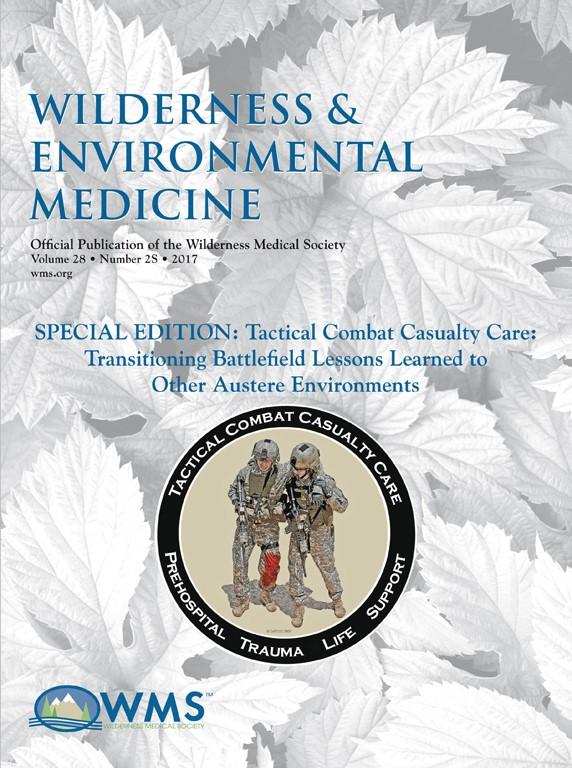
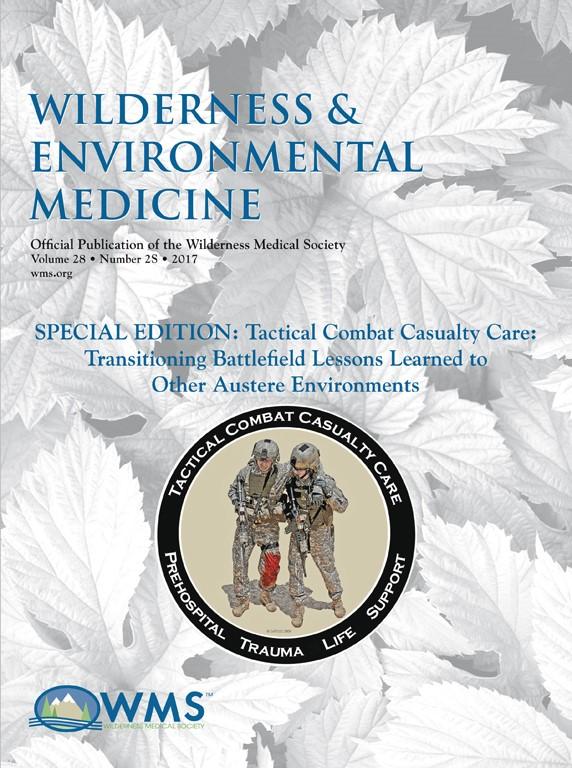
Philadelphia, PA, June 15, 2017 – After nearly 14 years of continuous combat operations, there have been many major advances made in casualty care by medical professionals in the US military that have resulted in the highest casualty survival rate in the history of modern warfare. The implementation of Tactical Combat Casualty Care (TCCC) in military units has drastically reduced the number of preventable deaths from traumatic injuries. Many of the lessons learned on the battlefield translate well to the austere conditions encountered every day in the wilderness. A lack of resources, extreme weather, and delayed transport to an established medical facility are just some of the common challenges practitioners and participants face. A special supplement to Wilderness & Environmental Medicine offers an in-depth examination of military trauma techniques to help educate medical professionals and the end-user community to improve readiness and outcomes.
Shaped out of a preconference held last July in Telluride, Colorado, Tactical Combat Casualty Care: Transitioning Battlefield Lessons Learned to Other Austere Environments provides an overview of TCCC, explains the evolution and adaptation of the guidelines, discusses key updates, details ongoing TCCC process improvements, describes how these procedures can be best utilized in austere environments, and finally, explores how TCCC tenets have successfully been applied to civilian medicine.
"Without Tactical Combat Casualty Care training to all military personnel, most severely traumatized personnel would die before reaching surgical care," explained CAPT (Ret) Brad Bennett, PhD, EMT-P, FAWM, US Navy, Chair, TCCC Preconference and Guest Editor, TCCC special supplement. "However, today it is well documented that of the injured military personnel who reach surgical care, 97% will survive. The same surgical resuscitation methods have been transitioned already to US trauma surgical care in civilian medical centers and have shown the same significant reduction in mortality."
Preventable trauma deaths mostly occur from three main causes: bleeding, airway obstruction, and collapsed lungs. This special supplement contains 19 papers exploring different aspects of TCCC and specific trauma care techniques including tourniquet and hemostatic dressings use, establishing surgical airways, thoracic trauma care, integration of military-established trauma techniques into other settings, and key lessons in establishing guidelines and their use.
COL (Ret) Craig H. Llewellyn, MD, MPH, MSTMH, emeritus professor and chair (1982-2001), Department of Military and Emergency Medicine, F. Edward Hébert School of Medicine, Uniformed Services University of the Health Sciences, Bethesda, MD, delivers an extensive overview of the symbiotic relationship between operational military medicine, tactical medicine, and wilderness medicine in the keynote lecture. "Much of the scientific base for both military medicine and wilderness medicine was and continues to be derived from the same research on physiologic responses to environmental extremes," writes Dr. Llewellyn. "This shared knowledge base created by civilian and military investigators continues to inform both military medicine and wilderness medicine."
In his comprehensive look at the origins of TCCC, Frank K. Butler, MD, FAAO, FUHM, Chair, Committee on Tactical Combat Casualty Care, Joint Trauma System, US Army Institute of Surgical Research, San Antonio, TX, explains that TCCC was developed using the best evidence-based battlefield practices and grew out of a Naval Special Warfare biomedical research effort and the realization that, as Dr. Butler writes, "extremity hemorrhage, a leading cause of preventable death on the battlefield, was not being treated with a readily available and highly effective intervention: the tourniquet."
One of the areas of focus of the supplement is how these military techniques can be integrated into medical care in other austere environments. In his article "Translating Tactical Combat Casualty Care Lessons Learned to the High-Threat Civilian Setting: Tactical Emergency Casualty Care and the Hartford Consensus," David W. Callaway, MD, FACEP, Carolinas Medical Center, Charlotte, NC, talks about "trauma care as an individual skill" that should be taught to providers based on their level of knowledge. "Similar to the small team operations in combat, all individuals venturing into the wilderness should possess relevant threat-based trauma-training; teams cannot rely on a designated medic or external medical assistance when in the backcountry."
TCCC guidelines can help medical professionals, but can also aid first responders and civilians. In an emergency situation, medical professionals are often not the first people on the scene. Many of the practical recommendations can help those encountering trauma victims, whether it be far from other help in the wilderness or in an urban area. A new nationwide effort called "Stop the Bleed" was developed using TCCC guidelines to teach laypeople how to control hemorrhaging in an emergency.
The authors hope this special supplement will help spread important, hard-earned knowledge about trauma care and, in the end, save lives. "TCCC medical guidelines can work in both austere and urban environments by both medically trained and laypersons to stop severe bleeding," concluded Dr. Bennett. "As stated decades ago: the saving of a life is done by the first person who places their hands on the injured, so be that right person, at the right time, with the right training to save a loved one or another community member."
"This special supplement provides an impressive cross-section of information that will be valuable to many in the broad community," according to Neal Pollock, Editor-in-Chief of Wilderness & Environmental Medicine. "We appreciate the efforts of all involved to bring the project to fruition."
###
Media Contact
Theresa Monturano
[email protected]
215-239-3711
@elseviernews
http://www.elsevier.com
############
Story Source: Materials provided by Scienmag