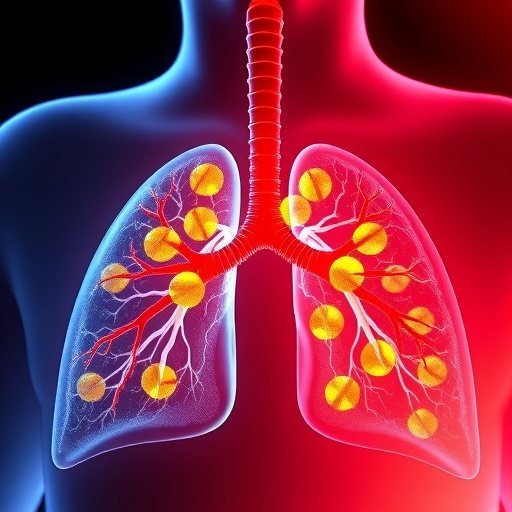
Bronchopulmonary dysplasia, or BPD, remains one of the most persistent complications facing extremely premature infants, whose immature lungs must function while still undergoing critical stages of development. A new study by Yuan, Zhao, Shen and colleagues, published in Pediatric Research, examines a potential molecular strategy for reducing the oxidative and inflammatory damage associated with the disease. The researchers focused on the interaction between two cellular regulators, SIRT1 and Toll-like receptor 4, or TLR4, using a cellular model of BPD. Their findings, summarized by the study title, indicate that targeting the SIRT1–TLR4 axis can attenuate oxidative inflammation, pointing toward a possible route for future therapies designed to protect vulnerable developing lung tissue.
BPD is most commonly associated with premature birth, particularly in infants who require prolonged oxygen supplementation or mechanical ventilation. Although these interventions can be lifesaving, the combination of high oxygen exposure, mechanical stress and an immature antioxidant system can injure the developing lung. Inflammation then amplifies the problem. Immune signaling can disrupt the formation of alveoli, the tiny air sacs responsible for gas exchange, while oxidative stress damages proteins, membranes and DNA. The result is a lung that may contain fewer and larger air spaces, abnormal blood-vessel development and impaired respiratory function. Because BPD develops through overlapping biological processes rather than a single defect, researchers have increasingly focused on molecular pathways that connect oxidative stress with inflammation.
SIRT1, or sirtuin 1, is an enzyme that regulates cellular responses to stress. It belongs to a family of proteins known for modifying other proteins through deacetylation, a chemical process that can alter protein activity and gene expression. SIRT1 has been linked to mitochondrial function, antioxidant defenses, metabolism and the control of inflammatory transcription programs. When cells experience excessive oxidative stress, the activity or availability of SIRT1 may change, potentially weakening protective responses. This makes SIRT1 an attractive target in diseases where inflammation and redox imbalance reinforce one another. However, the effects of SIRT1 are highly dependent on cell type, timing and the surrounding molecular environment, which is why studies in specific disease models are important.
TLR4, the second component of the pathway investigated in the study, is a pattern-recognition receptor best known for detecting bacterial lipopolysaccharide. It is part of the innate immune system, the body’s rapid first line of defense against infection. Once activated, TLR4 can initiate intracellular signaling through adaptor proteins and transcription factors, including nuclear factor kappa B. This signaling cascade promotes the production of cytokines and other inflammatory mediators. TLR4 can also respond to endogenous danger signals released by stressed or injured cells, meaning that inflammation may persist even in the absence of an active infection. In a developing lung exposed to oxygen stress or mechanical injury, this mechanism could help convert cellular damage into a broader inflammatory response.
The SIRT1–TLR4 axis therefore represents a biologically plausible link between oxidative injury and immune activation. A decline in SIRT1 activity could remove restraints on inflammatory signaling, while increased TLR4 activity could intensify the production of molecules that recruit and activate immune cells. These processes may also increase the generation of reactive oxygen species, creating a self-reinforcing cycle. Reactive oxygen species are chemically active molecules produced during normal metabolism, particularly in mitochondria, but excessive levels overwhelm antioxidant defenses. They can alter membrane lipids, interfere with enzymes and damage genetic material. By examining the relationship between SIRT1 and TLR4 in a cellular BPD model, the researchers sought to determine whether this connection could be manipulated to reduce the inflammatory consequences of oxidative stress.
The study’s central conclusion is that targeting this axis attenuated oxidative inflammation in the experimental cellular system. In scientific terms, attenuation means that the intervention reduced, rather than necessarily eliminated, the molecular signs of oxidative and inflammatory activity measured in the model. The result is significant because it suggests that SIRT1 and TLR4 are not merely associated with the injury process but may participate in a modifiable signaling network. A treatment capable of restoring protective SIRT1-related activity, suppressing excessive TLR4 signaling or coordinating both effects could theoretically interrupt the cycle linking cellular stress to inflammation. The work does not establish a treatment for infants, but it identifies a mechanism that may be explored in more advanced preclinical studies.
Cellular models are particularly useful for dissecting molecular pathways because they allow researchers to isolate specific biological events under controlled conditions. Investigators can expose cultured cells to stressors that reproduce selected features of the premature lung environment and then examine changes in signaling proteins, inflammatory mediators and oxidative markers. Such systems make it possible to test whether a candidate pathway responds directly to an intervention and to evaluate toxicity before moving into animal studies. At the same time, a cell culture cannot reproduce the full architecture of the developing lung. It does not fully capture interactions among epithelial cells, endothelial cells, fibroblasts, immune cells, blood vessels and the extracellular matrix, nor can it reproduce the complex effects of breathing support in a premature infant. The study’s findings should therefore be viewed as mechanistic evidence rather than proof of clinical benefit.
The potential importance of the research lies in its focus on preserving lung development rather than simply treating symptoms after chronic injury has formed. Current BPD care is largely supportive and may include carefully managed oxygen therapy, respiratory assistance, nutritional support and prevention of additional injury. Any future drug aimed at the SIRT1–TLR4 pathway would need to meet an unusually demanding safety standard. SIRT1 and TLR4 participate in many normal processes, including metabolism, host defense and tissue repair. Broadly suppressing TLR4 could impair responses to infection, while excessive manipulation of SIRT1 could have effects in organs beyond the lung. Researchers would need to establish the appropriate dose, timing and delivery method, ideally limiting activity to the developing respiratory system. They would also need to determine whether treatment remains effective after injury has begun and whether it interferes with normal lung maturation.
The report by Yuan and colleagues adds to a growing effort to understand how premature birth, oxygen exposure and inflammation converge at the cellular level. Its emphasis on the SIRT1–TLR4 relationship offers a framework for connecting antioxidant regulation with innate immune signaling, two processes that are often studied separately. The next steps will require confirmation in more complex experimental models, detailed mapping of downstream molecular events and careful evaluation of possible effects on infection control and development. If those studies support the cellular findings, the pathway could eventually become part of a broader therapeutic strategy aimed at reducing the biological damage that drives BPD. For now, the research provides a molecular lead—and a reminder that protecting premature lungs may depend on interrupting the feedback loops that turn necessary stress responses into chronic injury.
Subject of Research: The SIRT1–TLR4 signaling axis and its role in oxidative inflammation associated with bronchopulmonary dysplasia.
Article Title: Targeting the SIRT1-TLR4 axis attenuates oxidative inflammation in a cellular model of bronchopulmonary dysplasia.
Article References: Yuan, W., Zhao, L., Shen, G. et al. Targeting the SIRT1-TLR4 axis attenuates oxidative inflammation in a cellular model of bronchopulmonary dysplasia. Pediatr Res (2026). https://doi.org/10.1038/s41390-026-04812-z
Image Credits: AI Generated
DOI: 10.1038/s41390-026-04812-z
Keywords: Bronchopulmonary dysplasia; SIRT1; TLR4; oxidative stress; inflammation; premature infants; lung development; cellular model
Tags: bronchopulmonary dysplasiaimmune signaling in lung injuryimpact of oxygen therapy on lung inflammationlung development in preemiesmechanisms of BPD pathogenesismolecular strategies for BPDoxidative inflammation in premature infantsoxidative stress damage in neonatal lungsSIRT1 regulation of inflammationSIRT1-TLR4 pathwaytargeting TLR4 in lung diseasetherapeutic approaches for bronchopulmonary dysplasia