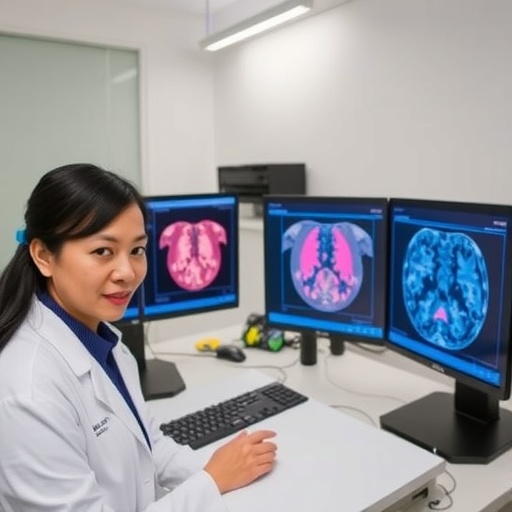
Cancer diagnosis is entering a new phase in which artificial intelligence does more than identify patterns in tissue. Researchers at The Hong Kong Polytechnic University have developed a framework designed to show when pathology AI can be trusted, when its predictions are uncertain and when a human pathologist must take over. Called TRUECAM, the system combines uncertainty estimation, out-of-scope detection, image-quality control and conformal prediction to create a safety-oriented layer around cancer-diagnosis models. The researchers say the framework could help transform AI from a silent prediction engine into a more accountable clinical partner, particularly in the analysis of whole-slide images used to classify tumors.
The need for such safeguards is especially urgent because pathological diagnoses directly influence treatment choices, prognosis and eligibility for targeted therapies. In conventional practice, pathologists examine stained tissue sections under a microscope, interpreting the shape, arrangement and biological characteristics of cells. Digital pathology has expanded this process by converting glass slides into extremely high-resolution whole-slide images, often containing billions of pixels. AI systems can scan these images rapidly and identify subtle features that may be difficult to evaluate consistently. Yet speed and accuracy alone are not enough in medicine. A model may appear highly confident while encountering a rare tumor, an unusual stain, a damaged specimen or an image from a hospital whose equipment differs from the data used during training.
TRUECAM was developed by a research team led by Professor Zhang Xiaoge, Assistant Professor in PolyU’s Department of Industrial and Systems Engineering. Its name describes the framework’s central objective: trustworthiness-focused, uncertainty-aware, end-to-end cancer diagnosis with model-agnostic capabilities. Rather than replacing existing pathology models, TRUECAM is designed to wrap around them. This means it can be connected to AI systems with different architectures, sizes and purposes, including specialised models trained for a particular cancer task and broader foundation models intended for more general applications. The framework evaluates the entire diagnostic pathway, from the original pathology image to the final classification, rather than treating the model’s output as an unquestionable answer.
One of TRUECAM’s most important functions is identifying inputs that fall outside a model’s intended scope. In machine learning, a system is usually trained on a defined distribution of examples. If it encounters tissue from a different cancer type, an unfamiliar preparation method or a slide with severe artefacts, its prediction may be unreliable even when the output probability is high. Out-of-scope detection attempts to identify these situations before they lead to an unsafe conclusion. The framework can then prompt a pathologist to review the case. This approach addresses a major weakness of conventional AI deployment: a model may know how to calculate a result, but it does not automatically know whether the case belongs to the world in which its training makes the result meaningful.
The system also focuses on uncertainty at the level of image regions. Whole-slide images are too large to process as a single conventional image, so AI pipelines typically divide them into smaller tiles or patches. Some regions contain clear tumor morphology, while others may include folds, blood, empty space, blurred tissue or structures that are inherently difficult to classify. TRUECAM is designed to automatically remove highly ambiguous regions that could distort the final diagnosis. By filtering out unreliable visual evidence, it aims to prevent a model from allowing a small number of confusing patches to dominate its interpretation of the entire slide. The remaining information can provide a more stable basis for cancer subtyping, while difficult cases remain available for human examination.
A further component is conformal prediction, a statistical method for producing prediction sets with a controlled level of error under appropriate assumptions. Instead of returning only one label, a conformalised system can indicate a set of plausible diagnoses or establish a decision threshold at which the result should be treated cautiously. The method calibrates the model’s outputs using data that represent the intended task and provides a measurable form of uncertainty. In clinical terms, this can help keep diagnostic errors within a preselected tolerance rather than relying solely on raw confidence scores. TRUECAM combines this technique with its other safeguards so that confidence is connected to the conditions under which the model is expected to work.
The researchers applied the framework to whole-slide image analysis for non-small cell lung cancer subtyping, a clinically important task because different tumor subtypes can influence treatment and prognosis. Their evaluation also examined whether the approach could extend to breast, brain and kidney cancer subtyping, as well as a pan-cancer classification setting involving 46 classes at the slide level. Across multiple cancer datasets, the team compared models operating with and without the TRUECAM framework. The computational experiments indicated that wrapped models consistently improved not only classification accuracy, but also robustness, interpretability, data efficiency and fairness. These results suggest that trust mechanisms can improve practical performance rather than simply adding restrictions to an AI system.
The framework’s model-agnostic design is central to its potential clinical reach. Hospitals and research institutions use a wide range of pathology models, from compact systems built for a single diagnostic question to foundation models trained on large and diverse collections of medical images. A safety framework that works only with one architecture would have limited value in real-world settings. TRUECAM is intended to operate across these variations, providing a common process for detecting unfamiliar cases, suppressing unreliable regions and controlling prediction risk. It could therefore serve as an additional layer between an AI model and the clinician, helping transform a probability score into a more informative assessment of whether the result deserves confidence.
Professor Zhang described the approach as a balance between fully automated pathology AI and diagnosis led entirely by pathologists. Clear-cut cases with strong, well-calibrated model confidence could be processed more efficiently, while uncertain cases would be flagged for professional review and clinical judgement. This form of human–AI collaboration could reduce repetitive workloads and allow pathologists to concentrate on the cases that require the greatest expertise. It may also support diagnostic capacity in healthcare systems facing increasing workloads, provided that the technology is validated prospectively, integrated into clinical workflows and used with appropriate oversight. The researchers emphasise that TRUECAM is intended to strengthen, not eliminate, the role of medical professionals.
The current study is focused mainly on whole-slide images, but the team is investigating whether the framework can incorporate additional forms of information, including molecular profiles such as RNA sequencing and diagnostic reports. Combining morphology with molecular and textual data could eventually enable more comprehensive decision support, although multimodal systems introduce new challenges involving data quality, privacy, calibration and interpretability. For now, TRUECAM offers a systematic strategy for making pathology AI more transparent about its limitations. The research has been published in Nature Biomedical Engineering, with support from the National Natural Science Foundation of China, Hong Kong’s Research Grants Council and the Shenzhen Science and Technology Program. Its broader significance lies in a simple but consequential principle: in cancer diagnosis, an AI system should be judged not only by how often it is correct, but also by how reliably it recognises when it may be wrong.
Subject of Research: Trustworthy, uncertainty-aware artificial intelligence for whole-slide pathology image analysis and cancer diagnosis.
Article Title: Implementing trust in non-small cell lung cancer diagnosis with a conformalized uncertainty-aware AI framework
News Publication Date: 23-Jun-2026
Web References: https://www.nature.com/articles/s41551-026-01694-8
References: Nature Biomedical Engineering, DOI: 10.1038/s41551-026-01694-8
Image Credits: PolyU
Keywords
Artificial intelligence, pathology, digital pathology, whole-slide imaging, cancer diagnosis, lung cancer, non-small cell lung cancer, medical imaging, uncertainty-aware AI, conformal prediction, trustworthy AI, image analysis, clinical decision support
Tags: AI accountability in medical decision-makingAI as a clinical partner for tumor classificationAI reliability in cancer diagnosisconformal prediction for clinical safetydevelopment of TRUECAM framework for pathology AIdigital pathology and whole-slide image analysisenhancing AI trustworthiness in cancer prognosisimage-quality control in digital pathologyimportance of safeguards in AI-driven pathologyimproving accuracy and safety in cancer treatment diagnosticsout-of-scope detection in AI diagnosticsuncertainty estimation in medical imaging