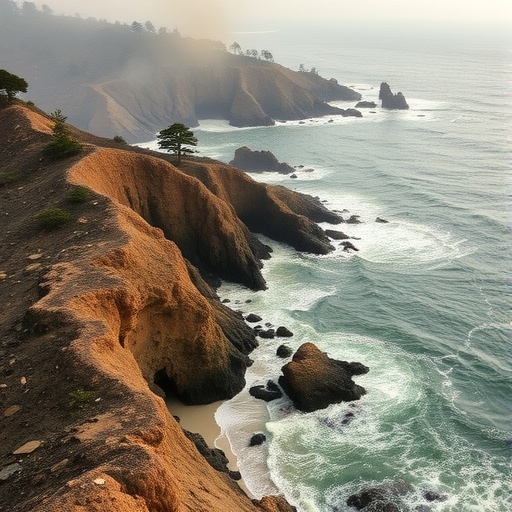
Wildfires are often described as disasters of flame, smoke and ash, but their effects do not end when the last hot spot is extinguished. Along the California coast, fire can set in motion a delayed water-quality crisis, carrying bacteria associated with human and animal feces from urban neighborhoods, rural landscapes and burned wildlands into streams, estuaries and the ocean. A twenty-year investigation published in PLOS Water examines how coastal bacterial communities respond after wildfires and shows why the microbiological consequences of fire deserve attention alongside air pollution, habitat loss and sediment runoff.
The study, titled “Coastal water bacterial responses to wildfires in California: A twenty-year investigation,” focuses on the connection between terrestrial fire events and coastal waters. California’s coastal ecosystems receive water from densely populated communities, agricultural areas, open rangelands and natural watersheds, creating multiple pathways for bacteria to move toward the sea. During and after a wildfire, those pathways can change rapidly. Vegetation that once stabilized soil is removed, organic material is transformed by heat, and rainfall can wash ash, sediment, animal waste and other contaminants downslope. The result is a pulse of microbial material entering waterways at precisely the time when monitoring systems may be focused primarily on chemical pollutants.
Fecal bacteria are important indicators because their presence can reveal contamination by sewage, livestock, wildlife or domestic animals. Some organisms used in water-quality testing, including Escherichia coli and enterococci, are not necessarily dangerous in every instance, but elevated concentrations suggest that water may also contain pathogens capable of causing gastrointestinal, respiratory or wound infections. Their detection is therefore used as a practical proxy for sanitary risk. The California investigation considers bacteria originating in both human-dominated and wildland settings, an approach that recognizes that coastal contamination does not come from a single source. A burned watershed may combine leaking infrastructure, disturbed soils, animal remains, wildlife waste and runoff from unburned areas.
Fire changes the physical behavior of a watershed. Vegetation and leaf litter normally slow rainfall, help water infiltrate soil and trap particles. When those layers are consumed or altered, rain can move more quickly across the ground, producing erosion and debris flows. Heat may also create water-repellent soil layers that reduce infiltration and increase surface runoff. Fine ash and charcoal can bind or transport microorganisms, while sediment can shield bacteria from sunlight and carry them farther downstream. These processes mean that even a moderate storm after a major fire can deliver a concentrated mixture of particles and microbes to coastal waters. The timing of this response may vary from days to years, depending on rainfall, topography, vegetation recovery and subsequent fires.
The twenty-year timescale is significant because short-term sampling can miss the full pattern of microbial change. Immediately after a fire, bacterial concentrations may rise as contaminated material is flushed from the landscape. Later, they may decline as vegetation returns and soils regain structure, or increase again when intense storms remobilize stored sediment. Repeated fires can interrupt recovery, leaving watersheds with less vegetation and greater susceptibility to runoff. Long-term records allow researchers to compare conditions before and after individual fires, evaluate seasonal variation and distinguish fire-related signals from normal fluctuations caused by tides, rainfall, temperature and urban discharge. They also provide a stronger basis for understanding how increasingly frequent and severe fires may affect coastal health.
The study’s emphasis on urban and wildland areas is especially relevant for California, where communities and undeveloped landscapes often meet within the same watershed. In urban zones, wildfire can damage sewer lines, septic systems, wastewater infrastructure and drainage networks, potentially releasing human-associated bacteria. In wildland areas, contamination may be linked more strongly to wildlife, livestock, soil disturbance and runoff from burned vegetation. Once these sources converge in creeks and coastal wetlands, microbial measurements alone may not identify where the bacteria originated. Scientists can use microbial source tracking, a set of genetic methods that searches for host-associated markers, to distinguish human, ruminant, bird and other animal contributions. Such tools can help water managers target mitigation rather than treating all contamination as identical.
Coastal waters are not passive endpoints in this process. Salinity, sunlight, temperature, oxygen levels and predation by other microorganisms influence whether fecal bacteria survive after entering the ocean. Freshwater runoff can create low-salinity plumes that temporarily transport bacteria along the shoreline before dilution and sunlight reduce their numbers. Sediments may act as both sinks and reservoirs, allowing bacteria to settle and later return to the water during waves, tides or dredging. Nutrients released from ash and decomposing organic matter can also alter microbial communities, although the ecological consequences depend on local conditions. A rise in indicator bacteria therefore reflects more than a single contamination event; it can signal a broader disturbance in the movement of water, sediment and organic material through the coastal system.
The findings carry practical implications for public health agencies, coastal managers and communities recovering from wildfire. Routine beach monitoring may need to be intensified after major fires, particularly when the first substantial rains arrive. Sampling upstream, at watershed outlets and along beaches can help identify how contamination changes across the landscape. Temporary warnings may be appropriate when indicator bacteria reach levels associated with increased illness risk, especially near storm drains, river mouths and recreational beaches. Infrastructure inspections are also important, since damaged sewer systems and compromised wastewater facilities can contribute human fecal bacteria long after flames have passed. In burned watersheds, erosion controls, revegetation and carefully designed drainage projects may reduce the amount of contaminated sediment reaching the coast.
The research also highlights the value of preparing before fires occur. Baseline measurements of bacterial indicators, water chemistry and microbial source markers can make post-fire changes easier to interpret. Emergency response plans that integrate fire agencies, wastewater utilities, watershed scientists and public-health officials could shorten the time between a fire, a rainfall event and a protective beach advisory. Long-term datasets are particularly valuable because climate change is altering the conditions under which fires begin and spread, while changing rainfall patterns may produce more intense runoff after prolonged drought. If fires become more frequent in the same watersheds, the microbial effects may accumulate or become harder to separate from other pressures such as urbanization, aging infrastructure and ocean warming.
By tracing bacterial responses across two decades, the California study places wildfire within a larger coastal-health story. Fire transforms landscapes, but the consequences continue through water long after smoke disappears. Human and animal fecal bacteria can be mobilized from distinct environments, mixed during runoff and delivered to places where people swim, fish and collect shellfish. Understanding those pathways can improve contamination warnings, guide restoration and reveal how resilient coastal ecosystems are under repeated disturbance. The research offers a reminder that the most consequential stage of a wildfire may arrive after the flames are gone, when rain converts a damaged watershed into a conduit between land and sea.
Subject of Research: Wildfire-related transport of human- and animal-associated fecal bacteria from urban and wildland areas into California coastal waters.
Article Title: Coastal water bacterial responses to wildfires in California: A twenty-year investigation
News Publication Date: 19 August 2026
Web References: https://doi.org/10.1371/journal.pwat.0000589
References: PLOS Water, DOI: 10.1371/journal.pwat.0000589
Image Credits: Carl Swindle
Keywords
Wildfires, California coast, coastal water quality, fecal bacteria, microbial contamination, wildfire runoff, watershed health, ocean pollution, public health, microbial source tracking
Tags: bacterial response to wildfiresCalifornia coastal wildfire impactcoastal water pollution from wildfiresfecal bacteria in coastal watershuman and animal fecal bacteria in oceanslong-term wildfire impact on water microbiologypost-wildfire water quality crisissediment runoff after wildfireswildfire aftermath and coastal ecosystem healthwildfire effects on marine ecosystemswildfire-induced water contaminationwildfire-related bacterial contamination pathways