• HOME
  • NEWS
  • EXPLORE
    • CAREER
      • Companies
      • Jobs
    • EVENTS
    • iGEM
      • News
      • Team
    • PHOTOS
    • VIDEO
    • WIKI
  • BLOG
  • COMMUNITY
    • FACEBOOK
    • INSTAGRAM
    • TWITTER
Saturday, February 7, 2026
BIOENGINEER.ORG
No Result
View All Result
  • Login
  • HOME
  • NEWS
  • EXPLORE
    • CAREER
      • Companies
      • Jobs
        • Lecturer
        • PhD Studentship
        • Postdoc
        • Research Assistant
    • EVENTS
    • iGEM
      • News
      • Team
    • PHOTOS
    • VIDEO
    • WIKI
  • BLOG
  • COMMUNITY
    • FACEBOOK
    • INSTAGRAM
    • TWITTER
  • HOME
  • NEWS
  • EXPLORE
    • CAREER
      • Companies
      • Jobs
        • Lecturer
        • PhD Studentship
        • Postdoc
        • Research Assistant
    • EVENTS
    • iGEM
      • News
      • Team
    • PHOTOS
    • VIDEO
    • WIKI
  • BLOG
  • COMMUNITY
    • FACEBOOK
    • INSTAGRAM
    • TWITTER
No Result
View All Result
Bioengineer.org
No Result
View All Result
Home NEWS Science News Biology

Creighton physicist’s work unveils new ability of immune cells

Bioengineer by Bioengineer
June 14, 2017
in Biology
Reading Time: 2 mins read
0
Share on FacebookShare on TwitterShare on LinkedinShare on RedditShare on Telegram

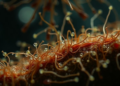
Credit: Andrew Ekpenyong, PhD

Omaha, Neb., (June 14, 2017) — A major discovery about a set of immune cells, published today in the journal Science Advances, started with a Creighton University physics professor going a little farther on an experiment than was initially planned.

First author on the paper, the Rev. Andrew Ekpenyong, MS'08, PhD, an assistant professor in the Department of Physics, was a doctoral student at the University of Cambridge in 2011, working with a team of medical doctors and scientists studying the stiffness of cells when he noticed something strange about a certain type of immune cell — the neutrophil. The more Ekpenyong pulled the cell with an optical stretcher — a special kind of dual-beam laser invented by Jochen Guck, PhD, a co-senior author on the paper — the smoother and more rounded the cell became.

Neutrophils, a special kind of white blood cell, are the human body's version of the Wild West desperado, shooting first and asking questions later, when foreign objects enter the body. Through cell signaling, neutrophils are first on the scene in such instances, going from a round, smooth and quiet cell to a rough-edged, activated one in an instant. It can take a neutrophil up to an hour to regain its quietude, but as Ekpenyong noticed, manipulation with the optical stretcher can speed the process of depolarization down to about one minute.

"It was just one of those cases where you start out to do one thing and take just one or two steps further for a bit of fun or further insight, and you have something else," said Ekpenyong, who earned a master's degree in physics from Creighton and joined the faculty in 2014 after post-doctoral work at Technical University of Dresden in Germany with Guck. "One of the lead researchers I was working with saw the video I had taken, jumped from his chair, left the room and beckoned his medical colleague to take a look."

That researcher is Edwin Chilvers, PhD, a professor of respiratory medicine in Cambridge's Department of Medicine. For Chilvers, another co-senior author on the paper, the discovery has implications across a broad spectrum of maladies, most notably acute respiratory distress syndrome (ARDS) and acute lung injury (ALI).

In those cases, activated neutrophils have become stuck in the lungs' tiny capillaries, leading to a host of life-threatening problems. Scientists have been searching for a chemical means of calming the cells, but to no avail. Ekpenyong's physics-based approach has led to his development of a microfluidic device that mimics the body's microvascular system by squeezing and stretching the neutrophils into their tranquil state, after they are activated.

The challenge now, Ekpenyong said, will be to find a way to translate this discovery into a clinical application, something at which Cambridge and Dresden researchers are already hard at work.

###

Media Contact

Adam Klinker
[email protected]
402-280-2864

http://www.creighton.edu

Original Source

http://www.creighton.edu/publicrelations/newscenter/news/2017/june2017/june142017/ekpenyongsciencenr061417/

############

Story Source: Materials provided by Scienmag
Share12Tweet8Share2ShareShareShare2

Related Posts

Florida Cane Toad: Complex Spread and Selective Evolution

Florida Cane Toad: Complex Spread and Selective Evolution

February 7, 2026
New Study Uncovers Mechanism Behind Burn Pit Particulate Matter–Induced Lung Inflammation

New Study Uncovers Mechanism Behind Burn Pit Particulate Matter–Induced Lung Inflammation

February 6, 2026

DeepBlastoid: Advancing Automated and Efficient Evaluation of Human Blastoids with Deep Learning

February 6, 2026

Navigating the Gut: The Role of Formic Acid in the Microbiome

February 6, 2026
Please login to join discussion

POPULAR NEWS

  • Robotic Ureteral Reconstruction: A Novel Approach

    Robotic Ureteral Reconstruction: A Novel Approach

    82 shares
    Share 33 Tweet 21
  • Digital Privacy: Health Data Control in Incarceration

    63 shares
    Share 25 Tweet 16
  • Study Reveals Lipid Accumulation in ME/CFS Cells

    57 shares
    Share 23 Tweet 14
  • Breakthrough in RNA Research Accelerates Medical Innovations Timeline

    53 shares
    Share 21 Tweet 13

About

We bring you the latest biotechnology news from best research centers and universities around the world. Check our website.

Follow us

Recent News

Phage-Antibiotic Combo Beats Resistant Peritoneal Infection

Boosting Remote Healthcare: Stepped-Wedge Trial Insights

Barriers and Boosters of Seniors’ Physical Activity in Karachi

Subscribe to Blog via Email

Enter your email address to subscribe to this blog and receive notifications of new posts by email.

Join 73 other subscribers
  • Contact Us

Bioengineer.org © Copyright 2023 All Rights Reserved.

Welcome Back!

Login to your account below

Forgotten Password?

Retrieve your password

Please enter your username or email address to reset your password.

Log In
No Result
View All Result
  • Homepages
    • Home Page 1
    • Home Page 2
  • News
  • National
  • Business
  • Health
  • Lifestyle
  • Science

Bioengineer.org © Copyright 2023 All Rights Reserved.