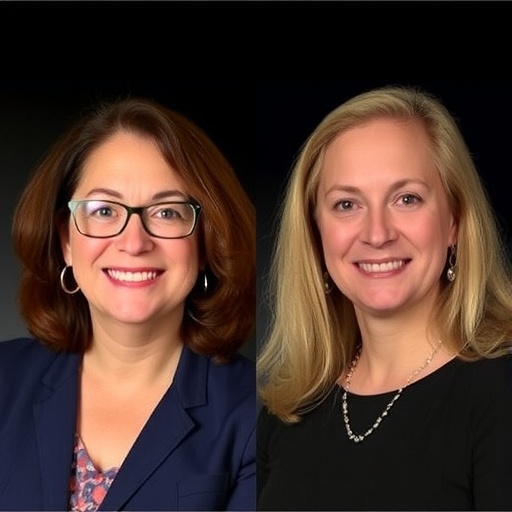
The International Osteoporosis Foundation (IOF) has announced a major change in the scientific leadership of Calcified Tissue International and Musculoskeletal Research, one of the field’s established platforms for research into bone, mineral metabolism, muscle, and musculoskeletal disease. Beginning on 1 September 2026, Professor René Rizzoli will step down as Editor-in-Chief, concluding a tenure defined by an emphasis on scientific quality, rigorous peer review, and research with clinical relevance. Professors Etienne Cavalier and Roland Chapurlat will then take over as Co-Editors-in-Chief, creating a leadership structure that brings together laboratory medicine, translational science, rheumatology, and clinical investigation.
The transition comes at a time when musculoskeletal research is expanding rapidly beyond traditional osteoporosis studies. Modern investigations increasingly connect bone biology with endocrine signalling, kidney function, vascular calcification, muscle loss, frailty, inflammation, genetics, and rare skeletal disorders. This broader scientific landscape is reflected in the journal’s scope, which includes preclinical, translational, and clinical research on bone and other musculoskeletal tissues in living organisms. The incoming editors are expected to guide the publication through an era in which laboratory biomarkers, advanced imaging, molecular profiling, and precision approaches to diagnosis and treatment are reshaping how skeletal diseases are understood.
Professor Roland Chapurlat brings extensive experience in rheumatology, bone disease, clinical research, and rare skeletal disorders. He is Chief of the Division of Rheumatology and Bone Diseases at Hôpital Édouard Herriot in Lyon, France, and has served since 2006 as Chief of the National Reference Centre for Fibrous Dysplasia of Bone. Since 2021, he has also directed INSERM UMR 1033, a research unit focused on the pathophysiology, diagnosis, and treatment of musculoskeletal diseases. His scientific work spans bone and joint disorders, with particular attention to fibrous dysplasia and McCune–Albright syndrome, a rare disorder caused in many cases by post-zygotic mutations affecting the GNAS signalling pathway.
Chapurlat’s research is significant because disorders such as fibrous dysplasia illustrate how genetic and cellular mechanisms can produce highly variable skeletal disease. In fibrous dysplasia, normal bone is replaced by structurally abnormal fibro-osseous tissue, leading to pain, deformity, fractures, and impaired function. The condition may affect a single bone or multiple skeletal sites and can occur alongside endocrine abnormalities in McCune–Albright syndrome. Research into these diseases requires collaboration between molecular biology, imaging, clinical medicine, and long-term patient monitoring—precisely the type of cross-disciplinary work that increasingly defines contemporary musculoskeletal science. Chapurlat has authored more than 440 peer-reviewed publications and has served on the journal’s editorial team as an Associate Editor since 2025.
His editorial experience also includes work with the journals Bone and Joint Bone Spine, while his professional service extends to the scientific committees of IOF and the Groupe de Recherche et d’Information sur les Ostéoporoses. These roles have placed him at the intersection of research evaluation, clinical practice, and international scientific collaboration. As Co-Editor-in-Chief, he is expected to contribute particular expertise in rheumatology, skeletal imaging, rare bone disease, and the translation of research findings into improved diagnosis and treatment. His background may also strengthen the journal’s coverage of diseases that are less common than osteoporosis but offer important insights into fundamental bone biology.
Professor Etienne Cavalier will bring a complementary perspective rooted in clinical chemistry and laboratory medicine. He is Professor of Clinical Chemistry at the University of Liège and Head of the Department of Clinical Chemistry at the University Hospital of Liège in Belgium. His research includes bone turnover markers, vitamin D, parathyroid hormone, vascular calcification markers, renal function, frailty, sarcopenia, and the use of liquid chromatography–tandem mass spectrometry to quantify steroids and peptides. These areas are central to modern skeletal medicine because laboratory measurements can help reveal changes in bone formation and resorption, identify metabolic abnormalities, monitor treatment responses, and clarify the links between bone, kidney, muscle, and cardiovascular health.
The technical importance of Cavalier’s research lies in the growing demand for reliable and clinically interpretable biomarkers. Bone turnover markers, for example, can provide biochemical information about the dynamic processes that cannot be captured by bone mineral density alone. Vitamin D and parathyroid hormone measurements can help assess mineral regulation, while renal biomarkers are critical because impaired kidney function alters phosphate, calcium, and hormone metabolism and can contribute to complex forms of metabolic bone disease. Research into frailty and sarcopenia further expands the field toward “osteosarcopenia,” a condition in which reduced bone strength and muscle mass combine to increase the risk of falls, disability, and fracture. Cavalier has published more than 460 peer-reviewed scientific papers and contributed to eight books or book chapters.
Cavalier is President of the Royal Belgian Society of Laboratory Medicine and chairs the IFCC–IOF Committee on Bone Metabolism. He is also involved with the scientific advisory committees of IOF and ESCEO, as well as professional societies in clinical chemistry, nephrology, and endocrinology. His leadership is likely to reinforce the journal’s attention to analytical quality, laboratory standardisation, and the clinical interpretation of emerging biomarkers. As precision medicine develops, the value of a test depends not only on its ability to detect a biological signal but also on whether that signal can be measured consistently, compared across laboratories, and connected to meaningful outcomes such as fracture prevention or improved mobility.
Together, Chapurlat and Cavalier represent a deliberately broad editorial partnership. Their combined expertise covers clinical and preclinical research, molecular and cellular mechanisms, diagnostic technologies, imaging, laboratory medicine, and patient-centred investigation. They will work with Professor Roger A. Fielding, the journal’s Musculoskeletal Research Section Editor, as well as reviewers and publishers, to strengthen the publication’s role as a trusted source of research across the musculoskeletal field. Professor Atsushi Suzuki will also join the editorial team as an Associate Editor, contributing experience in clinical and preclinical research. The expanded team will face the challenge of evaluating increasingly complex studies involving multi-omics, advanced imaging, computational analysis, intervention trials, and real-world clinical data.
The leadership change also marks the close of Professor René Rizzoli’s period as Editor-in-Chief. During his tenure, the journal maintained a strong focus on scientific standards and research in osteoporosis, mineral metabolism, and musculoskeletal health. In 2025, Calcified Tissue International was ranked in the top 15 percent for editorial excellence among more than 3,100 Springer Nature journals, according to the announcement. IOF President Professor Nicholas Harvey thanked Rizzoli for his dedicated service and said his commitment to scientific excellence had made an important contribution to both the journal and the wider field. The foundation welcomed Cavalier and Chapurlat as Co-Editors-in-Chief, emphasising their shared commitment to building on the journal’s editorial legacy.
The journal publishes studies addressing the structure and function of bone and other musculoskeletal tissues, including research into cell biology, molecular biology, intracellular signalling, physiology, hormones, cytokines, and other mediators that influence skeletal and muscular systems. It also covers clinical research involving bone disease, mineral metabolism, muscle function, and interactions between musculoskeletal tissues. The publication reported a 2025 Impact Factor of 3.5 and a five-year Impact Factor of 4.3, and was ranked 87th among 198 journals in the Endocrinology and Metabolism category. Under its new leadership from September 2026, the journal will enter its next phase with a mandate to connect mechanistic discoveries to clinically useful knowledge while maintaining the methodological and editorial standards expected in a rapidly evolving field.
Article Title: IOF Announces New Co-Editors-in-Chief for Calcified Tissue International and Musculoskeletal Research
Web References: https://www.osteoporosis.foundation/
Keywords: International Osteoporosis Foundation, Calcified Tissue International and Musculoskeletal Research, osteoporosis, bone diseases, musculoskeletal research, bone metabolism, rheumatology, clinical chemistry, fibrous dysplasia, vitamin D, biomarkers, academic publishing
Tags: advances in imaging for bone diseasesbiomarkers in bone and muscle healthclinical relevance in bone researchevolving scope of calcified tissue journalsinterdisciplinary approaches in musculoskeletal researchlaboratory medicine in musculoskeletal studiesleadership transition in scientific publishingmolecular profiling in skeletal disordersmusculoskeletal disease researchosteoporosisrheumatology and musculoskeletal healthtranslational science in osteoporosis