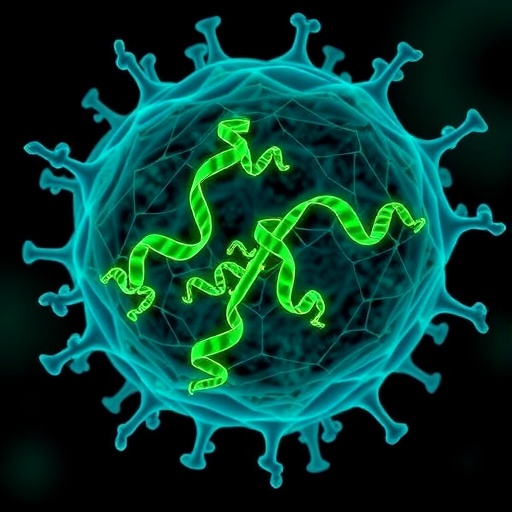
A new mRNA vaccine strategy designed to activate antitumor immunity without undermining the production of vaccine antigens has shown promising results in mouse models, according to a study published in Nature Biotechnology. The approach, called synchronized STING, or Syn-STING, combines three components inside a single lipid nanoparticle: messenger RNA encoding a tumor antigen, messenger RNA encoding the full-length STING transmembrane protein and a chemically modified STING activator whose release is deliberately delayed. The researchers report that this coordinated design generated strong T cell responses, limited tumor growth and extended survival in experimental models while avoiding several toxic immune effects associated with conventional STING agonists.
STING, short for stimulator of interferon genes, is a central component of the innate immune system. It detects signals associated with abnormal or damaged cells and activates a molecular pathway that culminates in the production of type I interferons and other inflammatory mediators. These signals can help antigen-presenting cells mature and can improve the ability of the immune system to recognize and destroy tumor cells. The same pathway, however, is broadly expressed across tissues and can cause systemic inflammation when activated indiscriminately. This has made STING an attractive but difficult target for vaccine development, particularly when agonists are administered together with mRNA antigens.
A major problem is that STING activation can suppress the translation of messenger RNA. mRNA vaccines must be translated efficiently after entering cells so that the encoded antigen can be produced and displayed to the immune system. If a STING agonist is activated too early, the resulting antiviral and inflammatory response can shut down protein synthesis before sufficient antigen is made. In effect, the immune system’s alarm may interfere with the vaccine’s ability to deliver its message. The Syn-STING design addresses this timing conflict by separating the stages of antigen production and innate immune stimulation within the same delivery system.
The lipid nanoparticles used in the study carry an mRNA template for the selected antigen, an mRNA template for full-length STING and a delayed-release form of DMXAA, a small-molecule STING agonist. Full-length STING is an integral membrane protein that normally resides in the endoplasmic reticulum and moves through intracellular membranes after activation. By supplying STING mRNA, the researchers sought to increase STING availability specifically in cells that receive the nanoparticle rather than activating the pathway throughout the body. This is particularly important because the natural mouse and human versions of STING do not respond identically to every agonist.
DMXAA illustrates that species-specific problem. The compound can activate mouse STING but does not efficiently stimulate the common human form of the protein. To make the experimental system more relevant to human biology, the researchers used humanized STING mouse models and, in some experiments, a human STING mutant engineered to respond to DMXAA. The activator was attached to a biodegradable linker that controls when the active molecule becomes available. This bioorthogonal-like arrangement was intended to keep DMXAA inactive during the early phase of nanoparticle uptake and antigen production, then release it locally as the linker breaks down inside the target cells.
The study tested the platform with two model antigens: the E7 oncoprotein from human papillomavirus and ovalbumin, a widely used laboratory antigen. E7 is commonly used in experimental cancer vaccines because it can serve as a target in tumors driven by high-risk HPV infection. Ovalbumin provides a well-characterized system for measuring antigen-specific immune responses. In both settings, the researchers examined whether the synchronized formulation could preserve antigen expression while producing the inflammatory signals needed to activate dendritic cells and other antigen-presenting cells.
Following intratumoral or subcutaneous administration, the nanoparticles were preferentially taken up by myeloid cells, a broad immune-cell group that includes dendritic cells, macrophages and related populations. This distribution helped concentrate the vaccine’s activity in cells capable of processing antigen and presenting peptide fragments to T lymphocytes. The delayed activation strategy also preserved the fidelity of antigen mRNA translation, allowing cells to produce the encoded protein before strong STING-driven translational suppression occurred. The investigators observed localized activation of the pathway in antigen-presenting cells rather than widespread stimulation across the body.
That localization appeared to reduce several unwanted effects seen with more broadly active STING agonists. The researchers reported that Syn-STING did not promote systemic differentiation of regulatory B cells, which can dampen immune responses, and did not cause substantial apoptosis among immune cells. These findings are significant because an agonist that causes excessive or poorly targeted inflammation may paradoxically weaken vaccination by damaging responding lymphocytes or expanding immunosuppressive populations. By concentrating activity in the cells that receive the vaccine, the platform aims to create a stronger local immune environment without imposing the same degree of systemic stress.
The resulting immune response was characterized by robust adaptive immunity and a T helper 1-biased profile. Th1 responses are generally associated with interferon-gamma production and the activation of cytotoxic T cells, which can recognize and kill cells presenting tumor-associated antigens. In tumor-bearing mice, vaccination with Syn-STING suppressed tumor growth and prolonged survival compared with less coordinated approaches. The researchers also detected negligible immunity directed against the introduced STING protein, an important observation because repeated administration could otherwise be limited by anti-STING antibodies or T cell responses against the engineered component.
Although the findings establish a promising preclinical framework, several questions remain before the technology can be evaluated in human cancer trials. Human STING biology is genetically diverse, and engineered responsiveness to DMXAA in mice does not automatically reproduce the behavior of naturally occurring human STING variants. The safety of expressing full-length STING from mRNA, the pharmacology of the biodegradable linker and the performance of the nanoparticles in human tissues will require detailed study. It will also be necessary to determine how the platform behaves after repeat dosing and whether tumor type, injection route or prior immune status alters its effectiveness. Even so, the work demonstrates how precise control over the timing, location and molecular identity of innate immune activation could help overcome one of the central obstacles facing mRNA cancer vaccines.
Subject of Research: Syn-STING lipid nanoparticle mRNA vaccines for localized STING activation and antitumor immunity
Article Title: Enhanced antitumor immunity of mRNA vaccines by bioorthogonal-like delayed activation of exogeneous STING
Article References: Qin, P., Qin, Q., Hao, Y. et al. “Enhanced antitumor immunity of mRNA vaccines by bioorthogonal-like delayed activation of exogeneous STING.” Nature Biotechnology (2026). https://doi.org/10.1038/s41587-026-03224-y
Image Credits: AI Generated
DOI: https://doi.org/10.1038/s41587-026-03224-y
Keywords: mRNA vaccines, lipid nanoparticles, STING, DMXAA, cancer immunotherapy, antitumor immunity, HPV E7, ovalbumin, T cell immunity, delayed drug release, innate immunity, vaccine adjuvants
Tags: antitumor immune response enhancementcancer immunology researchdelayed STING activator releaseimmune-related toxicity reductioninnate immune system modulationlipid nanoparticle vaccine deliverymRNA vaccine designSTING pathway activationsynchronized STING (Syn-STING) technologytargeted cancer vaccine strategiestumor immunotherapyType I interferon response