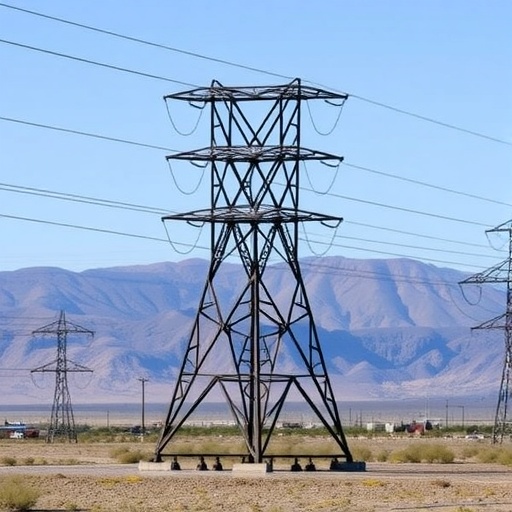
The University of Texas at Dallas and Sandia National Laboratories have signed a memorandum of understanding aimed at accelerating technologies that could determine how securely and efficiently the United States produces, stores and distributes electricity. The agreement brings together researchers working on energy storage, power electronics and energy conversion—three tightly connected fields that are becoming increasingly important as electricity demand rises and the national grid incorporates more renewable power. The partnership is designed not only to generate new scientific discoveries, but also to move those discoveries toward practical testing, domestic manufacturing and deployment across the energy system.
Joseph Pancrazio, vice president for research and innovation and a professor of bioengineering at UT Dallas, signed the agreement on July 28 at the university with Erik K. Webb, director of Sandia’s Energy Security Innovation Center, and Catherine Jereza, assistant secretary for the U.S. Department of Energy’s Office of Electricity. Their collaboration reflects a growing effort by universities, national laboratories and federal agencies to shorten the path between laboratory research and technologies capable of operating under real-world conditions. That transition is particularly challenging in energy, where devices must function reliably at large scale, withstand fluctuating demand and remain safe over years of operation.
The need for such advances is being driven by the rapid transformation of the electric grid. Electricity consumption is increasing as transportation, industry, buildings and data infrastructure become more dependent on electric power. At the same time, solar and wind generation introduce variability because their output changes with weather and time of day. Energy storage systems can help balance that variability by absorbing electricity when supply is abundant and releasing it when demand increases. Power electronics, including inverters, converters and control systems, provide the hardware and software needed to regulate the movement of electricity between batteries, renewable generators, transmission networks and consumers.
A resilient grid requires more than simply adding generation capacity. It must respond quickly to disturbances, prevent local failures from spreading and maintain stable voltage and frequency as thousands of distributed devices connect to the network. Modern power electronics can perform many of these tasks by converting electricity between direct current and alternating current, adjusting voltage levels and coordinating energy flows in milliseconds. Advanced control systems can also allow batteries and other resources to operate as a coordinated network rather than as isolated devices. However, these technologies must be validated under demanding conditions before they can be trusted in critical infrastructure, making large-scale testing a central element of the new partnership.
Researchers at UT Dallas’ Batteries and Energy to Advance Commercialization and National Security facility, known as BEACONS, will work with Sandia experts specializing in electric-grid security and energy technologies. Their research is expected to address the development and commercialization of battery systems as well as the manufacturing processes required to produce them at scale. Battery performance depends on a complex interaction of chemistry, materials structure, thermal management and electronic control. Scientists must improve energy density and charging speed while limiting degradation, overheating and the use of scarce or expensive raw materials. Manufacturing research is equally important because a promising laboratory cell can face substantial obstacles when it is produced consistently in large volumes.
The collaboration will also support a planned test bed where researchers can evaluate energy technologies at larger scales than are typically possible in a university laboratory. A test bed can connect individual components—such as battery modules, power converters and grid-control systems—into an integrated experimental environment. This allows researchers to measure how devices respond to rapid changes in load, intermittent generation, faults and communication failures. Testing at this stage can reveal problems that remain hidden in small-scale experiments, including thermal bottlenecks, control instability, unexpected interactions between components and vulnerabilities that could compromise grid security.
Sandia’s role brings national-laboratory expertise in energy security, infrastructure resilience and the behavior of complex electrical systems. The laboratory’s researchers study how the grid can continue operating during equipment failures, extreme weather, cyber incidents and other disruptions. Combining that expertise with UT Dallas’ research in advanced energy systems could help produce technologies designed with security and reliability from the beginning rather than added after development. The approach is increasingly significant as the grid becomes more distributed and digitally controlled. Every connected inverter, battery and sensor can improve flexibility, but each also introduces new technical and operational challenges that must be managed.
The agreement is also intended to expand the energy-technology workforce. A test bed would give students and researchers experience with equipment and operating conditions that more closely resemble those found in utilities, manufacturing plants and national infrastructure. Such training can include battery diagnostics, power-converter design, grid modeling, system integration, safety procedures and data analysis. The need for this expertise is growing as the United States seeks to strengthen domestic production of batteries and other energy technologies. Training scientists and engineers alongside industry and government partners could help address shortages of specialized workers while ensuring that new technologies are developed with commercial and national-security requirements in mind.
Jereza described the agreement as an example of the country’s ability to translate scientific innovation into domestic manufacturing opportunities that can transform the electricity system. Webb emphasized that a secure and efficient grid will require both technological progress and workforce development, while Pancrazio said the partnership combines UT Dallas’ strengths in advanced energy systems with Sandia’s expertise in storage, power electronics and grid technologies. Together, the institutions aim to create a framework in which researchers, students, companies and government agencies can test ideas, identify engineering barriers and advance the solutions most likely to strengthen grid reliability.
BEACONS was launched in 2023, supported by a $30 million award from the U.S. Department of Defense to establish an Energy Storage Systems Campus at UT Dallas. The campus is intended to support battery research, technology development and collaboration with industrial partners. The new memorandum expands that mission by linking the university’s battery and manufacturing capabilities with Sandia’s national work on energy security and grid performance. If successful, the collaboration could help move emerging storage and power-conversion technologies from controlled laboratory demonstrations toward validated systems capable of supporting a more flexible, resilient and secure electric grid.
Subject of Research: Energy storage, battery technologies, power electronics, energy conversion, electric-grid security and workforce development.
Web References:
https://research.utdallas.edu/about/staff/leadership
https://research.utdallas.edu/
https://be.utdallas.edu/
https://beaconsusa.org/
UT Dallas To Lead $30 Million Battery Technology Initiative
Image Credits: The University of Texas at Dallas
Keywords
Batteries; energy storage; power electronics; energy conversion; electric grid; grid security; renewable energy; solar energy; wave energy; electrical engineering; materials engineering; Sandia National Laboratories; University of Texas at Dallas; BEACONS; laboratories; scientific research.
Tags: advancing energy system reliabilitycollaborative energy research partnershipselectric grid resilienceenergy conversion systemsenergy storage technology developmentgrid modernization researchlaboratory-to-market technology transfernational energy securitypower electronics innovationrenewable energy integrationsustainable energy infrastructureUS energy independence