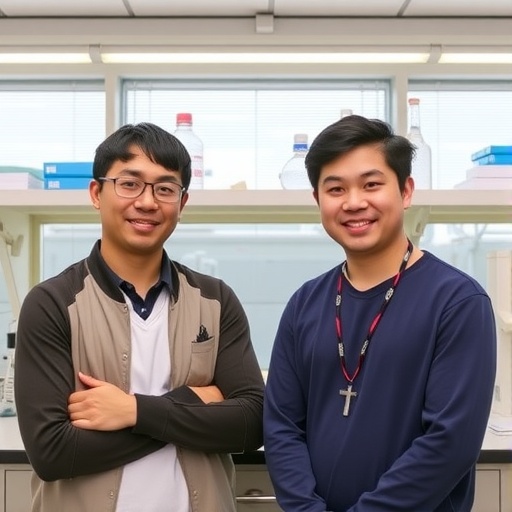
Cancer treatment is rarely limited to the cancer itself. Patients with advanced disease may also develop bacterial or fungal infections, while other medical conditions can require additional medicines. As the number of drugs taken by a patient rises, so does the possibility of adverse interactions, overlapping toxicities and treatment complications. This challenge has encouraged researchers to look beyond conventional “one drug, one target” strategies. At Kaunas University of Technology (KTU) in Lithuania, scientists and their collaborators have developed a series of hybrid molecules that combine anticancer and antimicrobial properties in a single chemical framework. In laboratory testing, several of these compounds reduced the viability of aggressive cancer cells while also inhibiting the growth of selected bacteria and fungi.
The compounds belong to a class of structures built around pyridine and 1,2,4-triazole chemical fragments. These fragments are important in medicinal chemistry because their nitrogen atoms can participate in interactions with biological molecules, including proteins and enzymes involved in cell survival, replication and metabolism. By joining different pharmacologically active structural elements into one molecule, researchers aim to create a hybrid scaffold capable of influencing more than one biological process. Such a strategy may be useful when diseases involve complex biological systems or when microorganisms and cancer cells can adapt to individual drugs. The researchers stress, however, that the work remains at an early, laboratory stage and does not demonstrate that the compounds are safe or effective treatments for patients.
The anticancer activity was evaluated in cell models representing three particularly difficult-to-treat diseases: lung cancer, triple-negative breast cancer and melanoma. These cancer types are associated with aggressive behaviour, a substantial risk of metastasis and, in many cases, resistance to existing therapies. Triple-negative breast cancer is especially challenging because its cells lack three commonly exploited molecular targets—the oestrogen receptor, progesterone receptor and HER2—limiting the usefulness of several established targeted treatments. Melanoma and lung cancer can also acquire resistance as tumour cells evolve under therapeutic pressure. Against this background, the KTU team tested whether the newly synthesised molecules could affect the survival of cancer cells in controlled in vitro experiments.
The term “cell viability” describes the proportion of cells that remain alive and capable of carrying out normal biological functions after exposure to a compound. A reduction in viability may indicate that cells have undergone programmed cell death, suffered irreversible damage or stopped proliferating. Several of the hybrid molecules produced such effects in the cancer-cell models. These findings provide an initial signal that the compounds may interfere with pathways required for tumour-cell survival, although the precise mechanisms have not yet been established. The researchers emphasise that a laboratory response in cultured cells is not equivalent to a clinical benefit. A candidate drug must also reach the tumour in the body, avoid rapid breakdown, show an acceptable safety profile and demonstrate activity in increasingly complex biological models.
The antimicrobial findings added a second dimension to the study. Three of the synthesised compounds displayed strong activity against tested bacteria and fungi. One compound was more effective against fungi than nystatin, an antifungal medicine used as a control in the experiments. Its antibacterial activity was comparable to that of vancomycin, an antibiotic commonly used as a reference for activity against susceptible bacteria. Two additional compounds also generated promising results, in some cases matching or exceeding the activity of the comparison medicines under the conditions of the laboratory tests. These comparisons do not mean that the new molecules can replace established drugs. Instead, they indicate that the chemical scaffold deserves further investigation as a possible source of new antimicrobial candidates at a time when resistance is reducing the effectiveness of existing therapies.
The most notable outcome was that the molecule with the strongest combined anticancer and antimicrobial performance was not the compound the researchers had initially expected to be the leading candidate. This result highlights a persistent challenge in drug discovery: chemical intuition and computational predictions can guide researchers, but biological systems frequently respond in ways that are difficult to anticipate. A molecule’s activity depends not only on the presence of a particular functional group, but also on its three-dimensional shape, electronic distribution, solubility, stability and ability to cross cellular or microbial membranes. Small changes in molecular architecture can therefore alter how a compound reaches its target and how strongly it interacts with it.
The research process described by the KTU scientists is consequently iterative. The team uses theoretical calculations and in silico analysis to estimate how candidate molecules may behave, then synthesises selected structures and tests them experimentally. Results from the biological assays feed back into the design process, allowing the researchers to refine the molecules and prioritise the most promising variants. This cycle is central to modern medicinal chemistry, where the aim is not simply to produce a molecule that is active in one assay, but to balance multiple properties at once. Potency must eventually be considered alongside selectivity for diseased cells, toxicity toward healthy tissues, chemical stability, pharmacokinetics and the ability to be manufactured reliably.
The dual-action concept could have particular value if future studies show that a single compound can act selectively against cancer cells while also suppressing infection-causing microorganisms. In principle, combining activities in one molecule could simplify treatment and reduce the need for multiple simultaneously administered drugs. It might also help researchers explore therapeutic strategies in which cancer and infection are addressed within the same clinical context. Yet hybrid molecules can introduce their own complications. A compound active against several biological targets may also interact with unintended proteins, increasing toxicity or producing unpredictable side effects. For that reason, the next phase of the work will need to examine the mechanisms responsible for both the anticancer and antimicrobial effects, as well as the compounds’ impact on healthy human cells.
Before any clinical application could be considered, the candidates would need to pass through a long sequence of studies. Researchers would first need to establish dose-response relationships, identify the most likely molecular targets and determine whether the compounds retain activity in more realistic models, including three-dimensional tumour systems and infection models. Preclinical investigations would then assess absorption, distribution, metabolism, excretion and toxicity in living organisms. Only compounds with sufficiently strong evidence of safety and effectiveness could proceed to carefully regulated clinical trials. The current results therefore represent a starting point rather than a therapeutic breakthrough, but they demonstrate how hybrid chemical design can generate unexpected activity across two major areas of medical need.
The study was conducted through the PYRANCAM project, funded by the Research Council of Lithuania under its Researcher Groups funding scheme. The findings contribute to international efforts to develop new approaches to cancer treatment and combat antimicrobial resistance, two problems that continue to place pressure on healthcare systems worldwide. By combining synthesis, biological testing and computational analysis, the KTU researchers have identified pyridine–1,2,4-triazole scaffolds with measurable activity in cancer-cell and microbial assays. Whether these molecules can be transformed into useful medicines will depend on the results of the next stages of research, particularly studies of selectivity, mechanism and safety. For now, the work offers a scientifically grounded example of how one carefully designed chemical framework may be investigated for multiple therapeutic possibilities.
Subject of Research: Hybrid compounds with anticancer and antimicrobial activity.
Article Title: New hybrid pyridine–1,2,4-triazole scaffolds: synthesis, in vitro evaluation of anticancer and antimicrobial activity, and in silico insights
News Publication Date: 22-May-2026
Web References: https://www.nature.com/articles/s41598-026-53201-3
References: Scientific Reports; DOI: 10.1038/s41598-026-53201-3
Image Credits: KTU
Keywords
Cancer research, antimicrobial resistance, hybrid molecules, pyridine, 1,2,4-triazole, lung cancer, triple-negative breast cancer, melanoma, drug discovery, medicinal chemistry, Scientific Reports
Tags: 24-triazole chemical structuresand cancer cellscancer and infection treatmentcombined antimicrobial and anticancer agentsDual-action anticancer and antimicrobial hybrid compoundsfungihybrid molecules for cancer therapyinnovative drug design for complex diseasesKaunas University of Technology pharmaceutical researchmedicinal chemistry of pyridine-based compoundsmulti-functional therapeutic compoundsmulti-target drug developmentpyridine and 1reducing drug interactions with hybrid therapiestargeting bacteria