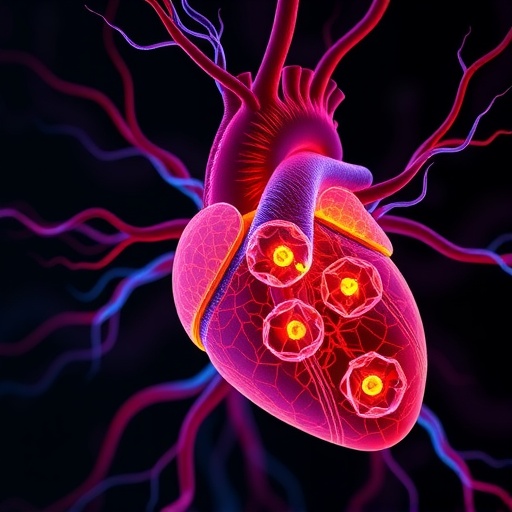
Heart failure with preserved ejection fraction, or HFpEF, has become one of cardiology’s most difficult challenges. Patients retain a seemingly normal left-ventricular ejection fraction, yet the heart progressively loses its ability to relax and fill efficiently. Breathlessness, exercise intolerance, fluid congestion and recurrent hospitalizations are common, while effective disease-modifying treatments remain limited. A new review in Nature Reviews Cardiology highlights a central biological problem behind this syndrome: myocardial fibrosis, the excessive accumulation and remodelling of extracellular matrix within the heart. The authors argue that cardiac fibroblasts, long regarded mainly as passive collagen-producing cells, may be critical organizers of the multicellular and systemic processes that drive HFpEF.
Fibrosis stiffens the myocardium by altering the composition, quantity and physical organization of the extracellular matrix surrounding cardiac cells. Collagens provide structural support, but excessive or chemically modified collagen can reduce ventricular compliance and interfere with electrical conduction. In HFpEF, this stiffening is particularly important because the left ventricle must accommodate blood during diastole, the relaxation phase of the heartbeat. When the ventricular wall becomes less compliant, filling pressures rise, blood backs up into the lungs and patients develop exertional shortness of breath. Fibrotic tissue can also create electrical discontinuities that increase vulnerability to atrial and ventricular arrhythmias. Despite its clinical importance, however, fibrosis in HFpEF is not simply a smaller version of the scar formed after a heart attack.
Following myocardial infarction, large numbers of fibroblasts can become activated myofibroblasts, a specialized state associated with contractile proteins and intensive production of scar-forming matrix. These cells help seal and stabilize damaged tissue. In HFpEF, by contrast, the disease usually develops gradually in the setting of obesity, hypertension, diabetes, ageing, kidney disease and systemic inflammation. According to the review, fibrosis in this context appears to arise from the activation of profibrotic programmes across multiple fibroblast states rather than from the dramatic expansion of one classic myofibroblast population. This distinction matters because therapies designed only to eliminate or suppress conventional myofibroblasts may overlook the broader cellular network contributing to chronic myocardial remodelling.
Advances in single-cell RNA sequencing have made it possible to examine gene activity in individual cardiac cells rather than averaging signals across an entire piece of tissue. Spatial transcriptomics adds another layer by mapping those molecular states back to their precise locations within the myocardium. Together, these technologies have revealed that cardiac fibroblasts form a diverse family of cells with distinct transcriptional profiles, anatomical niches and interactions with neighbouring cells. Some populations are closely associated with blood vessels, others with cardiomyocytes or immune cells, and still others appear to specialize in matrix maintenance or inflammatory communication. In HFpEF, different fibroblast states may acquire overlapping disease-associated programmes, allowing the fibrotic response to spread through the cardiac stroma without requiring a single dominant cell type.
One of the important programmes identified in the review involves nitrosative stress. This process develops when reactive nitrogen species, including peroxynitrite, accumulate and chemically modify proteins, lipids and nucleic acids. Nitrosative stress can disrupt signalling pathways, damage cellular structures and alter the behaviour of fibroblasts. Instead of responding appropriately to mechanical or hormonal cues, affected cells may shift toward persistent matrix production and inflammatory communication. The fibroblast response is also linked to disturbed lipid handling. In a metabolically stressed heart, changes in fatty-acid uptake, storage and oxidation can expose stromal cells to toxic lipid intermediates or alter their energy balance. These metabolic abnormalities may reinforce inflammatory and profibrotic signalling, tying the cardiac extracellular matrix to the wider metabolic disturbances that characterize HFpEF.
Fibroblasts do not operate in isolation. Cardiomyocytes, endothelial cells, pericytes, immune cells and vascular smooth-muscle cells continuously exchange signals through cytokines, growth factors, extracellular vesicles and direct cell contact. Mechanical stress caused by hypertension can activate mechanosensitive pathways in fibroblasts, while endothelial dysfunction can change the supply of oxygen, nutrients and vasoactive mediators to the myocardium. Immune cells may release transforming growth factor beta and other signals that promote matrix remodelling, while fibroblasts themselves can influence immune-cell recruitment and persistence. The result is a feedback loop in which inflammation, vascular dysfunction, altered loading conditions and extracellular-matrix stiffness continually amplify one another.
The review further presents the cardiac fibroblast as an integrator of signals arriving from organs far beyond the heart. Adipose tissue can release inflammatory mediators, adipokines and altered lipid species, particularly in obesity and insulin resistance. The bone marrow supplies immune and progenitor cells that may influence myocardial inflammation and repair. Signals originating in the gut, including microbial metabolites and inflammatory products associated with barrier dysfunction, may affect cardiovascular physiology through the circulation. The liver contributes changes in lipid metabolism and circulating proteins, while the lymphatic system regulates immune-cell trafficking and interstitial fluid clearance. Neural inputs, including sympathetic activation, can modify vascular tone, metabolism and inflammatory responses. These pathways suggest that the cardiac stroma is continuously exposed to systemic cardiometabolic stress rather than being governed solely by local cardiac injury.
This interorgan perspective may help explain why HFpEF is so heterogeneous. Two patients with similar ejection fractions can have very different combinations of hypertension, visceral adiposity, renal dysfunction, pulmonary vascular disease, inflammation and atrial arrhythmia. Those differences may produce distinct fibroblast states and distinct patterns of extracellular-matrix remodelling. A therapy that works in one molecularly defined subgroup could therefore fail in another if it targets the wrong pathway or is administered after fibrosis has become structurally entrenched. The emerging challenge is to identify which fibroblast programmes are harmful, which are protective or reparative, and how those programmes change over time.
Early proof-of-concept studies in animal models provide a reason for cautious optimism. Experimental approaches that selectively interfere with fibroblast-associated targets have reduced cardiac fibrosis, improved diastolic performance and lowered susceptibility to arrhythmias in models displaying HFpEF-like features. The therapeutic possibilities include blocking disease-associated signalling pathways, correcting fibroblast metabolism, limiting pathological responses to mechanical stress, and modifying communication between fibroblasts and immune or vascular cells. However, the biological diversity of fibroblasts creates a major safety concern. Broadly suppressing these cells could impair normal matrix maintenance, wound repair or vascular support. Future treatments will likely need to target specific disease-associated states or molecular programmes while preserving essential homeostatic functions.
The authors’ synthesis points toward a new generation of antifibrotic medicine based on precision stromal biology. Rather than viewing fibrosis as an endpoint produced by a single overactive cell type, researchers are beginning to see it as a dynamic system shaped by cellular identity, tissue location, metabolism, inflammation and communication between organs. Mapping these networks in human HFpEF tissue will be essential for determining which findings from animal models translate to patients. Biomarkers capable of identifying active fibroblast programmes, combined with imaging methods that measure diffuse fibrosis and tissue stiffness, could eventually support patient selection and treatment monitoring. If these strategies succeed, fibroblast-directed therapies may do more than reduce collagen deposition: they could interrupt the molecular circuits linking systemic metabolic stress to myocardial dysfunction, offering a targeted way to treat one of heart failure’s most persistent and least understood features.
Subject of Research: Cardiac fibroblast diversity, myocardial fibrosis and interorgan drivers in heart failure with preserved ejection fraction (HFpEF)
Article Title: Cardiac fibroblast diversity in HFpEF: states, niches, interorgan drivers and targets
Article References: Kiyar, M., Pinto, A.R., O’Sullivan, J.F. et al. “Cardiac fibroblast diversity in HFpEF: states, niches, interorgan drivers and targets.” Nature Reviews Cardiology (2026). https://doi.org/10.1038/s41569-026-01335-2
Image Credits: AI Generated
DOI: 10.1038/s41569-026-01335-2
Keywords: HFpEF, cardiac fibroblasts, myocardial fibrosis, extracellular matrix, heart failure, single-cell transcriptomics, spatial transcriptomics, cardiometabolic stress, diastolic dysfunction, antifibrotic therapy
Tags: cardiac fibroblastscardiac tissue remodellingcollagen accumulation in the heartdiastolic dysfunctionelectrical conduction abnormalities in HFpEFextracellular matrix remodellingfibrosis-driven heart diseaseheart failure with preserved ejection fractionmyocardial fibrosissystemic processes in heart failuretherapeutic targets for HFpEFventricular stiffness