


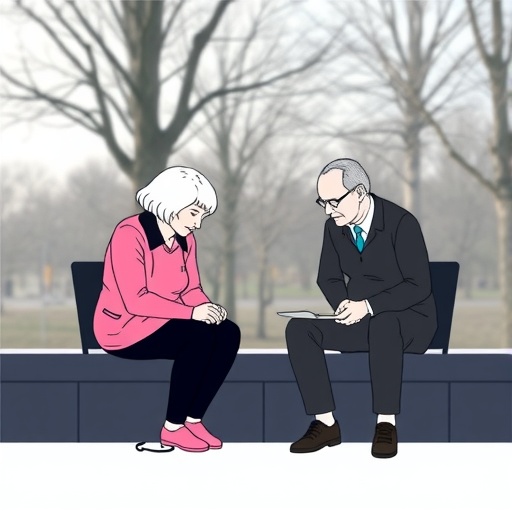
A new study published in Nature Communications is drawing attention to a potentially self-reinforcing health cycle: loneliness may increase the likelihood of developing multiple physical illnesses, while living with several chronic conditions may, in turn, deepen loneliness. Led by Y. Zhou, S. Zhu, J. Holt-Lunstad and colleagues, the research examines the bidirectional relationship between loneliness and physical multimorbidity, highlighting social inactivity as an important pathway connecting emotional isolation with deteriorating physical health.
Loneliness is more than simply spending time alone. It is the subjective feeling that a person’s social relationships are insufficient in quantity or quality. Someone may be surrounded by people and still feel profoundly lonely, while another person may live alone without experiencing loneliness. Physical multimorbidity, by contrast, is a clinical concept generally used to describe the presence of two or more long-term health conditions in the same individual. These conditions can include cardiovascular disease, diabetes, chronic respiratory illness, arthritis, neurological disorders and other persistent ailments that often require complex, ongoing care.
The study’s central message is that the relationship between these two conditions appears to operate in both directions. Loneliness can be associated with a greater risk of developing or accumulating physical illnesses, but multimorbidity can also make loneliness more likely. This two-way pattern challenges the idea that loneliness is merely a psychological consequence of poor health. Instead, it suggests that social and emotional experiences may participate in a dynamic health process, while physical illness can simultaneously reduce opportunities for social connection and reinforce feelings of isolation.
The researchers also identify social inactivity as a mediating factor. In epidemiological research, a mediator is a process that helps explain how one variable may be connected to another. In this case, loneliness may contribute to reduced participation in social activities, and lower social engagement may then be linked with the emergence or worsening of multiple physical conditions. At the same time, people managing several illnesses may withdraw from social life because of pain, fatigue, mobility limitations, treatment schedules or fear of embarrassment, potentially intensifying loneliness. Social inactivity therefore sits at the intersection of psychological distress, daily behavior and physical health.
This mechanism is biologically plausible. Social isolation and chronic loneliness have been associated in previous research with prolonged activation of stress-related systems, including the hypothalamic–pituitary–adrenal axis and the sympathetic nervous system. Persistent stress responses can influence inflammation, immune regulation, sleep, blood pressure and metabolic function. Loneliness may also affect health indirectly by reducing motivation for exercise, disrupting healthy routines and making it more difficult to seek medical care. These pathways do not mean that loneliness directly causes every illness, but they help explain why sustained social disconnection can become relevant to long-term disease risk.
The reverse pathway may be equally powerful. Multimorbidity often creates a daily burden that extends beyond the symptoms of any single diagnosis. Individuals may need to coordinate multiple medications, attend frequent appointments and adapt to limitations in movement, energy or concentration. Some conditions can make travel difficult, while others may restrict employment, hobbies or participation in community life. As activities disappear, social networks can shrink. The resulting loneliness may then reduce confidence and motivation even further, creating a feedback loop in which illness limits social contact and limited social contact makes illness harder to manage.
The findings are especially relevant as populations age and chronic diseases become more common. Advances in medicine mean that many people live longer with conditions that once would have been fatal, increasing the number of individuals navigating several diseases simultaneously. At the same time, urbanisation, changing household structures, remote work and digital forms of communication are reshaping how people interact. The study suggests that healthcare systems focused exclusively on symptoms, prescriptions and laboratory results may overlook a crucial part of disease management: whether patients have meaningful opportunities to remain socially active.
Importantly, the concept of mediation should be interpreted carefully. Demonstrating that social inactivity helps account for an association does not, by itself, prove that increasing social activity will prevent multimorbidity or reverse loneliness. Observational studies can reveal patterns and support plausible explanations, but they may also be affected by unmeasured factors such as socioeconomic disadvantage, disability, access to transport, mental health, neighbourhood safety or pre-existing disease. Establishing causality would require stronger longitudinal evidence and carefully designed interventions that test whether changes in social participation produce measurable improvements in health.
Even with those qualifications, the research points toward a broader definition of prevention. Social activity does not have to mean large gatherings or an extensive circle of friends. Regular contact with family, participation in local groups, volunteering, peer-support programmes, accessible exercise classes or structured community activities may all provide opportunities for connection. For people living with chronic illness, interventions may need to be adapted around pain, fatigue, sensory impairment and mobility restrictions. Transport assistance, digital inclusion and activities delivered through healthcare or community settings could be particularly important for those at greatest risk of withdrawal.
The study ultimately presents loneliness and physical multimorbidity as interconnected public-health challenges rather than separate problems belonging to different parts of medicine. Its emphasis on social inactivity offers a practical clue about where the cycle might be interrupted, while its bidirectional framework warns against simplistic explanations. Treating disease may help people reconnect with daily life, and strengthening social connection may support healthier routines and engagement with care. As scientists continue to investigate the mechanisms involved, the message emerging from this work is clear: social disconnection is not merely an emotional inconvenience, and physical illness is not only a biological event. For many people, the two can evolve together, each amplifying the other.
Subject of Research: The bidirectional relationship between loneliness and physical multimorbidity, including the mediating role of social inactivity.
Article Title: Bidirectional associations between loneliness and physical multimorbidity and the mediating role of social inactivity.
Article References: Zhou, Y., Zhu, S., Holt-Lunstad, J. et al. “Bidirectional associations between loneliness and physical multimorbidity and the mediating role of social inactivity.” Nature Communications (2026). https://doi.org/10.1038/s41467-026-76770-3
Image Credits: AI Generated
DOI: 10.1038/s41467-026-76770-3
Keywords: Loneliness, physical multimorbidity, social inactivity, social isolation, chronic disease, public health, mental health, social connection, mediation, epidemiology
Tags: bidirectional health relationshipchronic illness and social isolationemotional isolation and chronic illnesshealth cycle between loneliness and multimorbidityhealth intervention strategies for lonelinessimpact of loneliness on physical healthLoneliness and physical multimorbiditylong-term health conditionsmental health and physical health connectionsocial engagement and disease managementsocial inactivity as mediatorsocial relationships and health outcomes


