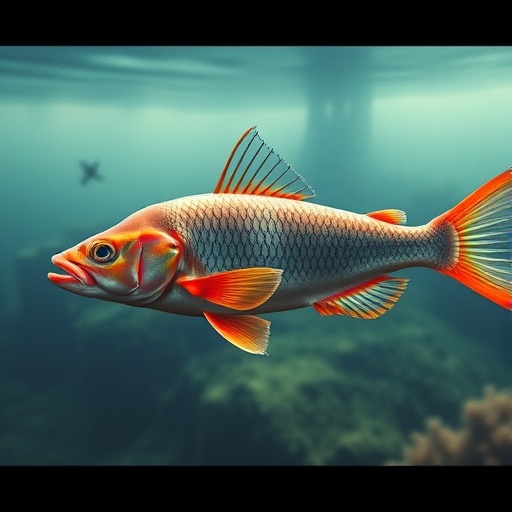
A tiny Australian freshwater fish may be carrying a warning for the future of wildlife conservation. New research shows that genomic data can reveal which populations are most vulnerable to climate change long before their numbers collapse, giving conservation managers a chance to intervene while recovery is still possible. The study focused on the southern pygmy perch, Nannoperca australis, a small native fish that once occupied a broad network of streams, rivers and wetlands across southeastern Australia. Today, habitat destruction, river regulation and prolonged drought have reduced it to scattered populations, many of them isolated from one another across the Murray–Darling Basin.
The research, led by scientists from Flinders University’s Molecular Ecology Laboratory and published in the Journal of Heredity, combined genome-wide analysis with climate modelling to examine how different populations may cope with continued warming. Rather than treating the species as a single uniform group, the researchers investigated whether fish from different parts of the basin possessed different levels of genetic variation associated with environmental resilience. Their results suggest that geography can provide an important early clue: southern pygmy perch living in upland streams appear generally more vulnerable to future climate change than populations inhabiting lowland wetlands and rivers.
The team analysed thousands of DNA markers from 467 fish collected at 30 sites across the species’ remaining range. These markers allowed the researchers to measure genetic differences among populations and identify patterns linked to local environmental conditions. In conservation genomics, this approach can help reveal “genomic vulnerability”—the degree to which a population’s existing genetic profile may be mismatched with the climate it is likely to experience in the future. A population may survive today yet still lack enough genetic variation to cope with warmer water, altered rainfall, reduced streamflow or more frequent droughts. By comparing current genetic characteristics with projected climate conditions, scientists can estimate which groups face the greatest evolutionary pressure.
The findings are particularly significant because climate change does not affect every population in the same way. Fish living in cool upland streams may already be close to their thermal limits, leaving them with fewer options as temperatures rise. Their habitats can also be more sensitive to declining rainfall and reduced water flow. Lowland wetlands and rivers, by contrast, may contain more variable conditions or provide access to a wider range of habitats, potentially giving some populations greater opportunity to tolerate or adapt to environmental change. The researchers found that elevation was a strong predictor of vulnerability, suggesting that conservation agencies may be able to identify high-risk populations using a relatively simple landscape feature, even in regions where detailed genomic surveys are not yet available.
That possibility could make genomic conservation more practical. Collecting and analysing thousands of genetic markers from every threatened population is expensive and time-consuming, especially when conservation teams are working across large river systems. If elevation and other environmental characteristics reliably correspond with genomic vulnerability, managers could use them as a first screening tool. Genetic testing could then be concentrated on populations flagged as most at risk. The approach would not replace genomic data, but it could help direct limited resources toward the places where intervention is most urgent.
The southern pygmy perch also offered the researchers an opportunity to test whether conservation breeding can preserve a species’ ability to respond to future change. During Australia’s Millennium Drought, the fish disappeared from the Lower Lakes region of the Murray River. A genetically informed captive-breeding and reintroduction programme was subsequently developed to restore the population. Such programmes can sometimes create an unintended problem: when only a small number of animals contribute to the next generation, genetic diversity may be lost through founder effects and inbreeding. Reduced diversity can limit a population’s ability to adapt when conditions change. In this case, however, the restored population retained a genomic profile indicating capacity to cope with future warming.
That result provides rare empirical support for the idea that conservation breeding can protect not only a species’ immediate survival, but also its longer-term evolutionary potential. The success appears to have been aided by genetic information incorporated into the recovery programme, allowing managers to make more informed decisions about which fish should contribute to breeding and reintroduction. Preserving genetic diversity does not guarantee that a population will survive climate change, but it can increase the range of biological options available to natural selection. In practical terms, genetically diverse populations are more likely to contain individuals with traits that help them withstand new temperatures, changing water conditions or emerging environmental stresses.
The study’s lead author, Dr Emily Booth, said the work demonstrates how genomics is becoming a direct conservation tool rather than simply a method for describing biodiversity. “Climate change doesn’t affect all populations equally,” Booth said. “By combining genomic data with climate modelling, we can identify the populations most at risk and help conservation managers prioritise where actions are likely to have the greatest impact.” That information could support several forms of intervention, including captive breeding, assisted gene flow—moving individuals or genetic material between populations—and habitat restoration designed to maintain cool, connected and reliable aquatic refuges.
Senior author Professor Luciano Beheregaray said the findings show that genomic research can be translated into concrete management decisions. The researchers argue that the same framework could be applied well beyond the southern pygmy perch. Freshwater fish are among the most threatened vertebrates on Earth, facing a combination of warming water, drought, dams, pollution, invasive species and the fragmentation of river networks. Unlike many land animals, fish in disconnected waterways may have little opportunity to move as conditions deteriorate. A population trapped in a shrinking or warming habitat cannot easily reach a more suitable environment, making its genetic capacity especially important.
The research therefore offers a potential roadmap for identifying hidden climate risk before it becomes visible as a dramatic population decline. It also shows why protecting a species requires more than counting individuals. Two populations may contain similar numbers of fish while differing substantially in genetic diversity, environmental history and ability to adapt. For the southern pygmy perch, a fish small enough to be overlooked beside more famous Australian wildlife, genomic evidence is now helping reveal where the future is most dangerous—and how carefully planned conservation can keep evolutionary possibilities alive.
Subject of Research: Animals
Article Title: Genomic vulnerability to climate change of a poorly dispersing and threatened fish, the southern pygmy perch (Nannoperca australis)
News Publication Date: 23-Jun-2026
Web References: Flinders University Molecular Ecology Laboratory; Journal of Heredity article
References: Booth EJ, Brauer CJ, Sandoval-Castillo J, Wedderburn SD, Whiterod NS, Unmack PJ, Hammer MP, Beheregaray LB. “Genomic vulnerability to climate change of a poorly dispersing and threatened fish, the southern pygmy perch (Nannoperca australis).” Journal of Heredity. DOI: 10.1093/jhered/esag052
Image Credits: Photo courtesy Michael P. Hammer
Keywords: climate change, conservation genomics, southern pygmy perch, Nannoperca australis, freshwater fish, Murray–Darling Basin, genetic diversity, genomic vulnerability, captive breeding, adaptive capacity, biodiversity conservation, Australia
Tags: climate change vulnerability in aquatic speciesclimate resilience in freshwater fish populationsconservation genetics of Australian fishearly detection of climate-sensitive wildlife populationsgenetic variation and environmental resilience in aquatic speciesgenome-wide studies for wildlife conservationGenomic analysis of endangered freshwater fishhabitat destruction impact on native fish populationsidentifying vulnerable fish populations before collapseimpact of drought and habitat loss on freshwater biodiversitymolecular ecology of southern pygmy perchuse of genomics and climate models in conservation