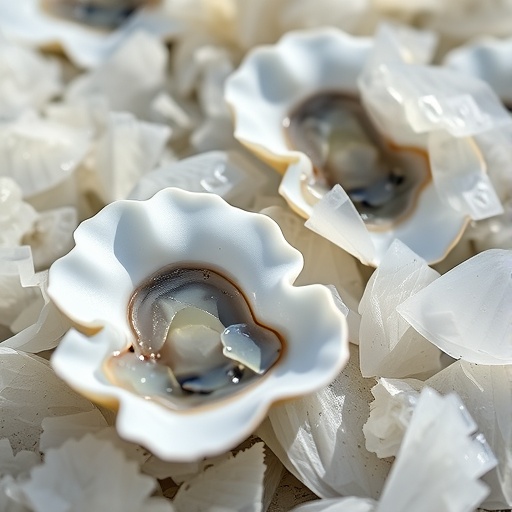
Microplastic pollution has reached another critical biological threshold along the Texas Gulf Coast, where oysters are showing biochemical stress and tissue damage linked to exposure to tiny plastic particles. A new study published in PLOS One reports that microplastics are not merely accumulating in coastal waters and sediments; they are also associated with measurable changes inside oysters, including alterations in tissue structure, increased protein nitration, and changes in antioxidant defenses. The findings position oysters as living early-warning systems for pollution that may otherwise remain difficult to detect through chemical monitoring alone.
The study, titled “Histochemical alteration, protein nitration, and antioxidant expression in oysters as early warning indicators for microplastic contamination in the Texas Gulf Coast,” examines how microplastic contamination may affect the physiology of oysters at the cellular and molecular levels. Oysters are particularly valuable for this type of investigation because they are stationary filter feeders. As they draw large volumes of seawater across their gills, they can concentrate suspended particles, including microplastics, in their tissues. Their close contact with coastal sediments also exposes them to particles that settle on the seafloor and later become resuspended by tides, storms, boat traffic, or dredging.
Microplastics are generally defined as plastic fragments, fibers, or films smaller than five millimeters, although many environmental particles are far smaller and may approach microscopic dimensions. They can originate from the breakdown of larger plastic waste, synthetic textile fibers, industrial materials, fishing equipment, packaging, and urban runoff. Once introduced into estuaries and coastal waters, these particles can carry chemical additives and pollutants on their surfaces. Their biological effects may therefore result not only from physical contact or ingestion but also from the release of plastic-associated chemicals and the transport of other contaminants into animal tissues.
The Texas Gulf Coast is especially important for studying this problem because it combines extensive oyster habitat with major urban, industrial, shipping, and recreational activity. Oysters occupy shallow coastal environments where pollutants can accumulate, and they are harvested for human consumption as well as serving essential ecological functions. Oyster reefs filter water, create habitat for other species, stabilize sediments, and influence nutrient cycling. Stress in oyster populations can therefore have consequences that extend beyond individual animals, affecting fisheries, shoreline resilience, and the broader health of Gulf ecosystems.
To identify biological responses to contamination, the researchers used histochemical analysis, a group of techniques that reveals changes in cells and tissues through targeted staining. Histochemical alterations can indicate that an organ has been injured or is responding to environmental pressure. In oysters, tissues involved in filtration, digestion, and metabolism are continuously exposed to particles from the surrounding environment. Changes in their microscopic organization may provide an early signal of damage before contamination produces visible effects at the population level, such as reduced growth, impaired reproduction, weakened shells, or increased mortality.
The study also focused on protein nitration, a biochemical process associated with oxidative and nitrosative stress. Under normal conditions, cells produce reactive oxygen and nitrogen species as part of metabolism and immune defense. These molecules are controlled by protective systems, but environmental stress can disrupt that balance. Excess reactive species may chemically modify proteins through nitration, potentially changing their structure and interfering with their function. Elevated protein nitration can therefore serve as an indicator that cells are experiencing damaging molecular pressure, even when the animal appears outwardly healthy.
A second molecular response examined by the researchers involved antioxidant expression. Antioxidants are enzymes and other protective molecules that neutralize reactive compounds before they damage proteins, membranes, DNA, and cellular structures. When an organism encounters pollution, antioxidant systems may become more active as the animal attempts to restore chemical balance. However, sustained or intense exposure can overwhelm these defenses, producing a condition known as oxidative stress. Measuring antioxidant expression alongside tissue damage and protein nitration allows scientists to distinguish between a temporary protective response and a broader failure of cellular defenses.
Taken together, the biological indicators described in the study suggest that microplastic contamination can affect oysters through several connected pathways. Particles may irritate tissues directly, interfere with feeding or digestion, and stimulate immune activity. At the same time, the chemicals associated with plastics or carried on their surfaces may promote the formation of reactive oxygen and nitrogen species. The resulting stress can alter cellular proteins, trigger antioxidant responses, and produce visible changes in tissue architecture. This combination is important because no single measurement captures the full biological impact of pollution; tissue structure, molecular damage, and protective responses provide complementary evidence.
The researchers’ approach also highlights why oysters may be useful for coastal pollution surveillance. Water samples provide a snapshot of contamination at a particular time and location, while oysters integrate exposure over longer periods as they filter and retain materials from their surroundings. Their tissues can record the biological consequences of pollutants that fluctuate with rainfall, runoff, tides, and industrial activity. By pairing chemical measurements of microplastics with histochemical and molecular biomarkers, monitoring programs could potentially detect ecological stress before it develops into a visible collapse of oyster reefs or a measurable decline in fisheries.
The findings do not mean that every plastic particle produces the same effect, nor do they establish a simple one-to-one relationship between the presence of microplastics and harm to people who eat oysters. Risk depends on particle size, shape, polymer type, concentration, exposure duration, environmental conditions, and the presence of additional pollutants. Nevertheless, the study adds to growing evidence that microplastics should be evaluated not only as persistent debris but also as biologically active stressors. The authors report no specific funding for the work and no competing interests, and they describe their results as support for using oyster tissue responses as early warning indicators along the Texas Gulf Coast. As plastic inputs continue to rise, such biological monitoring may become essential for protecting coastal ecosystems and understanding the hidden cost of contamination.
Subject of Research: Microplastic contamination and its biochemical and physiological effects on oysters in the Texas Gulf Coast.
Article Title: Histochemical alteration, protein nitration, and antioxidant expression in oysters as early warning indicators for microplastic contamination in the Texas Gulf Coast
Web References: https://doi.org/10.1371/journal.pone.0354521
References: Muñiz et al., “Histochemical alteration, protein nitration, and antioxidant expression in oysters as early warning indicators for microplastic contamination in the Texas Gulf Coast,” PLOS One, DOI: 10.1371/journal.pone.0354521.
Image Credits: Muñiz et al., CC BY 4.0
Keywords: Microplastics, oysters, Texas Gulf Coast, Gulf of Mexico, oxidative stress, protein nitration, antioxidant response, histochemistry, marine pollution, environmental monitoring
Tags: biochemical changes in oystersbiochemical stress in marine lifecoastal sediment pollutionearly warning systems for plastic pollutioneffects of microplastics on filter feedersimpact of microplastics on marine physiologymicroplastic contamination detectionMicroplastic pollution in oystersmicroplastics and antioxidant response in marine organismsoyster as environmental indicatorTexas Gulf Coasttissue damage from microplastics