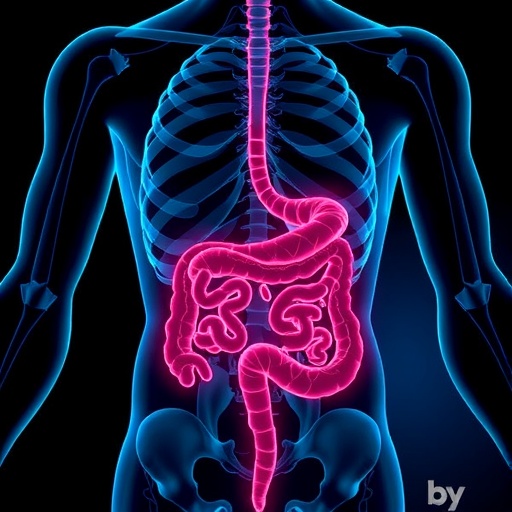
Scientists have used artificial intelligence, genetic profiling and gut microbiome analysis to investigate how Crohn’s disease progresses from chronic inflammation to intestinal fibrosis, a form of irreversible bowel scarring that can narrow the intestine and eventually require surgery. The study, led by researchers at the University of Birmingham Dubai and published in Frontiers in Artificial Intelligence, suggests that fibrosis may not represent a completely separate or final stage of Crohn’s disease. Instead, it appears to develop through an active biological process in which immune activation, damage to the intestinal lining and disruption of gut bacteria continue to reinforce one another.
Crohn’s disease is a lifelong inflammatory bowel disease in which the immune system attacks the digestive tract, causing recurring inflammation, abdominal pain, diarrhoea, weight loss and fatigue. In some patients, prolonged inflammation triggers the formation of fibrotic tissue within the bowel wall. Unlike ordinary inflammation, fibrosis involves the excessive production and accumulation of connective tissue proteins, including collagen. Over time, this stiffens and thickens the intestine, creating strictures that obstruct the movement of food. Current clinical tools can identify narrowing and inflammation, but distinguishing active, potentially treatable inflammation from established scar tissue remains difficult.
To examine the molecular changes associated with this process, the research team analysed 448 intestinal tissue transcriptomic samples and 80 microbiome samples from healthy individuals, people with Crohn’s disease and patients with fibrotic Crohn’s disease. Transcriptomics measures the activity of thousands of genes simultaneously by examining messenger RNA, the molecular intermediaries that carry instructions from DNA to cells. By comparing gene-expression patterns across disease states, researchers can identify biological pathways that become more active or less active as disease progresses. The participants were predominantly adults, with median ages spanning the 30s to early 60s, allowing the researchers to examine disease-associated patterns across a broad adult population.
Machine-learning analysis identified a shared set of 43 genes associated with the transition from inflammatory disease to fibrosis. Rather than pointing to a single molecular switch, the results revealed three interconnected biological patterns. The first was persistent immune activation. Several genes involved in inflammatory signalling were more active in fibrotic disease, indicating that the immune system may remain engaged even after tissue damage has become established. This continued immune activity could stimulate repair mechanisms that become excessive, leading intestinal cells to deposit increasing amounts of scar-forming material.
The second pattern involved the loss of normal bowel function. Genes associated with digestion, nutrient absorption and maintenance of the intestinal lining were less active in fibrotic tissue. The intestinal wall is not simply a passive barrier: it contains specialised cells that absorb nutrients, produce protective mucus and regulate interactions between the body and the microbes living inside the gut. Reduced activity in these functional pathways suggests that scarred tissue may lose some of its ability to perform these tasks. That loss could make the bowel more vulnerable to further injury while also contributing to the symptoms experienced by patients.
The third pattern reflected ongoing cellular stress and damage. The researchers found molecular signals suggesting that intestinal cells were operating under pressure and that the protective gut barrier had weakened. A compromised barrier can allow microbial products and other substances from the gut to come into closer contact with immune cells in the bowel wall. This may amplify inflammation and create a feedback loop: inflammation damages the barrier, barrier damage increases exposure to inflammatory triggers, and repeated injury encourages abnormal tissue repair and fibrosis.
The microbiome findings supported this model. Patients with fibrotic disease showed reductions in several bacteria commonly associated with the production of short-chain fatty acids, including Faecalibacterium, Anaerostipes, Coprococcus and Ruminococcus. Short-chain fatty acids are produced when gut microbes ferment dietary fibre and can influence intestinal energy metabolism, epithelial barrier integrity and immune regulation. Their depletion may therefore remove signals that normally help maintain a stable intestinal environment. At the same time, potentially harmful bacteria such as Bilophila and Bacteroides were more abundant. The researchers reported that these microbial changes were closely linked to gene-expression patterns connected with inflammation, barrier damage and fibrotic progression.
A major feature of the study was the use of generative artificial intelligence to address a common problem in fibrosis research: the limited number of well-characterised patient samples. Fibrotic intestinal tissue is harder to obtain than samples from patients with active inflammation, and datasets are often too small for conventional machine-learning systems to learn reliably. The researchers trained generative models to produce synthetic gene-expression profiles based on patterns present in the real biological data and constrained by known biological relationships. These artificial samples were not intended to replace patient data. Instead, they expanded the training material available to machine-learning models and helped the researchers test whether disease-associated molecular signals remained consistent under different analytical conditions.
Using the AI-enhanced datasets improved the performance of the models and helped highlight genes including IL23R, TNF and TGFB, which encode proteins or signalling components already recognised as important in inflammatory and fibrotic disease. Tumour necrosis factor, or TNF, is a central driver of inflammation and is targeted by several established Crohn’s disease therapies. Interleukin-23 receptor, or IL-23R, participates in immune pathways involved in chronic intestinal inflammation. Transforming growth factor beta, or TGF-β, is strongly associated with tissue repair and the activation of fibroblasts, the cells responsible for producing much of the connective tissue that accumulates during scarring. Their appearance among the key signals provides biological support for the computational results, although it does not by itself establish that any one gene causes fibrosis.
The researchers say the findings could eventually support earlier identification of patients at high risk of developing bowel strictures and help clinicians distinguish active inflammation from permanent structural damage. A molecular signature combining gene activity and microbiome information might one day complement imaging, endoscopy and clinical assessments. Such a test could be particularly valuable because anti-inflammatory treatment may control immune activity without reversing established scar tissue. Detecting the fibrotic process before narrowing becomes severe could create an opportunity to intervene earlier, while new therapies aimed specifically at tissue remodelling and fibrosis are being developed. The study remains an experimental analysis rather than a validated clinical test, and its proposed biomarkers will require confirmation in larger, independent patient groups. Nevertheless, it offers a detailed view of fibrosis as a continuing interaction between the immune system, intestinal cells and microbial ecosystems, rather than an unavoidable endpoint that appears after inflammation has simply stopped.
Subject of Research: People
Article Title: Generative AI-augmented transcriptomic and microbiome analysis across inflammatory and fibrotic disease states in Crohn’s disease
News Publication Date: 4-Aug-2026
Web References: https://www.frontiersin.org/journals/artificial-intelligence/articles/10.3389/frai.2026.1881820/full
References: Frontiers in Artificial Intelligence
Keywords: Crohn’s disease, intestinal fibrosis, inflammatory bowel disease, artificial intelligence, generative AI, machine learning, transcriptomics, genomics, gut microbiome, biomarkers, inflammation, bowel strictures, IL-23R, TNF, TGF-β
Tags: AI-driven treatment pathways for Crohn’sArtificial intelligence in Crohn’s disease diagnosisdistinguishing inflammation from scarring in Crohn’searly detection of Crohn’s diseasefibrosis as a biological process in Crohn’sgenetic profiling for inflammatory bowel diseasegut microbiome analysis in Crohn’s diseaseimmune activation in Crohn’s diseaseintestinal fibrosis progressionmolecular markers of Crohn’s diseasepersonalized medicine for Crohn’s disease managementrole of gut bacteria in bowel inflammation