


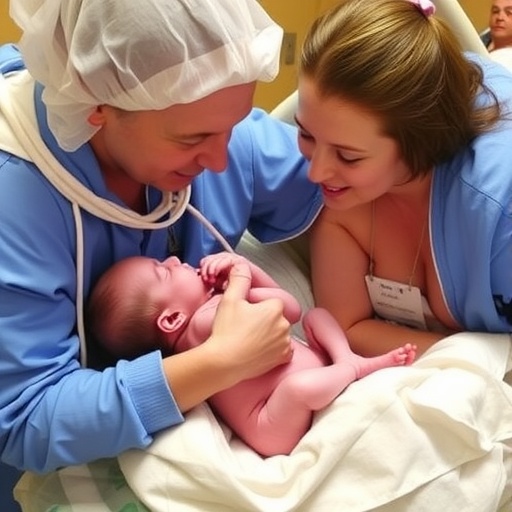
A short correspondence published in the Journal of Perinatology has reignited debate over how the first minutes of life should be managed for babies born moderately or late preterm. The article, written by D. Caratozzolo and A. Calandrino, comments on research examining the combined impact of delayed umbilical cord clamping and immediate kangaroo mother care on oxygen saturation and heart rate. Although the publication is not a new clinical trial, it draws attention to a rapidly evolving area of neonatal medicine: how carefully timed, low-cost interventions may influence a vulnerable infant’s transition from the womb to independent breathing.
Moderate and late preterm infants are born between approximately 32 and 36 completed weeks of gestation. They often appear more stable than extremely premature newborns, but their lungs, nervous systems and cardiovascular regulation are still developing. During the first minutes after birth, these infants may experience fluctuating oxygen levels, irregular breathing and changes in heart rate as blood circulation shifts from placental support to pulmonary respiration. Oxygen saturation, measured with pulse oximetry, provides an estimate of how much oxygen is carried in the blood, while heart rate offers a rapid indicator of cardiovascular adaptation. Together, these measurements help clinicians assess whether a newborn is making a safe transition.
Delayed cord clamping generally involves waiting for a period after birth before clamping and cutting the umbilical cord, rather than doing so immediately. During this interval, blood may continue to flow from the placenta to the infant, potentially increasing circulating blood volume and supporting the establishment of pulmonary circulation. In preterm infants, this additional placental transfusion has been associated with potential benefits such as improved blood pressure, greater red blood cell volume and a reduced need for some forms of medical support. However, the precise physiological effects can vary according to gestational age, delivery method, breathing status and the timing of other interventions.
Kangaroo mother care, meanwhile, places the newborn skin-to-skin on a parent’s bare chest, usually under warm coverings. The practice is widely recognized for supporting thermal regulation, breastfeeding and parent–infant bonding. Skin-to-skin contact may also influence autonomic nervous system activity, helping stabilize breathing and heart rate through sensory stimulation, warmth and close physical contact. For preterm infants, this environment can resemble some aspects of the protected intrauterine setting, while also allowing parents to participate directly in care. Immediate kangaroo care, however, requires careful coordination when a baby needs respiratory assistance or intensive monitoring.
The study discussed by Caratozzolo and Calandrino focused on whether delayed cord clamping followed by immediate kangaroo mother care could affect oxygen saturation and heart rate in moderate and late preterm infants. These outcomes are especially important because the post-birth period is characterized by rapid physiological change. Before birth, the placenta performs the main work of oxygen exchange. After birth, the lungs must expand, pulmonary blood flow must increase and the heart must redirect circulation. A newborn’s oxygen saturation normally rises over the first several minutes, meaning that both the timing of measurements and the conditions under which they are taken are critical to interpretation.
The correspondence highlights why apparently simple neonatal interventions must be evaluated within a precise clinical framework. Oxygen saturation can be influenced by probe placement, motion, skin pigmentation, peripheral circulation and the specific location of the sensor. Heart rate readings may also change with crying, handling, temperature and respiratory effort. In addition, the timing of cord clamping, the interval before skin-to-skin contact and the level of respiratory support can all affect the measurements. Without clearly defined protocols, it may be difficult to determine whether a physiological change is caused by delayed clamping, kangaroo care, the combination of both or the infant’s underlying condition.
The discussion also speaks to a broader question in neonatal research: whether two beneficial practices necessarily produce an additive effect when used together. Delayed cord clamping may support circulatory transition, while kangaroo mother care may promote thermal and autonomic stability. Yet combining them can create logistical challenges. A preterm infant may need continuous pulse oximetry, airway positioning, temperature control or non-invasive ventilation during the handover from delivery room care to skin-to-skin contact. Any clinical protocol must therefore balance the potential advantages of prolonged contact with the need for rapid recognition and treatment of respiratory or circulatory compromise.
For families and clinicians, the significance of this debate lies less in a single headline result than in the growing effort to redesign the first moments after birth around gentler, physiology-based care. Instead of separating a stable newborn from the parent immediately, hospitals are increasingly investigating whether cord management, respiratory support and skin-to-skin contact can be integrated without compromising safety. Such approaches may be particularly valuable in settings where advanced neonatal resources are limited, because delayed cord clamping and kangaroo care require equipment and training but do not depend on costly medicines or complex technology.
The authors’ correspondence underscores the need for larger, carefully controlled studies before firm conclusions can be drawn about the combined strategy. Future research will need to compare clearly defined timing protocols, account for gestational age and delivery circumstances, and follow infants beyond the first minutes of life. Researchers may also examine additional outcomes, including the need for respiratory support, body temperature, blood pressure, feeding success, admission to intensive care and longer-term neurodevelopment. For now, the conversation reinforces a central principle of modern neonatology: the transition from womb to world is not a single event, but a dynamic physiological process in which timing, measurement and individualized care can make a critical difference.
Subject of Research: Effects of delayed umbilical cord clamping and immediate kangaroo mother care on oxygen saturation and heart rate in moderate and late preterm infants.
Article Title: Correspondence: Comment on “Impact of delayed cord clamping and immediate kangaroo mother care on oxygen saturation and heart rate in moderate and late preterm infants”.
Article References: Caratozzolo, D., Calandrino, A. “Correspondence: Comment on ‘Impact of delayed cord clamping and immediate kangaroo mother care on oxygen saturation and heart rate in moderate and late preterm infants’.” Journal of Perinatology (2026). https://doi.org/10.1038/s41372-026-02864-x
Image Credits: AI Generated
DOI: https://doi.org/10.1038/s41372-026-02864-x
Keywords: delayed cord clamping, kangaroo mother care, preterm infants, oxygen saturation, heart rate, neonatal transition, neonatal medicine, skin-to-skin care
Tags: benefits of kangaroo careDelayed cord clampingearly neonatal interventionsimpact of umbilical cord managementkangaroo mother carelate preterm birth carelow-cost neonatal proceduresneonatal cardiovascular adaptationneonatal heart rate regulationneonatal oxygen saturationneonatal transition strategiespreterm infant management


