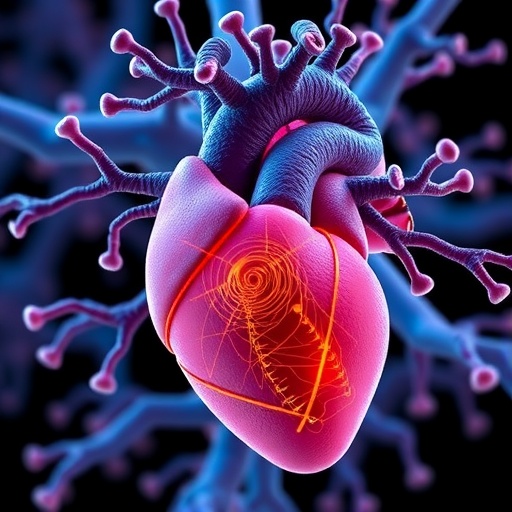
A postage-stamp-sized platform may be offering scientists one of the most realistic new ways to study human heart valve disease. Researchers at the University of Pittsburgh, Carnegie Mellon University and collaborating institutions have created valve-like structures on human heart assembloids—miniature, simplified models of heart tissue made from human induced pluripotent stem cells. The experimental system combines genetics, tissue engineering, fluid mechanics and cell biology to reproduce key features of valve development and disease in a laboratory setting.
The study, led by Guang Li, associate professor in the University of Pittsburgh School of Medicine’s Department of Cell Biology, represents the first reported effort to grow heart valve-like structures on this type of human heart assembloid. The findings, published in Cell Stem Cell, could help researchers investigate congenital and acquired valve disorders without relying exclusively on animal models. The platform may also eventually provide a way to test potential treatments using patient-specific human cells.
Heart valves are highly specialized structures that open and close thousands of times each day, directing blood through the chambers of the heart and preventing it from flowing backward. Their formation depends not only on the correct genetic instructions, but also on mechanical forces generated by blood flow, tissue movement and the contraction of nearby cardiac muscle. These interacting signals are difficult to reproduce in conventional cell cultures, where cells are often grown on flat surfaces under relatively static conditions.
Animal models have provided valuable information about valve development, but they do not perfectly replicate human biology. Heart valves in animals can develop at different speeds and may respond differently to genetic mutations, physical stress or metabolic injury. The researchers therefore sought to build a human model in which valve-like tissue could develop while exposed to carefully controlled physical and biological signals. “Human valves are very different from animal valves,” Li said. “To study human valve diseases, we need human valve models.”
The team began with human induced pluripotent stem cells, or iPSCs. These cells can be generated from adult tissues such as blood or skin and reprogrammed into a flexible state in which they can produce many different cell types. By directing the cells through specific developmental signals, the researchers generated cardiac tissues and combined distinct organoids into an assembloid. This approach is designed to capture the way organs form from multiple interacting tissues rather than from a single uniform cell population.
The resulting heart assembloid incorporated two organoid components made from different types of heart cells. The researchers then encouraged valve-like tissue to form on its surface by adding several features that mimic the environment of a developing heart. A flowing culture medium reproduced aspects of blood movement, while an endothelial cell layer modeled the specialized cells that line the interior of blood vessels and heart valves. The system also included magnetized beads positioned around the tissue and moved by an external magnetic belt. Their motion generated mechanical stimulation intended to imitate the contractions of cardiac muscle.
These physical cues were central to the experiment. In the developing heart, mechanical forces influence how cells organize, change shape and adopt specialized identities. Fluid movement can alter the behavior of endothelial cells, while repeated tissue deformation can affect the maturation and strength of valve-like structures. By integrating these forces into the assembloid, the researchers created a model that was more dynamic than a conventional organoid and closer to the environment in which human valves develop.
After establishing the model, the researchers used it to investigate several forms of valve pathology. One focus was mitral valve prolapse, or MVP, a disorder in which the mitral valve does not close normally and can bulge backward when the heart contracts. MVP is associated with genetic factors and affects an estimated 7 to 8 million people in the United States. When the researchers introduced a mutation linked to the disorder, the developing valve-like structures displayed features consistent with MVP, suggesting that the assembloid could connect a specific genetic change to a measurable developmental defect.
The researchers also used the platform to model acquired valve injuries. These included processes associated with valve calcification, cryo-injury and metabolic complications related to hypoglycemia and diabetes. Such conditions can damage valve tissue over time and interfere with its flexibility and function. Because the assembloids were built from human cells, the team could examine how these stresses altered cellular pathways and tissue development in a controlled setting. The experiments identified biological signaling routes involved in the abnormal development associated with MVP and pointed toward mechanisms that might be corrected therapeutically.
The current system is still a simplified representation of a human heart. The valve-like structures developed on the surface of the assembloid rather than inside a chamber, and the model does not yet reproduce the full circulation, pressure and electrical coordination of a mature organ. Li’s next goal is to increase its complexity by creating assembloids with two chambers and growing valves within them. A more integrated model could provide a closer simulation of how valves form and function inside the heart, while offering researchers a powerful tool for studying disease mechanisms, evaluating drugs and exploring regenerative therapies.
Subject of Research: Lab-produced tissue samples
Article Title: Human iPSC-derived heart valve-like assembloids model valve development and disease pathology
News Publication Date: 11-Aug-2026
Web References: https://www.cell.com/cell-stem-cell/fulltext/S1934-5909(26)00271-7
References: DOI: 10.1016/j.stem.2026.07.011
Image Credits: Yuanhang He/University of Pittsburgh
Keywords
Organoids, assembloids, heart valves, mitral valve prolapse, induced pluripotent stem cells, tissue engineering, biomedical engineering, cardiac function, heart disease, human disease models
Tags: cardiac valve developmentcongenital valve disorder researchdisease modeling with induced pluripotent stem cellsfluid mechanics in heart tissueheart valve diseaseheart valve disorder treatment testinghuman heart assembloidsin vitro heart modelslaboratory heart tissue studiespatient-specific heart disease modelingregenerative heart therapiesstem cell tissue engineering