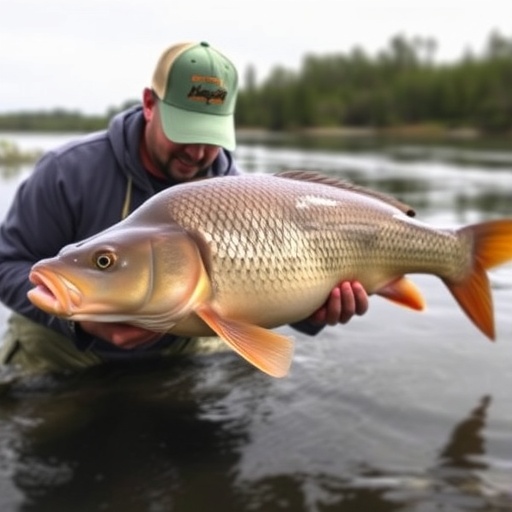
Koi herpesvirus, also known as cyprinid herpesvirus 3 (CyHV-3), is one of the most destructive viral pathogens in freshwater aquaculture. It can move rapidly through populations of common carp, causing severe disease and mortality within days. A new study by researchers at the Hebrew University of Jerusalem and Michigan State University suggests that several closely related fish species may be far less important in sustaining outbreaks than previously feared.
The findings, published in Aquaculture, show that goldfish, grass carp, silver carp and black carp are highly resistant to the effects of CyHV-3. These species may occasionally become infected, but they rarely develop serious disease and appear to eliminate the virus much more efficiently than common carp. They also transmit the pathogen poorly, making them what researchers describe as “inefficient carrier hosts.”
CyHV-3 is a contagious herpesvirus that primarily threatens common carp and ornamental koi. The virus can spread through direct contact between fish, contaminated water and equipment, and the movement of infected animals. Once introduced into a susceptible population, it can cause extensive mortality, creating major economic losses for fish farmers and potentially altering the structure of wild freshwater communities.
Common carp are among the most widely farmed freshwater fish in the world. They are raised for food, stocked in ponds and reservoirs, and kept as ornamental koi. Their broad distribution creates numerous opportunities for CyHV-3 to move between aquaculture facilities and natural environments. Because other carp species often occupy the same ponds, rivers and lakes, scientists have been concerned that apparently healthy fish might harbor the virus and spread it silently.
To examine that possibility, the research team used experimental exposure conditions designed to resemble natural transmission. Healthy fish were placed in tanks containing common carp infected with CyHV-3. The virus spread readily among the common carp, while only a small proportion of the other species became infected. Most of those fish remained healthy, suggesting that exposure alone does not necessarily lead to productive infection or severe disease in these hosts.
The investigators then used direct injection to bypass some of the fish’s natural barriers to infection. This approach exposed the animals to the virus more directly and allowed the researchers to compare their responses under a stronger challenge. The contrast remained pronounced. Common carp developed the characteristic severe effects associated with CyHV-3 infection, whereas goldfish, grass carp, silver carp and black carp showed little clinical illness and rapidly reduced the amount of virus in their bodies.
That distinction is important because infection, disease and transmission are not identical processes. A fish may come into contact with a virus and even contain detectable viral material without becoming an efficient source of new infections. For a pathogen to spread successfully, it must replicate to sufficient levels, leave the host and reach another susceptible animal. The experiments indicated that the non-common carp species generally failed to complete this chain efficiently.
The researchers also tested whether apparently recovered or minimally affected fish could pass CyHV-3 back to common carp. Transmission was possible, but it occurred at a much lower efficiency than transmission from infected common carp. In practical terms, these related species may contribute occasional infections under some conditions, yet they are unlikely to maintain the explosive transmission required to drive large-scale outbreaks. The principal epidemiological risk remains infected common carp themselves.
The results may help refine disease-control strategies in aquaculture and freshwater management. Measures such as testing and quarantining common carp, limiting the movement of infected fish, disinfecting equipment and monitoring water transfers remain essential. The study does not indicate that other carp species are completely incapable of carrying CyHV-3, nor does it eliminate the need for surveillance. Instead, it suggests that control efforts should prioritize the most competent host rather than treating every related species as an equal threat.
The biological mechanisms behind the resistance observed in these fish remain an important subject for future research. Their ability to restrict viral replication and clear infection could reveal host traits that prevent CyHV-3 from causing severe disease. Understanding those defenses may eventually support the development of improved breeding programs, diagnostic tools or targeted treatments for common carp. For now, the study provides a more precise picture of how CyHV-3 moves through mixed fish communities—and offers evidence that the presence of several close carp relatives is unlikely, by itself, to ignite a major outbreak.
Subject of Research: Animals
Article Title: Differences in CyHV-3 infection and infectivity among common carp and Asian carp species
Web References: https://doi.org/10.1016/j.aquaculture.2026.744303
References: Aquaculture. DOI: 10.1016/j.aquaculture.2026.744303
Keywords: Koi herpesvirus; cyprinid herpesvirus 3; CyHV-3; common carp; goldfish; grass carp; silver carp; black carp; viral transmission; aquaculture; fish disease; carrier hosts; freshwater ecosystems
Tags: aquatic animal health researchCarp herpesvirus resistancefish species susceptibility to CyHV-3freshwater aquaculture disease managementherpesvirus outbreaks in freshwater fishimpact of Koi herpesvirus on carp populationsimplications for fish farming industryrole of resistant fish species in virus transmissionsignificance of fish species in controlling viral spreadstrategies for reducing carp mortality due to herpesvirusviral pathogen transmission in aquaculturewild freshwater fish community health