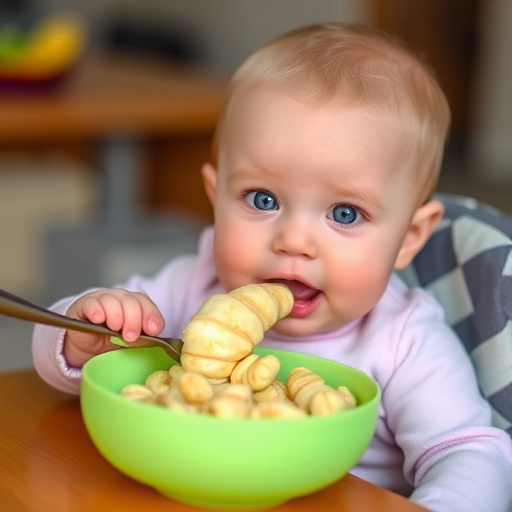
The first spoonful of solid food marks more than a milestone in an infant’s daily routine. It also begins a major biological transition in the gut, where a microbial community shaped largely by breast milk must adapt to a new supply of carbohydrates, proteins, fats and plant-derived compounds. A study by Eva Pivrncova, Jan Bohm, Cristina Piras and colleagues, published in Pediatric Research, examines how this dietary shift is reflected in both the bacteria living in breastfed infants’ intestines and the small molecules produced through their metabolism.
During exclusive breastfeeding, the infant gut operates within a relatively specialized nutritional environment. Human milk provides lactose as a principal carbohydrate, while also supplying fats, proteins, immune factors and complex human milk oligosaccharides. Many of these sugars are not digested directly by the infant. Instead, they are consumed by selected intestinal microbes, creating a biochemical system in which diet, bacterial activity and infant development are closely linked.
The introduction of solid foods changes that system rapidly. Cereals, fruits, vegetables and other early foods bring new types of starch, fiber, amino acids and lipids into the digestive tract. Some of these nutrients reach the colon, where bacteria ferment them and generate metabolites such as short-chain fatty acids. These compounds can influence intestinal acidity, the integrity of the gut barrier and communication between the microbiome and the developing immune system.
The researchers focused on breastfed infants as they moved from a milk-dominated diet toward complementary feeding. This period is particularly informative because it captures a natural change in nutritional exposure while many other aspects of early development are also progressing. Rather than treating the gut microbiome as a fixed collection of organisms, the study examines it as a dynamic ecosystem responding to the changing chemical environment created by food.
Bacterial profiling provides one view of that transformation. By assessing the composition and relative abundance of microorganisms in infant samples, scientists can track whether dietary transition is associated with the expansion of particular bacterial groups or the decline of organisms favored by a milk-based diet. Such measurements do not simply identify “good” or “bad” bacteria. They reveal changes in ecological balance, including which microbes are present, how dominant they are and how the community reorganizes as new nutrients become available.
The second component, metabolic profiling, adds another layer of information. Microbial composition alone cannot show what the organisms are doing. Two infants may carry broadly similar bacterial groups but produce different chemical outputs depending on diet, microbial interactions and host physiology. Metabolomics, the large-scale measurement of small molecules, can detect compounds associated with carbohydrate fermentation, amino-acid metabolism, bile-acid transformation and other biochemical pathways. Together, bacterial and metabolic data offer a more functional picture of the developing gut ecosystem.
The study’s significance lies in connecting these two forms of evidence during a narrow but consequential window of infancy. A change in bacterial abundance is biologically meaningful only when it is interpreted alongside the chemistry of the gut. If the appearance of new foods coincides with shifts in fermentation products or other metabolites, that pattern may indicate that the microbiome is not merely changing in membership but also changing in function.
This transition may help explain why complementary feeding is associated with broad maturation of the infant gut. As dietary complexity increases, the microbial community is exposed to a wider range of substrates and may develop greater functional capacity. At the same time, the infant intestine and immune system must learn to tolerate and process unfamiliar molecules. The resulting interaction is likely to influence intestinal development, energy recovery from food and the establishment of longer-term host–microbe relationships.
The authors’ work also highlights why the timing and composition of early solid foods remain important areas of research. A microbiome profile observed during breastfeeding cannot be assumed to predict the profile that emerges after complementary foods are introduced. However, the study does not imply that a single bacterial pattern or metabolite defines an ideal infant diet. Early-life biology is shaped by multiple factors, including birth circumstances, medication exposure, geography, feeding practices and the variety of foods offered.
By documenting changes in bacterial and metabolic profiles, the research provides a framework for studying how nutrition helps organize the infant gut. Its broader message is that dietary transition is a systems-level event: food alters the raw materials entering the intestine, microbes transform those materials, and the resulting metabolites participate in communication with the developing body. Understanding that chain could eventually help researchers distinguish normal maturation from patterns associated with digestive or immune problems, while keeping infant nutrition grounded in evidence rather than microbiome hype.
Subject of Research: Changes in gut bacterial communities and metabolic profiles in breastfed infants during the transition from breastfeeding to complementary solid foods.
Article Title: Changes in bacterial and metabolic profiles in breastfed infants during dietary transition to solids.
Article References: Pivrncova, E., Bohm, J., Piras, C. et al. Changes in bacterial and metabolic profiles in breastfed infants during dietary transition to solids. Pediatr Res (2026). https://doi.org/10.1038/s41390-026-05354-0
Image Credits: AI Generated
DOI: 10.1038/s41390-026-05354-0
Keywords: infant microbiome, breastfeeding, complementary feeding, solid foods, gut bacteria, metabolomics, infant nutrition, early-life development, gut metabolism, pediatric research
Tags: and vegetables on infant gut bacteriabiochemical changes in infant metabolism during solid food transitiondietary transition and microbial shifts in infantsearly childhood nutrition and gut microbiotaeffects of introduction of cerealsfruitsgut bacteria and metabolite interactions in early childhoodimpact of solid foods on breastfed infantsinfant gut microbiome developmentinfluence of diet on infant immunemetabolic profile changes during weaningmicrobial fermentation of dietary fibers in infantsrole of human milk oligosaccharides in infant health