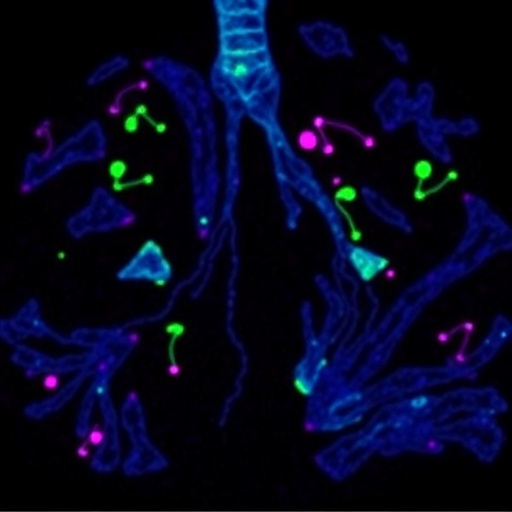
Lung adenocarcinoma cells may become more invasive and more difficult to eliminate because of a single transcription factor that links two major cancer adaptations, according to a study published in Cell Death Discovery. Researchers at Kanazawa University report that C/EBPγ promotes epithelial-mesenchymal transition (EMT) while also strengthening the repair of DNA double-strand breaks, enabling tumor cells to survive genotoxic stress more effectively.
EMT is a reversible biological program in which epithelial cells lose characteristics associated with organized tissue structure and acquire mesenchymal properties. During this transition, cancer cells typically reduce cell-cell adhesion, change shape, become more mobile, and gain greater capacity to invade surrounding tissues. EMT has long been associated with metastasis and treatment resistance, but the molecular factors that connect EMT to improved survival after DNA damage remain incompletely understood.
To search for such factors, the research team used an epigenomic strategy centered on broad regions of trimethylated histone H3 lysine 4, known as H3K4me3. This chromatin modification is commonly associated with active gene promoters. When H3K4me3 domains extend across larger genomic regions, they can mark genes that are particularly important for maintaining cellular identity or controlling major changes in cell behavior. The investigators compared these domains before and after transforming growth factor beta, or TGF-β, induced EMT in lung adenocarcinoma cells.
C/EBPγ emerged from this analysis as a candidate regulator whose chromatin-associated activity increased during EMT. Functional experiments supported that prediction. When researchers introduced C/EBPγ into lung adenocarcinoma cells, the cells developed an elongated, mesenchymal-like appearance, reduced their production of E-cadherin, and increased expression of mesenchymal markers. E-cadherin is a key protein involved in epithelial cell adhesion, and its loss is a widely used molecular indicator of EMT. Cells containing additional C/EBPγ also showed enhanced migratory behavior, whereas depletion of the endogenous protein weakened EMT-associated gene expression and impaired the transition.
The mechanism was notable because C/EBPγ did not require its conventional DNA-binding domain to induce EMT. Instead, the protein depended on its leucine zipper domain, a structural region that enables protein-protein interactions. This result suggests that C/EBPγ functions less as a conventional DNA-binding transcriptional switch and more as a molecular partner that modifies the activity of other regulatory proteins. The distinction is important because it identifies protein-interaction interfaces, rather than only DNA-recognition sites, as potential targets for future therapies.
Proteomic analyses revealed that C/EBPγ interacts with C/EBPβ, another member of the CCAAT/enhancer-binding protein family. In the lung adenocarcinoma models used in the study, C/EBPβ acted as a suppressor of EMT, while C/EBPγ promoted the transition by antagonizing C/EBPβ through leucine zipper-dependent interactions. In this model, the balance between related C/EBP proteins appears to influence whether cancer cells retain epithelial features or adopt a more invasive state. This antagonistic relationship provides a possible explanation for how C/EBPγ can drive EMT without directly binding DNA through its own DNA-binding domain.
The researchers also identified an independent function involving DNA repair. C/EBPγ associated with XRCC5 and XRCC6, two core components of the non-homologous end joining pathway. NHEJ repairs DNA double-strand breaks by bringing broken DNA ends together and rejoining them, often without requiring a long matching sequence between the ends. Although the pathway can introduce small sequence changes, it is essential for rapidly repairing the potentially lethal breaks produced by chemotherapy and other forms of genotoxic stress.
In laboratory experiments, C/EBPγ enhanced NHEJ activity and accelerated the recruitment of XRCC6 to sites of DNA damage. Cells expressing the factor accumulated fewer DNA damage markers after exposure to etoposide, a drug that induces DNA breaks by interfering with topoisomerase II. The findings indicate that C/EBPγ does not merely help cancer cells adopt a more adaptable and mobile phenotype; it also improves their ability to restore damaged chromosomes after treatment.
The consequences were observed in both cell-based assays and mouse xenograft models. Lung adenocarcinoma cells expressing C/EBPγ survived DNA-damaging chemotherapy more efficiently than control cells, and tumors containing the factor were less sensitive to etoposide treatment. When the leucine zipper domain was disrupted, the protective effect was lost, underscoring the importance of C/EBPγ’s interactions with other proteins. The study therefore presents C/EBPγ as a molecular hub that coordinates two features of aggressive disease: EMT-driven cellular plasticity and enhanced repair of therapy-induced DNA damage. Although further work will be needed to determine whether the mechanism operates broadly across patient tumors, disrupting C/EBPγ or its interaction surfaces could eventually provide a way to resensitize lung adenocarcinoma to DNA-damaging treatments.
Subject of Research: C/EBPγ-mediated epithelial-mesenchymal transition, DNA double-strand break repair, and therapy resistance in lung adenocarcinoma
Article Title: C/EBPγ induces epithelial-mesenchymal transition and facilitates DNA double-strand break repair in lung adenocarcinoma cells
News Publication Date: 2 June 2026
Web References: https://doi.org/10.1038/s41420-026-03181-0
References: Cell Death Discovery, DOI: 10.1038/s41420-026-03181-0
Image Credits: Terashima M. et al., Cell Death Discovery (2026), Figure 7F
Keywords: C/EBPγ, lung adenocarcinoma, epithelial-mesenchymal transition, EMT, DNA double-strand breaks, non-homologous end joining, XRCC5, XRCC6, therapy resistance, cancer biology, DNA repair, C/EBPβ
Tags: c/EBPγ in lung adenocarcinomacancer adaptation and resiliencecancer cell plasticityDNA double-strand break repair in tumorsepigenomic analysis of cancer progressionepithelial-mesenchymal transition in cancergenotoxic stress survival in cancer cellshistone H3K4me3 chromatin modificationsmechanisms of cancer cell invasionmolecular links between EMT and DNA repairtherapy resistance in lung cancertranscription factors in cancer metastasis