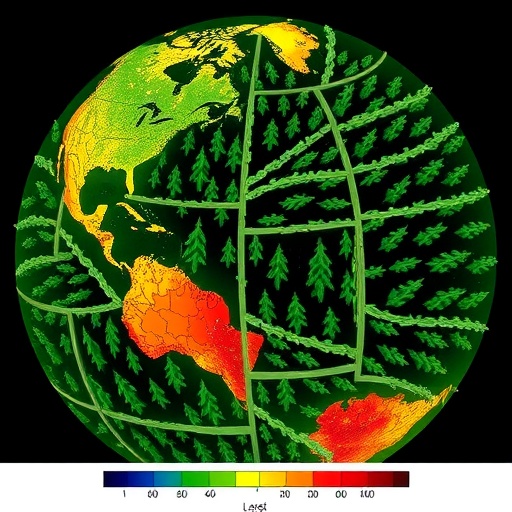
A new national website is being launched to provide a clearer, faster view of vaccine-preventable disease activity across the United States. The U.S. Disease Tracker, developed by Johns Hopkins University in collaboration with the Association of State and Territorial Health Officials and the Council of State and Territorial Epidemiologists, is designed to make infectious-disease surveillance data more accessible to the public, journalists, clinicians, public-health agencies and policymakers. The platform initially follows measles, meningitis and pertussis, or whooping cough, with plans to add other vaccine-preventable diseases as the system expands.
The tracker addresses a persistent challenge in infectious-disease epidemiology: data collected by different jurisdictions are often reported using varying definitions, timelines and levels of geographic detail. By organizing information in a standardized format, the new system aims to make disease patterns more comparable across states and territories. Users can examine case activity at state and sub-state levels, observe changes over time and review cases by age group. These features may help reveal where transmission is increasing, which populations are most affected and how outbreaks develop geographically.
The project builds on, rather than replaces, the Centers for Disease Control and Prevention’s national disease surveillance infrastructure. For participating jurisdictions, health departments voluntarily provide data directly to the tracker. For states that have not joined the initiative, information is drawn from the CDC’s National Notifiable Diseases Surveillance System, the country’s established framework for collecting reports of diseases considered important to public health. Combining these sources is intended to broaden access to timely information while preserving the national surveillance system’s role in disease reporting and verification.
Disease surveillance is especially important for infections that can spread rapidly when immunity levels decline. Measles is among the most transmissible human viruses, with outbreaks capable of expanding quickly in communities where vaccination coverage is uneven. Pertussis, caused by the bacterium Bordetella pertussis, can also spread efficiently through respiratory droplets and is particularly dangerous for infants. Meningitis describes inflammation of the membranes surrounding the brain and spinal cord and can result from several infectious agents, including bacteria and viruses. Monitoring these conditions together can provide insight into how vaccination, population movement, seasonal effects and local transmission networks influence disease activity.
The tracker’s development was partly motivated by lessons from the COVID-19 pandemic. The rapid spread of SARS-CoV-2 demonstrated the value of near-real-time public-health data, but it also exposed differences in reporting practices and data quality between jurisdictions. Lauren Gardner, a project co-lead and director of Johns Hopkins’ Center for Systems Science and Engineering, said the new platform is based on standardized and validated public-health data. Standardization is essential for epidemiological interpretation because apparent differences between regions may otherwise reflect reporting practices rather than genuine differences in disease incidence.
The platform’s visualizations are intended to support both technical analysis and public understanding. Maps can show the geographic distribution of reported cases, while time-series displays can indicate whether activity is rising, falling or remaining stable. Age-specific reporting adds another layer of epidemiological information, allowing users to identify whether infants, children, adolescents, adults or older people account for a larger share of cases. Such distinctions are important because vaccine schedules, waning immunity, exposure patterns and the severity of infection can differ substantially between age groups.
More than 25 jurisdictions have committed to participating in the effort. At launch, data from 10 states are directly represented, while more than 15 additional jurisdictions are expected to begin contributing in 2026. The expansion of participation will be important for interpreting national trends. A surveillance system becomes more powerful as it gains broader geographic coverage, but its data must still be understood in context. Differences in testing, healthcare access, reporting delays and case definitions can influence the number of infections recorded, meaning that reported cases may not represent every infection occurring in a community.
William Moss, a project co-lead and senior advisor at Johns Hopkins’ International Vaccine Access Center, said the tracker is intended to help guide public-health decisions and support healthcare providers. Clinicians may use regional patterns to strengthen diagnostic awareness, discuss vaccination with patients and recognize when symptoms could signal an outbreak. Public-health officials can use the information to identify areas requiring additional investigation, communication or immunization efforts. Policymakers and researchers may also use the standardized data to evaluate disease-prevention strategies and study how transmission changes over time.
The project was designed with health department leaders and frontline practitioners to ensure that the information remains useful in operational settings while protecting privacy. Shaun Truelove, another project co-lead and executive director of the International Vaccine Access Center, said the system was developed to maximize the usefulness of surveillance data while maintaining non-identifiability and data security. This balance is critical: detailed geographic and demographic information can improve outbreak analysis, but excessive detail could increase the risk of identifying individuals, especially in areas with few cases.
Johns Hopkins collaborators include the Bloomberg Center for Government Excellence, the Data Science and AI Institute and the Institute for Data Intensive Engineering and Science. As additional jurisdictions contribute data, the U.S. Disease Tracker is expected to broaden its coverage and eventually include more vaccine-preventable infections. By bringing together public-health agencies, epidemiologists, data scientists and academic researchers, the initiative seeks to create a more consistent view of disease transmission in the United States and strengthen the evidence available for preventing future outbreaks.
Subject of Research: National surveillance of vaccine-preventable diseases, including measles, meningitis and pertussis.
Article Title: New U.S. Disease Tracker Maps Vaccine-Preventable Disease Activity
Web References: https://usdiseasetracker.org/; https://www.astho.org/; https://www.cste.org/; https://www.cdc.gov/
Image Credits: U.S. Disease Tracker
Keywords: vaccine-preventable diseases, measles, pertussis, whooping cough, meningitis, viral infections, infectious disease surveillance, epidemiology, public health data, vaccination, disease tracking, outbreaks, United States
Tags: CDC disease surveillance infrastructuredigital health monitoring toolsdisease outbreak analysisdisease transmission patternshealth data collaborationinfectious disease monitoringmeasles and pertussis trackingpublic health data accessibilitystandardized epidemiological datastate and territorial health dataU.S. Disease Tracker platformvaccine-preventable disease surveillance