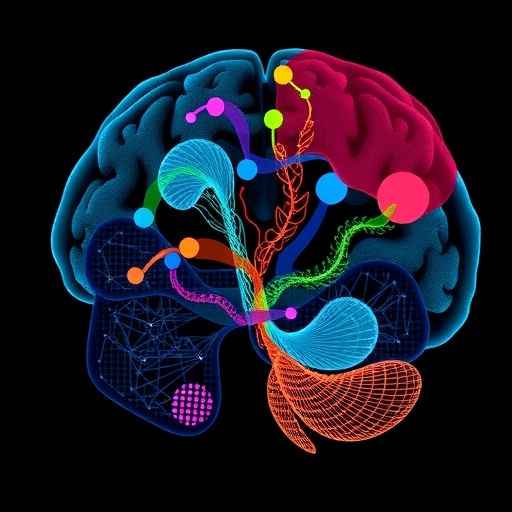
Parkinson’s disease is often described through its most visible symptoms: tremor, slowed movement, muscle stiffness and problems with balance. But beneath those signs, the disease disrupts communication across the brain long before disability becomes obvious. A new study by Raffaella De Micco, Sara Satolli, Nadia Piramide and colleagues focuses on one of the most important questions in early Parkinson’s research: whether the brain’s communication networks change differently in women and men.
Published in npj Parkinson’s Disease, the study, titled “Sex-related differences in striatal functional connectivity in early Parkinson’s disease,” examines the relationship between biological sex and functional connectivity in the striatum. This region is a central component of the brain’s movement-control system and a key target of Parkinson’s pathology. By investigating connectivity at an early stage of the disease, the researchers address a period when neurological damage may still be subtle, while compensatory mechanisms could remain active.
The striatum is a group of deep-brain structures that helps the brain select, initiate and refine movement. It does not operate alone. Instead, it exchanges information with the cerebral cortex, thalamus, midbrain and other components of the basal ganglia, forming interconnected circuits that influence movement, motivation, learning and reward. In Parkinson’s disease, the gradual loss of dopamine-producing neurons in the substantia nigra disturbs these circuits. The resulting imbalance can make voluntary movement slower and less automatic.
To study this communication, researchers use the concept of functional connectivity. Unlike structural connectivity, which refers to physical nerve-fiber pathways, functional connectivity measures synchronized activity between brain regions. When two areas show correlated fluctuations in activity during a brain scan, scientists infer that they are functionally linked, even if they are not directly connected. These relationships can reveal how disease changes the organization of neural networks, including changes that may not be visible through conventional clinical examinations.
The focus on sex-related differences is particularly important because Parkinson’s disease does not affect all patients in exactly the same way. Men are diagnosed more frequently in many populations, while women and men may differ in age at onset, symptom profiles, medication responses and the prevalence of non-motor complications. Hormonal factors, genetic background, immune responses, exposure to environmental risks and differences in brain development have all been proposed as possible contributors. Yet these influences are often overlooked when patients are grouped together in a single analysis.
By concentrating on early Parkinson’s disease, the investigation may help distinguish primary disease-related changes from the effects of years of progression, advanced disability or long-term treatment. Functional networks can be altered by medication, cognitive decline, depression, sleep disruption and reduced physical activity, all of which may become more prominent as Parkinson’s advances. Studying patients near diagnosis offers a clearer view of how the disease begins to reshape brain communication and whether those changes follow different patterns in women and men.
The striatum is a particularly revealing target because dopamine depletion does not affect every circuit uniformly. Motor regions of the striatum are closely tied to movement symptoms, while associative and limbic subdivisions participate in cognition, emotion and reward processing. If functional connectivity changes in one striatal network but not another, those differences could help explain why Parkinson’s disease produces a varied combination of motor and non-motor symptoms. They may also provide clues about why two people with similar clinical scores can experience very different daily challenges.
The study’s significance extends beyond describing a biological difference. In modern neurology, identifying distinct neural signatures could support more precise diagnosis, prognosis and treatment selection. Brain-network measures might eventually help clinicians predict which patients are more likely to develop cognitive symptoms, medication-related complications or particular movement patterns. However, functional-connectivity findings are not yet ready to serve as standalone diagnostic tests. They must be replicated in larger and more diverse populations, validated across scanning systems and connected carefully to long-term clinical outcomes.
The research also highlights the growing importance of sex-aware neuroscience. Treating sex as a biological variable does not mean assuming that every woman or every man has the same disease course. Instead, it allows researchers to test whether disease mechanisms, network adaptations or treatment responses are distributed differently across groups. Such analyses can expose patterns that disappear when data from all patients are averaged together. The ultimate goal is not simply to label differences, but to use them to improve care for every person living with Parkinson’s disease.
As Parkinson’s research moves toward earlier detection and personalized treatment, the brain’s communication networks are becoming as important as its visible symptoms. The work by De Micco, Satolli, Piramide and colleagues places the striatum at the center of that effort, asking how early disease-related disruption may be shaped by sex. Its findings add to a rapidly expanding picture of Parkinson’s as a disorder of distributed brain circuits rather than a problem confined to one damaged structure. That network perspective could become essential for understanding why the disease begins differently, progresses differently and demands different strategies from one patient to the next.
Subject of Research: Sex-related differences in striatal functional connectivity in early Parkinson’s disease
Article Title: Sex-related differences in striatal functional connectivity in early Parkinson’s disease
Article References: De Micco, R., Satolli, S., Piramide, N. et al. “Sex-related differences in striatal functional connectivity in early Parkinson’s disease.” npj Parkinson’s Disease (2026). https://doi.org/10.1038/s41531-026-01503-8
Image Credits: AI Generated
DOI: 10.1038/s41531-026-01503-8
Keywords: Parkinson’s disease, early Parkinson’s disease, striatum, functional connectivity, brain networks, sex differences, dopamine, neuroimaging, basal ganglia, personalized neurology
Tags: basal ganglia circuitry in Parkinson’sbrain communication networks in Parkinson’searly detection of Parkinson’s through brain connectivityearly Parkinson’s neurological changesfunctional brain connectivity researchmovement-control system in Parkinson’sneurobiological mechanisms of Parkinson’sneuroimaging in early Parkinson’sParkinson’s disease sex differencesParkinson’s disease progression and sexsex-specific brain network alterationsstriatal functional connectivity in Parkinson’s