A child’s broken bone can heal in an unexpected way. Instead of restoring the delicate architecture of the growth plate, the injury may trigger the formation of a rigid bridge of bone known as a bony bar. This abnormal structure can permanently disrupt skeletal growth, leaving one limb shorter than the other or causing progressive deformity. New research from Johns Hopkins Medicine suggests that sensory nerves, traditionally viewed mainly as pain detectors, may be active drivers of this process—and that temporarily blocking their signals could reduce abnormal bone formation by as much as 60% in mice.
The study, published in Science Translational Medicine, was led by pathologist Aaron W. James, M.D., Ph.D., and investigators from the James Laboratory at Johns Hopkins University. It builds on earlier work showing that sensory neurons embedded in skeletal tissue continuously monitor their surroundings and react rapidly after injury. In the new study, the researchers focused on the physis, or growth plate, a layer of specialized cartilage located near the ends of children’s developing bones. Growth plates control normal bone lengthening and are particularly vulnerable to trauma.
When a growth plate is damaged, the normal boundary between cartilage and bone can collapse. Blood vessels and nerve fibers quickly enter the injured region, where they interact with skeletal cells and initiate a repair response. In some cases, that response becomes excessive or misdirected, producing a bony bar across the growth plate. Because the bar connects regions that should remain separated during childhood, it can halt growth in part of the bone while surrounding tissue continues to develop. The resulting imbalance may cause angular deformities or substantial differences in limb length.
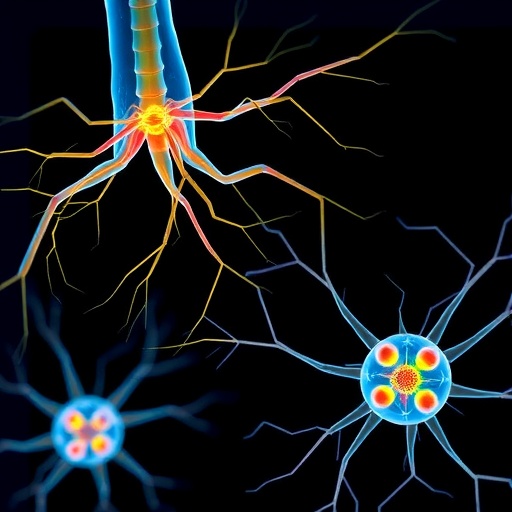
The Johns Hopkins team identified TrkA-positive sensory neurons as important participants in this process. TrkA is a receptor expressed by a population of sensory nerve cells that respond to nerve growth factor and other molecular signals associated with injury and inflammation. Rather than simply transmitting pain, these neurons appear to communicate with nearby cartilage, blood vessels and bone-forming cells. The researchers found evidence that the nerves promote abnormal repair through pleiotrophin, or PTN, a signaling molecule involved in cell migration, blood-vessel growth and tissue remodeling.
To test whether blocking the nerve response could alter healing, the investigators treated mice with long-acting bupivacaine, an FDA-approved local anesthetic commonly used to numb tissues during medical procedures. The drug was administered twice weekly after fractures involving the animals’ growth plates. The treated mice were compared with control animals that did not receive the nerve-blocking intervention. The researchers assessed the injuries at both early and later stages, including one week and six weeks after treatment began, corresponding to approximately 42 days in the study’s imaging and tissue analyses.
The results showed a marked reduction in pathological bone formation among the treated animals. After six weeks, mice receiving long-acting bupivacaine developed up to 60% less bony-bar formation than untreated controls. Tissue analyses indicated that the intervention did more than reduce the visible size of the abnormal bridge. It also altered the cellular environment surrounding the injury, limiting signals associated with the growth of nerves, blood vessels and new bone. The findings suggest that sensory nerve activity may help coordinate several parts of the pathological repair process at once.
The researchers used single-cell RNA sequencing to examine how individual cell populations responded to the injury and the nerve-blocking treatment. More than 300 genes were found to be upregulated or downregulated in association with changes in sensory nerve activity. Several of these molecular changes pointed toward the PTN pathway, which has not previously been fully investigated in the context of nerve-driven growth plate injury. By suppressing this signaling environment, bupivacaine appeared to reduce the expression of genes that encourage regenerative and remodeling responses capable of producing an unwanted bony bridge.
The study also included analyses of human tissue samples collected from patients who underwent surgery for growth plate injuries. Although the therapeutic experiments were conducted in mice, the human samples showed parallel features involving nerves, blood vessels and skeletal tissue. These observations provide a possible biological link between the animal findings and human growth plate pathology, but they do not establish that bupivacaine is effective or safe for preventing bony bars in children. The investigators emphasize that the work is a preclinical proof of concept rather than a treatment recommendation.
Growth plate injuries account for a substantial proportion of childhood skeletal trauma, with some estimates indicating that as many as 30% of pediatric skeletal injuries involve these vulnerable regions. Falls, vehicle collisions and sports accidents are frequent causes. Most injuries heal without lasting consequences, but severe or poorly controlled repair can require corrective surgery. Current treatment often focuses on monitoring growth, removing an established bony bar or reconstructing damaged tissue. The new findings raise the possibility that early, targeted modulation of sensory nerves could one day complement these approaches, while also offering a framework for understanding how nerves influence other painful bone disorders.
James and his colleagues say the next stage of research will be to clarify how growth plate cartilage normally repels nerve fibers and blood vessels, and how injury overrides those protective mechanisms. They also want to determine whether the PTN pathway can be targeted more precisely than with a broad local anesthetic. Because sensory nerves are involved in pain as well as tissue regulation, future therapies may need to preserve beneficial nerve functions while preventing the signals that promote pathological bone formation. For now, the mouse results reveal an unexpected role for the nervous system in childhood bone healing and point to a potential strategy for preventing one of the most disruptive complications of growth plate trauma.
Subject of Research: Animals
Article Title: Somatosensory nerves drive pathologic bony bar formation after physis injury through Pleiotrophin signaling in mouse models
News Publication Date: 5-Aug-2026
Web References: Johns Hopkins Medicine, “Growth Plate Fractures”: https://www.hopkinsmedicine.org/health/conditions-and-diseases/growth-plate-fractures ; James Laboratory: https://labs.pathology.jhu.edu/james/
References: Science Translational Medicine, DOI: https://doi.org/10.1126/scitranslmed.adv2412
Image Credits: Science Translational Medicine
Keywords: growth plate injury, pediatric bone fractures, bony bar, sensory nerves, TrkA, pleiotrophin, PTN signaling, bupivacaine, bone regeneration, orthopedic trauma, skeletal biology, Johns Hopkins Medicine
Tags: abnormal skeletal growth in childrenbone bridge formation after fracturesgrowth plate injury healinggrowth plate trauma and deformityinnovative therapies for growth plate injuriesnerve involvement in bony bar developmentnerve signaling in bone repairneural regulation of bone regenerationpreventing growth plate-related deformitiessensory nerve blockade to enhance bone healingsensory nerves in bone regenerationtargeting sensory neurons for improved healing