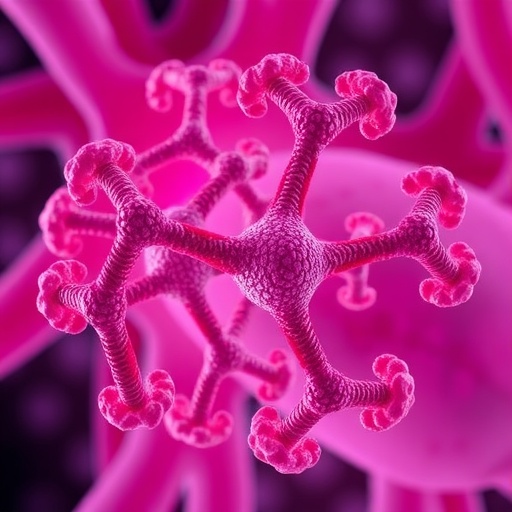
The MYH9 gene is emerging as a critical biological switch at the intersection of cancer progression and inherited disease, according to a comprehensive review published in Genes & Diseases. Researchers describe MYH9 as far more than a structural gene: it encodes non-muscle myosin IIA, a molecular motor that helps cells change shape, move through tissues, divide, and communicate with their surroundings. Because these activities are fundamental to both normal physiology and malignant transformation, MYH9 is attracting increasing attention as a possible biomarker and therapeutic target.
The protein produced by MYH9, non-muscle myosin IIA, belongs to a family of motor proteins that convert chemical energy into mechanical force. It works together with actin filaments to generate contractile tension inside cells. This actomyosin system allows cells to adhere to neighboring cells, establish polarity, alter their shape, and migrate. During cell division, the same machinery contributes to the formation of the contractile ring that separates one daughter cell from another. MYH9 therefore operates at the physical and biochemical core of processes that determine how cells organize themselves and respond to external signals.
This versatility may explain why MYH9 can have apparently opposing effects in cancer. Depending on the tissue, genetic background, and signaling environment, the gene may support tumor formation or instead limit malignant behavior. In some cancers, increased MYH9 activity can strengthen cellular movement and promote invasion, helping tumor cells detach from a primary mass and cross tissue barriers. In other settings, reduced or altered MYH9 function may disrupt normal tissue architecture and weaken restraints on uncontrolled growth. The review emphasizes that MYH9 cannot be classified universally as either an oncogene or a tumor suppressor; its effects are strongly context dependent.
MYH9 is particularly relevant to metastasis, the process responsible for most cancer-related deaths. To spread, cancer cells must loosen connections with surrounding cells, remodel their cytoskeleton, move through the extracellular matrix, and enter blood or lymphatic vessels. Non-muscle myosin IIA contributes to several of these steps by regulating contractile force and the mechanics of cell migration. It also interacts with signaling networks that control adhesion, polarity, and invasion. Changes in MYH9 expression or activity may consequently influence not only whether a tumor grows, but also how efficiently it travels to distant organs.
The gene has also been linked to treatment resistance, another major challenge in oncology. Cancer cells that alter their shape, mechanical properties, or interactions with neighboring cells can become better equipped to survive chemotherapy, targeted drugs, or immune attack. MYH9-associated pathways may help malignant cells adapt to physical and biochemical stress within tumors. These observations raise the possibility that inhibiting selected components of the MYH9 network could make cancer cells more vulnerable to existing treatments. However, because the protein is also essential in healthy cells, any intervention would need to be carefully tailored to avoid unacceptable toxicity.
Outside cancer biology, inherited MYH9 mutations cause a group of disorders known as MYH9-related diseases. These conditions are rare but clinically diverse, reflecting the widespread importance of non-muscle myosin IIA. A common feature is thrombocytopenia, a reduced number of platelets that can increase the risk of bleeding. Patients may also develop distinctive platelet abnormalities, hearing loss, kidney disease, and, in some cases, cataracts or other organ complications. The same molecular machinery that controls cell mechanics in tumors is therefore also required for the development and maintenance of blood, auditory, and renal tissues.
The review highlights another layer of regulation involving non-coding RNAs. Unlike messenger RNAs, which provide templates for protein production, non-coding RNAs regulate gene activity without being translated into proteins. MicroRNAs can bind to MYH9 messenger RNA and reduce its stability or prevent protein production. Long non-coding RNAs may act as molecular scaffolds, guides, or decoys that alter MYH9-related signaling. Circular RNAs, which form closed molecular loops, can also influence regulatory networks by binding microRNAs or interacting with proteins. Together, these mechanisms can shift MYH9 activity during cancer initiation, progression, invasion, and metastasis.
Understanding this regulatory network could open several therapeutic routes. Small-molecule inhibitors might interfere with the motor activity of non-muscle myosin IIA or with the signaling proteins that control it. RNA-based treatments could suppress harmful MYH9 expression by using targeted small interfering RNAs, antisense molecules, or other gene-regulating technologies. In the longer term, gene-editing approaches may offer ways to correct disease-causing mutations in MYH9-related disorders, although delivery, precision, and long-term safety remain substantial obstacles. The most realistic near-term strategy may involve combining MYH9-directed treatments with established anticancer drugs or immunotherapies.
Important questions remain unanswered. Scientists do not yet know whether people carrying inherited MYH9 mutations have a consistently altered risk of developing cancer, or whether that risk varies according to the specific mutation and affected tissue. It is also unclear how MYH9’s mechanical functions interact with immune signaling, tumor metabolism, and the evolving tumor microenvironment. Future studies will need to distinguish the gene’s normal activities from cancer-specific vulnerabilities and determine which patients might benefit from therapies aimed at the MYH9 pathway. By bringing together structural biology, genetics, cell mechanics, and clinical research, the review positions MYH9 as a promising but complex focus for precision medicine.
Subject of Research: MYH9 gene, non-muscle myosin IIA, cancer biology, metastasis, inherited MYH9-related diseases, and therapeutic development.
Article Title: MYH9: Structure, functions, and therapeutic implications in cancer and genetic disorders
Web References: https://doi.org/10.1016/j.gendis.2025.101977
References: Shayan Emami, Amirreza Mazloomi, Fatemeh Ziadloo, Shaghayegh Hosseinzadeh, Hassan Saeedi, Azin Khoshghiafeh, Mohammad Reza Ahmadifard, “MYH9: Structure, functions, and therapeutic implications in cancer and genetic disorders,” Genes & Diseases, Volume 13, Issue 4, 2026, Article 101977.
Image Credits: Genes & Diseases
Keywords: MYH9; non-muscle myosin IIA; cancer; metastasis; tumor suppressor; oncogene; treatment resistance; MYH9-related disease; thrombocytopenia; non-coding RNA; microRNA; gene therapy; precision medicine.
Tags: actomyosin system in cell dynamicsgenetic and environmental factors influencing MYH9 functionmolecular mechanisms of MYH9 in disease progressionMYH9 and cell shape regulationMYH9 as a biomarker and therapeutic targetMYH9 geneMYH9 in tissue remodeling and cellular communicationMYH9’s involvement in inherited genetic disordersnon-muscle myosin IIA in cancerpotential for MYH9-targetrole of MYH9 in cell motility and division