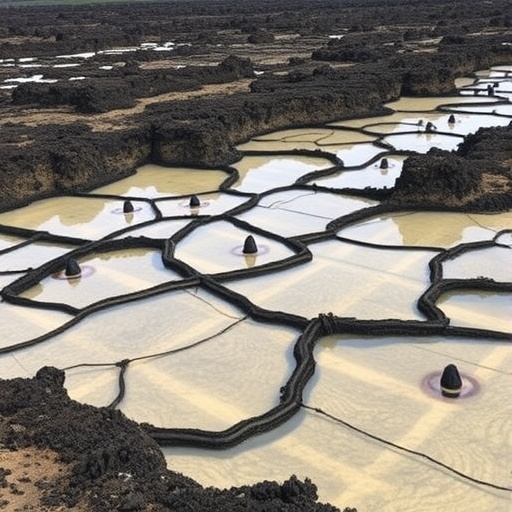
Peatlands cover only a small fraction of the planet’s land surface, yet they hold roughly one-quarter of all soil carbon. For centuries, drainage has allowed farmers, foresters, and developers to use these waterlogged landscapes, but the practice has also transformed peatlands from long-term carbon stores into major sources of carbon dioxide. Now, a study from Aarhus University suggests that some of the most severely damaged peatlands—those scarred by intense wildfire—could offer an unexpected opportunity for climate restoration. When these fire-affected ecosystems are rewetted, they may release dramatically less methane than unburned peatlands, removing one of the largest climate trade-offs associated with restoration.
The finding addresses a difficult problem in peatland management. Rewetting raises the water table and limits oxygen exposure, which can sharply reduce the decomposition responsible for carbon dioxide emissions. However, oxygen-free conditions also create an ideal environment for methanogenic archaea, microorganisms that convert organic compounds into methane. Although methane remains in the atmosphere for a shorter time than carbon dioxide, it has a much greater warming effect over a 100-year period. As a result, restoration projects can produce an initial surge in methane emissions, complicating efforts to demonstrate rapid climate benefits.
The researchers investigated whether a peatland’s wildfire history changes this response. They conducted a 90-day laboratory incubation experiment using drained peat soils and rewetted samples representing three conditions: no fire, mild burning, and severe burning. Throughout the experiment, the team measured carbon dioxide and methane emissions, analyzed soil chemistry, and examined microbial communities involved in anaerobic carbon breakdown. The work, published in Environmental Science and Ecotechnology, was designed to reveal not only how much greenhouse gas the soils released after rewetting, but also why fire intensity produced such different outcomes.
The results showed a dramatic contrast between the treatments. Rewetting unburned peat caused methane emissions to rise approximately 40-fold compared with drained soil. That response is consistent with the formation of oxygen-depleted conditions in which methanogens can thrive. Mildly burned peat performed even worse, generating methane emissions about six times higher than those measured in rewetted unburned soil. Severe burning, however, reversed the pattern. Methane emissions from severely burned peat remained statistically similar to those from drained controls, representing a 91 percent reduction compared with rewetted unburned peat.
The explanation appears to lie in the chemical transformation caused by extreme heat. Fourier-transform infrared spectroscopy indicated that severe fires increased the relative abundance of recalcitrant carbon compounds, including phenols and aromatic structures. These molecules are chemically resistant and difficult for microbes to break down, leaving fewer usable substrates for methane production. Severe fire also raised soil pH and electrical conductivity, two properties that were negatively correlated with methane emissions in the experiment. Together, these changes appear to leave the burned peat less biologically digestible after it becomes waterlogged.
Mild fires created a very different legacy. Rather than extensively transforming the peat’s carbon chemistry, they may have disrupted soil aggregates and released previously protected, easily degradable organic carbon. That newly available material could have fed methanogenic microorganisms after rewetting, explaining why mildly burned peat produced more methane than unburned soil. The microbial data supported this interpretation: the abundance of mcrA, a genetic marker associated with methane production, fell sharply in severely burned peat, while methanogen communities became more prominent in mildly burned samples.
The findings are especially relevant as climate change increases wildfire risk across drained peatlands. Lower water tables, prolonged drought, and higher temperatures make exposed peat more flammable, and fires can continue smoldering underground for long periods. Globally, more than six million hectares of peatland are estimated to burn each year, including approximately 0.5 to 0.9 million hectares of degraded peatlands that may be suitable for rewetting. The researchers estimate that prioritizing these fire-affected areas could avoid between 0.1 and 0.8 million tonnes of carbon dioxide equivalent annually through methane mitigation, using a 100-year global warming potential.
The climate benefit is only part of the story. Rewetting productive agricultural peatlands often creates conflict because restoring high water levels can reduce crop yields and land income. Severely burned peatlands, by contrast, may already have lost much of their agricultural value, making them less contentious targets for intervention. Their altered chemistry could also reduce the methane penalty that has historically made restoration appear less attractive. This combination of lower economic resistance and potentially lower post-restoration methane emissions could make fire-damaged peatlands practical starting points for large-scale climate projects.
The researchers caution that the study was conducted under controlled laboratory conditions and over a limited 90-day period. Field ecosystems are influenced by vegetation recovery, rainfall, water-table fluctuations, temperature, and the movement of carbon through complex soil layers. Long-term monitoring will therefore be needed to determine whether the methane-suppressing effect of severe fire persists for years or changes as microbial communities recover. Even with those uncertainties, the study challenges the assumption that all burned peatlands respond similarly after rewetting. In some landscapes, wildfire may leave behind not only ecological damage, but also a narrow window in which restoration can deliver unusually strong climate and social advantages.
Subject of Research: Peatland rewetting, wildfire legacies, methane emissions, soil chemistry, and microbial communities
Article Title: Severe wildfire legacies suppress methane emissions after peatland rewetting
News Publication Date: 29-Jul-2026
Web References: https://doi.org/10.1016/j.ese.2026.100735
References: Environmental Science and Ecotechnology, DOI: 10.1016/j.ese.2026.100735
Image Credits: Environmental Science and Ecotechnology
Keywords: peatlands, wildfire, rewetting, methane, climate change, greenhouse gas emissions, soil carbon, methanogens, ecosystem restoration, land-use conflict
Tags: climate benefits of peatland restorationecosystem recovery after wildfireeffects of rewetting on greenhouse gaseslong-term climate impact of peatland managementmethane emissions from rewetting peatlandsmicrobial activity in burned peatlandspeatland carbon sequestrationpeatland climate restorationpeatland restoration trade-offspeatland wildfire recoveryrewetting burned peatlandswildfire impact on peatland carbon storage