The dodo may have experienced the world in ways that were far more complex than its familiar image as a clumsy, foolish bird suggests. A new study based on high-resolution computed tomography (CT) scans of rare dodo skulls has reconstructed the internal spaces once occupied by the bird’s brain and sensory organs. The findings indicate that the extinct species may have possessed an unusual combination of sensory adaptations, including a stronger reliance on smell, enhanced tactile perception through its large beak and a daily activity pattern that could have extended beyond bright daylight.
The dodo, Raphus cucullatus, disappeared from its native island of Mauritius in the late seventeenth century, only a few decades after sustained human arrival. Because no complete behavioral record exists and surviving anatomical material is scarce, researchers have long relied on fragmented bones, historical descriptions and comparisons with living birds. The new investigation, led by researchers at the University of Lethbridge in Canada in collaboration with scientists at the Natural History Museum Denmark and other institutions, offers one of the most detailed attempts yet to infer how the dodo interacted with its environment.
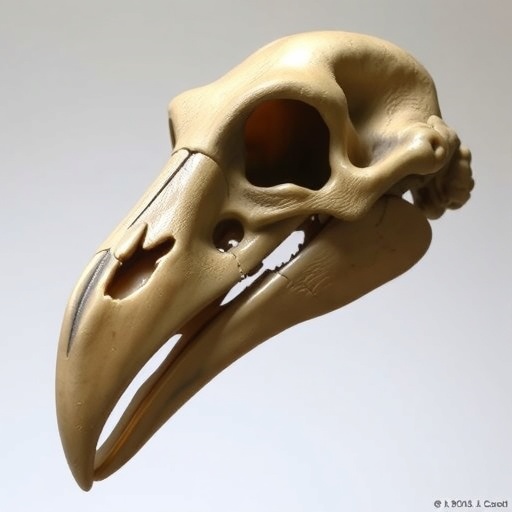
Only two complete dodo skulls are currently known. One is held by the Natural History Museum Denmark in Copenhagen, while the other belongs to the Oxford University Museum of Natural History. The Copenhagen specimen has been part of the museum’s collections for centuries and was recently examined as preparations began for new permanent galleries scheduled to open in 2027. Researchers used high-resolution CT scanning to look inside the skull without damaging the exceptionally rare fossil.
CT scanning produces a series of X-ray images that can be combined into a three-dimensional digital model. In this case, the technique revealed not only the external shape of the skull but also the complex cavities inside it. These spaces include the braincase, nasal passages and other anatomical structures associated with the nervous and sensory systems. Because the developing brain presses against the surrounding bone, it can leave a detailed internal imprint. That imprint, known as an endocast when digitally or physically reconstructed, provides an indirect record of the brain’s size and shape long after the original tissue has disappeared.
The researchers analyzed CT data from three dodo skulls, including both complete specimens, and compared their digital endocasts with those of living pigeons and doves—the dodo’s closest surviving relatives. This comparison allowed the team to distinguish features that may be characteristic of the dodo from variations caused by individual anatomy or preservation. The study’s title, “The sensory world of the Dodo and Solitaire revealed by endocast and skull anatomy,” reflects its central aim: to move beyond guessing what the extinct birds looked like and investigate how they may have sensed and processed their surroundings.
One of the most striking clues concerns the dodo’s possible activity pattern. Features of the reconstructed brain and associated sensory anatomy suggest that the bird may not have been strictly diurnal, or active only during daylight. Instead, it could have been active during periods of low light, particularly around dawn and dusk. This does not prove that dodos were nocturnal, but it raises the possibility that their daily routines were more flexible than previously assumed. Such activity could have helped them exploit food resources or avoid the intense heat of the Mauritian day.
The anatomy also points to a potentially more important role for smell than is seen in modern pigeons and doves. The relative development of structures associated with olfaction suggests that the dodo may have depended more heavily on chemical information when locating food or navigating its surroundings. On an isolated island, where vegetation, fruits, seeds and other resources may have been distributed unevenly, an enhanced sense of smell could have offered a valuable way to detect food that was hidden, distant or difficult to identify visually.
The dodo’s enormous upper beak may likewise have served as more than a tool for grasping or crushing food. Its shape and internal anatomy suggest that the beak could have provided extensive tactile information. In practical terms, the bird may have used its bill to probe, manipulate and investigate objects, allowing it to gather sensory information from the ground and surrounding vegetation. This interpretation is consistent with the idea that the dodo evolved a distinctive foraging strategy during millions of years of isolation on Mauritius, where it faced ecological conditions unlike those experienced by its continental relatives.
The study does not claim that anatomy can reveal every detail of dodo behavior, and the researchers emphasize that endocasts are indirect evidence. A brain cavity records the broad form of the brain and associated structures, but it cannot show precisely what an animal thought, how intelligent it was or how it behaved in every situation. Nevertheless, the findings challenge the traditional portrayal of the dodo as cognitively diminished. Compared with living pigeons and doves, the dodo appears to have had a distinctive sensory profile rather than an obviously inferior one. Its extinction was likely driven by rapid environmental change, hunting, introduced animals and habitat disturbance—not by any inherent inability to survive.
By combining data from several skulls, including the only two complete examples known to science, the researchers have created a stronger anatomical foundation for studying the dodo. The work also demonstrates how modern imaging can recover biological information from specimens that cannot be dissected or otherwise sampled. Each scan transforms a rare skull into a reusable digital resource, allowing scientists to examine internal anatomy, compare individuals and test new hypotheses without endangering irreplaceable material. The result is a more complicated and vivid picture of an animal that has become a global symbol of extinction: not a caricature of failure, but an evolutionarily distinctive island bird with a sensory world all its own.
Subject of Research: The sensory abilities, brain anatomy and possible behavior of the extinct dodo and solitaire, reconstructed from skull endocasts and comparative anatomy.
Article Title: The sensory world of the Dodo and Solitaire revealed by endocast and skull anatomy
News Publication Date: 5-Aug-2026
Web References: https://academic.oup.com/zoolinnean/article-lookup/doi/10.1093/zoolinnean/zlag123
References: Zoological Journal of the Linnean Society; DOI: 10.1093/zoolinnean/zlag123
Image Credits: Natural History Museum Denmark
Keywords: Dodo, extinct birds, avian evolution, brain endocast, CT scanning, sensory biology, olfaction, tactile perception, Mauritius, paleontology, evolutionary anatomy, extinction science
Tags: analysis of rare dodo fossilschallenges in reconstructing dodo behaviorcomparative anatomy of dodo and modern birdsdodo behavior and ecologydodo extinction and island ecologydodo reliance on smell and tactile perceptionDodo skull reconstructionextinct bird sensory adaptationshigh-resolution CT scans of dodoimplications for bird evolutioninsights into dodo daily activity patternsscientific methods in studying extinct species