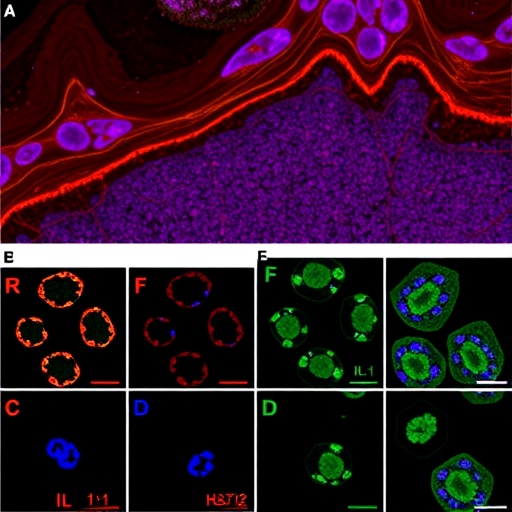
A new study published in Nature Microbiology identifies signalling pathways from the interleukin-1 family as key drivers of mucosal defence during systemic infection with the opportunistic fungus Candida albicans. The findings offer a revised view of invasive candidiasis, a life-threatening condition in which a microorganism that commonly inhabits the mouth, gastrointestinal tract and other mucosal surfaces enters the bloodstream and spreads to internal organs. Rather than treating mucosal tissues as passive barriers, the research indicates that they can actively coordinate immune protection even after infection has become systemic.
C. albicans is usually controlled by the physical integrity of epithelial surfaces and by immune mechanisms that maintain a stable relationship between the fungus and its human host. Disruption of these defences, through surgery, intensive-care treatment, immunosuppression, antibiotic exposure or damage to the intestinal lining, can allow the organism to invade deeper tissues. Once in the circulation, the yeast can switch into filamentous forms, adhere to host cells and evade immune clearance. Invasive candidiasis can then trigger widespread inflammation and organ damage, with mortality remaining high despite antifungal therapy.
The study focuses on the IL-1 family, a group of immune mediators that includes interleukin-1α, interleukin-1β, interleukin-18 and several related cytokines. These molecules are released or activated when cells detect tissue injury or microbial components. IL-1 signals primarily through receptors that activate intracellular pathways involving the adaptor protein MyD88 and transcription factors such as NF-κB, leading to the expression of inflammatory genes. The resulting response can increase antimicrobial activity, strengthen epithelial barriers and recruit immune cells to vulnerable tissues.
The researchers’ findings suggest that this signalling network has an important role beyond the immediate site of fungal invasion. Mucosal surfaces appear to use IL-1 family signals to communicate the presence of danger to immune and epithelial cells, creating a protective state that limits fungal growth and reduces the likelihood of dissemination. This form of communication is particularly important in tissues where microbes are constantly present, because the immune system must distinguish between harmless colonisation and a transition toward invasive disease.
A central feature of the work is the connection between local mucosal immunity and systemic protection. The intestine and other mucosal organs contain epithelial cells, macrophages, dendritic cells, neutrophils and lymphocytes that cooperate to control C. albicans. When fungal cells or their cell-wall components are detected, pattern-recognition receptors can stimulate inflammasome activity and cytokine production. IL-1 family signals then help coordinate epithelial repair and immune recruitment, while also influencing the activation and function of phagocytes that engulf and destroy fungal cells.
The results are consistent with a model in which impaired IL-1 family activity leaves mucosal tissues less capable of containing C. albicans. In that setting, fungal organisms may cross epithelial barriers more easily, while immune cells receive weaker or poorly timed instructions to respond. The consequences can extend beyond a higher fungal burden: uncontrolled invasion may alter tissue architecture, compromise barrier function and intensify inflammatory injury. This helps explain why defects in cytokine signalling can increase susceptibility to infection even when some immune cells remain present.
The study also highlights the complexity of antifungal immunity. Effective protection against C. albicans requires more than a single defensive mechanism. Neutrophils are essential for killing invading fungal cells, but their activity depends on signals that direct them to the correct tissue and regulate their intensity. Excessive inflammation can damage host organs, whereas an inadequate response allows fungal proliferation. IL-1 family pathways may therefore function as biological coordinators, balancing rapid antimicrobial action with the preservation of mucosal integrity.
These observations could have implications for patients at risk of invasive candidiasis. Current treatment relies mainly on antifungal drugs, including echinocandins, azoles and amphotericin formulations, but resistance and delayed diagnosis remain major challenges. Therapies that strengthen mucosal barriers or selectively enhance protective IL-1 family signalling could eventually complement antifungal treatment. Such approaches would require careful control, because excessive IL-1 activity is associated with inflammatory and autoimmune disease. The therapeutic goal would not simply be to increase inflammation, but to restore an effective, appropriately localised immune response.
The findings may also influence research into infection-associated complications in hospitals, where disruption of the microbiome and epithelial barriers can create conditions favourable to C. albicans invasion. Understanding how mucosal tissues detect and contain the fungus could lead to improved biomarkers for identifying patients at risk before bloodstream infection develops. For now, the study establishes IL-1 family signalling as a central link between mucosal surveillance and systemic antifungal defence, revealing that protection against invasive disease may begin at the body’s epithelial frontiers long before the fungus reaches the bloodstream.
Subject of Research: IL-1 family signalling and mucosal immune defence against systemic Candida albicans infection
Article Title: IL-1 family signalling drives mucosal defence against systemic Candida albicans infection
Article References: Griffiths, J.S., Kempf, A., Pickering, R.J. et al. IL-1 family signalling drives mucosal defence against systemic Candida albicans infection. Nature Microbiology (2026). https://doi.org/10.1038/s41564-026-02431-2
Image Credits: AI Generated
DOI: https://doi.org/10.1038/s41564-026-02431-2
Keywords: Candida albicans, invasive candidiasis, mucosal immunity, IL-1 family, cytokine signalling, epithelial barrier, antifungal immunity, systemic fungal infection, immunology
Tags: Candida albicans mucosal immunitycytokine signaling pathways in mucosal defensecytokine-mediated mucosal protectionfungal invasion and immune evasionhost immune response to Candida albicansIL-1 family cytokines in fungal infectionsIL-1 signaling in fungal defenseimmune mechanisms against opportunistic fungiinvasive candidiasis pathogenesismucosal immune system activationrole of epithelial barriers in fungal infectionssystemic candidiasis immune response