Parkinson’s disease is often described as a disorder of movement, but one of its most disabling symptoms can be defined by the moments when movement abruptly disappears. Freezing of gait, or FOG, occurs when a person suddenly feels unable to initiate or continue walking, often as they approach a doorway, turn, or navigate a crowded space. A new study by Hou, Liu, Zhao and colleagues points toward a deeper explanation: in Parkinson’s disease with freezing of gait, the brain may fail to reorganize communication between motivation-related systems deep in the forebrain and the cortical networks that control action when the brain shifts between behavioral states.
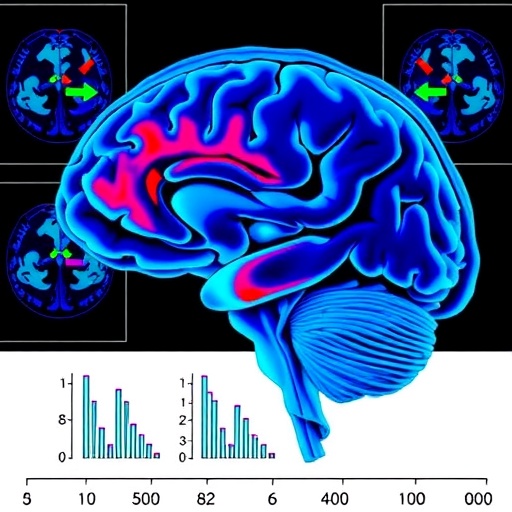
Published in npj Parkinson’s Disease, the research investigates what the authors call a “state-dependent reconfiguration failure” of the basal forebrain–cortical gradient. The phrase describes a breakdown in the brain’s ability to dynamically alter its functional organization according to changing demands. Rather than operating as a fixed circuit, the brain continuously adjusts its internal hierarchy as a person rests, prepares to move, initiates an action, or responds to a challenging environment. The study suggests that this flexibility may be particularly vulnerable in patients who experience freezing.
The basal forebrain is a collection of structures located beneath the cerebral cortex that helps regulate arousal, attention, learning, motivation, and the selection of behavior. It includes regions involved in cholinergic signaling, in which neurons release the neurotransmitter acetylcholine, as well as networks that interact with dopamine and other chemical systems. These areas do not simply issue commands to the legs. Instead, they help determine which information deserves priority and whether the brain is prepared to initiate and sustain a goal-directed action.
The cortex, meanwhile, is organized along broad functional gradients. At one end of these gradients are areas involved in immediate sensory processing and motor control. At the other are association regions that integrate memory, attention, decision-making, and internal goals. This arrangement allows the brain to move between highly focused processing and more abstract, flexible forms of cognition. A healthy nervous system can reconfigure this balance as circumstances change. Walking through an empty hallway, for example, requires a different neural strategy from walking through a busy station or stepping over an obstacle.
Parkinson’s disease disrupts several of the systems that make this flexibility possible. The loss of dopamine-producing neurons in the substantia nigra is the best-known pathological feature, and it impairs the basal ganglia circuits responsible for selecting and scaling movement. Yet freezing of gait often cannot be explained by dopamine depletion alone. Many patients continue to experience freezing even when their other motor symptoms improve with dopaminergic medication. This has led researchers to examine additional networks, including the cholinergic basal forebrain, frontal attention systems, brainstem locomotor regions, and large-scale cortical networks.
The importance of the new work lies in its focus on brain state rather than on a single permanently damaged pathway. A person with Parkinson’s disease may be able to walk normally in one context and freeze moments later when asked to turn, divide attention, cross a narrow space, or respond to an unexpected cue. Such variability implies that the nervous system retains some capacity for movement but struggles to shift efficiently between competing modes of operation. The study’s central concept is that freezing may emerge when this transition fails—when the brain cannot properly reconfigure its internal gradient to support action under changing conditions.
This framework also helps explain why freezing is so strongly influenced by attention and environmental context. External cues such as floor markings, rhythmic sounds, or another person’s pacing can sometimes help a patient overcome an episode. These interventions may work by reducing the computational demands placed on impaired networks or by providing an alternative route for initiating movement. If basal forebrain–cortical coordination is unstable, a strong visual, auditory, or cognitive cue could temporarily supply the structure that the brain is unable to generate internally.
The findings may have implications beyond diagnosis. Current clinical assessments often measure walking speed, step length, balance, or the number of freezing episodes under standardized conditions. Those measures are valuable, but they may not capture the neural instability that appears only when a patient moves between states. A state-sensitive approach could encourage researchers to evaluate how the brain responds during preparation, initiation, turning, dual-task walking, and unexpected interruptions. It may also help explain why two patients with similar conventional motor scores can have dramatically different risks of falling and loss of independence.
The research could eventually influence treatment strategies aimed at restoring network flexibility rather than simply increasing dopamine. Potential directions include therapies that target cholinergic signaling, noninvasive brain stimulation, adaptive deep-brain stimulation, cognitive-motor training, and wearable systems that deliver cues when freezing is detected. Such applications remain prospective, and the study does not by itself establish a new treatment. Its contribution is more fundamental: it reframes freezing of gait as a failure of dynamic network coordination, connecting the symptom to the brain’s inability to reorganize itself in real time.
That shift in perspective may be especially valuable as Parkinson’s research moves toward individualized care. Freezing is not a single, uniform phenomenon; it can be triggered by different combinations of motor difficulty, attention, anxiety, sensory conflict, and environmental complexity. Understanding how basal forebrain and cortical systems interact across these conditions could provide a biological explanation for that diversity. The broader message is that movement depends not only on whether the brain possesses the necessary motor commands, but also on whether its large-scale networks can assemble those commands at the precise moment they are needed.
Subject of Research: State-dependent brain-network reconfiguration and freezing of gait in Parkinson’s disease.
Article Title: State-dependent reconfiguration failure of the basal forebrain-cortical gradient in Parkinson’s disease with freezing of gait.
Article References: Hou, M., Liu, C., Zhao, J. et al. “State-dependent reconfiguration failure of the basal forebrain-cortical gradient in Parkinson’s disease with freezing of gait.” npj Parkinson’s Disease (2026). https://doi.org/10.1038/s41531-026-01506-5
Image Credits: AI Generated
DOI: 10.1038/s41531-026-01506-5
Keywords: Parkinson’s disease, freezing of gait, basal forebrain, cerebral cortex, brain networks, neural reconfiguration, cortical gradients, cholinergic signaling, motor control, neuroscience
Tags: basal forebrain-cortical gradientbrain flexibility and behavioral statesbrain reorganization failurecortical network dysfunctionfreezing of gaitmotivation-related neural systemsmotor control in Parkinson’smovement initiation deficitsneurobiological mechanisms of FOGneuroimaging of Parkinson’s diseaseParkinson’s diseasestate-dependent brain dynamics